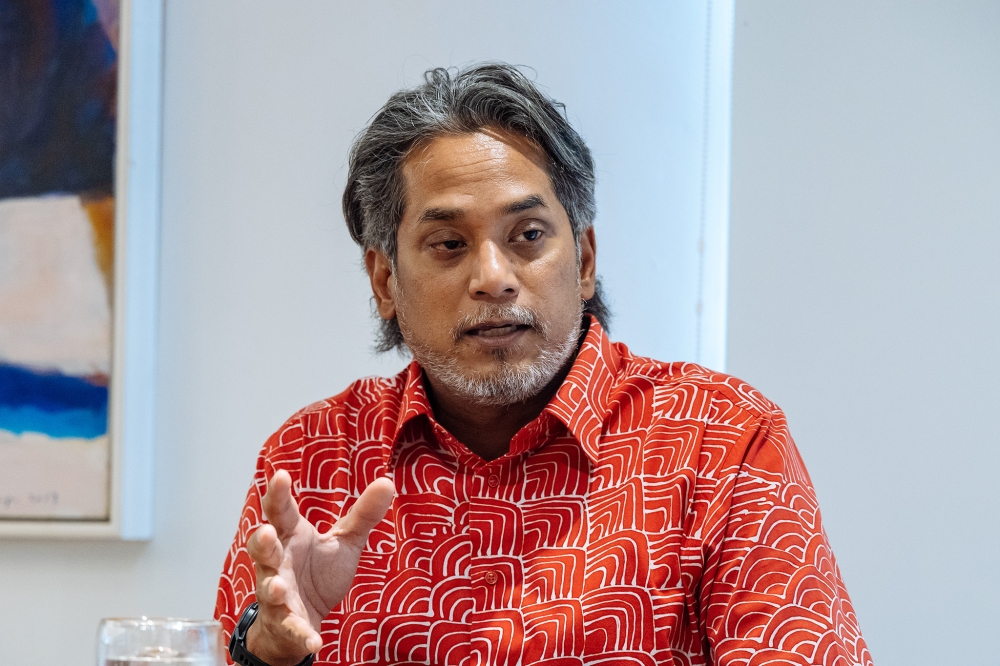
Speculation has intensified around the political trajectory of Khairy Jamaluddin, the former Umno Youth chief, following reports that Barisan Nasional is considering his candidacy for the state assembly seat in Rembau, Negeri Sembilan. The development signals potential manoeuvres within the coalition as it prepares for upcoming electoral contests, and raises intriguing questions about leadership roles in one of Malaysia's key states.
Khairy's name surfacing in connection with Rembau represents a notable strategic consideration for Barisan Nasional. His previous tenure as Umno Youth head brought him prominence within party structures, and his transition to parliamentary politics has kept him within the broader coalition's orbit. The timing of these discussions reflects the coalition's need to consolidate support bases and identify candidates capable of attracting both traditional and emerging voter demographics.
The significance of the Rembau seat extends beyond a standard state assembly contest. Located in Negeri Sembilan, the constituency sits within a state where political dynamics have shifted considerably in recent years. Barisan Nasional's performance in such positions directly influences the party's ability to form government at the state level, making candidate selection a matter of substantial consequence for the coalition's broader peninsular strategy.
Conversations about Khairy potentially stepping into a Menteri Besar candidacy add another layer of complexity to these calculations. A Menteri Besar position would represent a significant elevation in his political standing, placing him among the highest-ranking figures in state administration. Such discussions, even if preliminary, suggest that senior coalition figures view him as possessing the stature and political capital necessary for executive responsibility at the state level.
The broader context of these considerations involves Barisan Nasional's ongoing efforts to restore its dominance following the turbulence of recent political cycles. The coalition has faced persistent challenges in retaining voter confidence and managing internal party dynamics. Identifying candidates who can bridge traditional support networks while appealing to newer segments of the electorate remains a pressing organisational challenge. Khairy's profile, combining generational credentials with established party connections, positions him as a potential asset in this regard.
Within Negeri Sembilan specifically, the political landscape presents distinct opportunities and constraints. The state has witnessed competitive contests between major coalitions, and securing or improving Barisan Nasional's position requires strategic deployment of candidates with genuine local resonance or cross-demographic appeal. The Rembau constituency, as part of this calculus, demands careful consideration of who can effectively represent coalition interests while maintaining voter support.
Khairy's journey within Umno has been marked by both achievements and periods of adaptation. His rise through youth movement ranks demonstrated organisational capacity and communication skills. His subsequent moves have required him to establish credibility beyond the youth sector and to build relationships across the broader party apparatus. Any candidacy in Rembau would represent an attempt to translate these accumulated experiences into effective state-level representation.
The mention of Menteri Besar possibilities reflects deeper discussions within Barisan Nasional about succession planning and leadership renewal in state governments. While speculative at this stage, such discussions indicate that the coalition is actively considering how to deploy its available talent across multiple electoral levels. The prospect of offering senior positions to proven party figures serves both as an incentive for organisational loyalty and as a signal to voters about the depth of coalition leadership.
For Malaysian political observers, the Khairy scenario illustrates how coalition parties continue to navigate the complex terrain between established hierarchies and the need for refreshed political narratives. State-level contests increasingly serve as testing grounds where national figures can build track records before potential elevation. Success in Rembau could provide a platform for Khairy to demonstrate governance capacity and voter appeal at a level that could influence future opportunities.
The Negeri Sembilan context also matters considerably. The state has its own distinct political culture and voter preferences, shaped by both historical patterns and contemporary socio-economic conditions. Introducing a candidate with strong federal-level credentials requires demonstrating genuine commitment to addressing local concerns and building connections with community networks that ultimately determine electoral outcomes.
Barisan Nasional's consideration of Khairy for these roles also reflects broader staffing challenges within the coalition. Finding candidates who combine competence, electability, organisational skills, and genuine policy interest remains perpetually difficult. When senior party figures identify individuals they believe can fill such requirements, the resulting positioning often becomes subject to intense speculation and analysis within political circles.
Looking forward, the actual materialisation of these considerations into formal candidacy announcements will depend on numerous factors beyond current public discussion. Barisan Nasional's internal processes typically involve consultation across multiple party levels, assessment of ground conditions, and strategic calculations about electoral timing. Whether Khairy ultimately contests Rembau, pursues higher positions, or takes alternative directions remains to be determined through the coalition's decision-making frameworks.
What remains clear is that the emergence of Khairy's name in these contexts underscores the ongoing evolution of Malaysian political structures and the importance coalition parties place on identifying and positioning leadership talent for the next phase of electoral competition.

