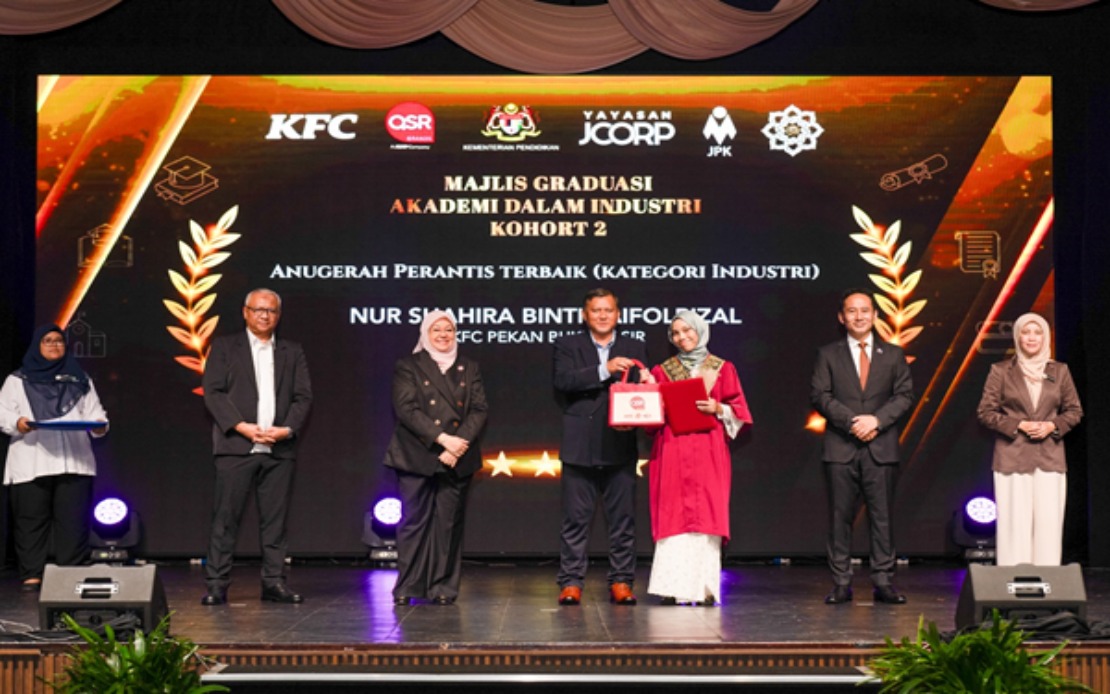
QSR Brands, operating through KFC Malaysia in partnership with Yayasan JCorp, has successfully graduated another 37 vocational students from its Apprenticeship Development Initiative (ADI), reinforcing the company's commitment to nurturing skilled workers for Malaysia's hospitality sector. The accomplishment marks a significant milestone in the country's efforts to bridge the gap between academic training and industry requirements, particularly in the competitive quick-service restaurant market where practical competencies directly translate to employment readiness.
The ADI programme represents a pioneering model of collaboration within Malaysia's restaurant industry, having been formally introduced in June 2023 through a strategic alliance involving KFC Malaysia, the Department of Skills Development under the Ministry of Human Resources, and the Ministry of Education. This tri-partite framework demonstrates how the private sector can actively participate in shaping vocational education standards while simultaneously developing a pipeline of qualified workers for their own operations and the broader industry.
The latest cohort of graduates builds upon the success of the inaugural intake, which comprised 23 students who completed their industrial training in March 2025. The cumulative graduation of 60 workers trained by KFC Malaysia underscores the scalability of the model and suggests that similar programmes could be replicated across other sectors facing skilled labour shortages. For regional observers, this demonstrates how Malaysian companies are responding proactively to workforce development challenges rather than relying solely on government-led initiatives.
Ministry of Education Technical and Vocational Education and Training director Zulkernai Fauzi has lauded the ADI programme as an exemplary benchmark for industry-education integration, advocating for its expansion across Malaysia's technical and vocational education ecosystem. His endorsement carries significant weight, suggesting that government bodies recognise the programme's effectiveness in producing graduates who possess both recognised certifications and practical work experience—a combination that has traditionally been elusive in Malaysia's vocational training landscape where classroom-based learning often disconnects from real-world application.
Students enrolled in the programme underwent comprehensive training at KFC restaurants across Johor Bahru, where they were immersed in the vocational syllabus for Fast Food Preparation and Service. Beyond mastering food preparation techniques, trainees gained exposure to critical operational domains including customer service delivery, workplace safety compliance, and restaurant management protocols. This holistic approach ensures that graduates enter the workforce not merely as technically proficient workers but as individuals capable of navigating complex service environments where multiple competencies operate simultaneously.
The academic achievements of Cohort 2 demonstrate the rigour of the programme's design. All 37 students attained a perfect pass rate in Vocational Stream Subjects (MPAK) and both Malaysian Skills Certificate (SKM) Level 2 and Level 3 qualifications, while 95 per cent successfully completed the Sijil Pelajaran Malaysia (SPM) examination. These results suggest that integrating vocational training with continued academic study does not compromise either pathway; rather, it appears to reinforce learning outcomes across both domains. Each graduate received five formal qualifications, establishing a robust credential portfolio that enhances their employability across multiple hospitality and service-sector positions.
Yayasan JCorp chairman Rozaini Mohd Sani emphasised that participation in the ADI programme catalyses personal development alongside skill acquisition, particularly for young people from disadvantaged backgrounds. The initiative's inclusive approach—removing barriers based on socioeconomic status—aligns with Malaysia's broader human capital development agenda and demonstrates how corporate social responsibility can intersect meaningfully with workforce development. By opening pathways for youth regardless of background, the programme addresses both immediate labour market demands and longer-term social mobility objectives.
QSR Brands chief human resources officer Dr Sharifah Musainah Syed Alwi reframed the significance of the graduation beyond mere credential conferment, emphasising that graduates had undergone authentic training in operational restaurant environments where they managed real workflows and mastered industry-recognised competencies. This distinction matters considerably; it signals that these qualifications reflect genuine capability development rather than theoretical knowledge alone. The recognition of industry-specific skills ensures that employers viewing these credentials understand precisely what competencies graduates possess.
The programme also incorporated performance-based recognition mechanisms, awarding distinctions for Best Apprentice (Industry Category), Best Apprentice (SPM Category), and Best Apprenticeship Documentation. These awards serve multiple functions: they incentivise excellence throughout the training period, provide graduates with additional credentials that differentiate them in competitive job markets, and establish benchmarks for measuring programme quality across successive cohorts. The documentation award is particularly noteworthy, as it underscores the importance of maintaining rigorous standards and creating institutional memory within the apprenticeship framework.
For Malaysian policymakers and regional observers, the ADI programme offers instructive lessons about designing vocational education systems that respond authentically to industry needs. Rather than imposing top-down curricula disconnected from workplace realities, the model positions employers as active curriculum designers and trainers, ensuring that educational content reflects current industry standards and evolving skill requirements. This responsiveness to market signals enables the programme to produce graduates whose skills remain relevant as hospitality sector practices evolve.
The success of Cohort 2 positions the ADI as a potential template for expansion beyond the quick-service restaurant sector. Other industries facing significant skilled labour gaps—including healthcare services, logistics, advanced manufacturing, and hospitality management—could adopt comparable models tailored to their specific operational requirements. The replicability of this approach across diverse sectors could substantially accelerate Malaysia's transition towards a knowledge and skills-intensive economy.
Looking forward, the continued graduation of cohorts through the ADI programme generates accumulated data about programme effectiveness, graduate employment outcomes, and long-term career progression. This longitudinal evidence base will prove invaluable for refining the model, identifying optimal training durations, determining which skill combinations produce the highest employability rates, and assessing whether graduates pursue advancement within KFC Malaysia or transfer skills to other employers. Such transparency strengthens the programme's credibility with other potential corporate partners considering similar initiatives.
The partnership between QSR Brands, Yayasan JCorp, and government agencies demonstrates that addressing Malaysia's vocational skills deficit requires coordinated action from multiple stakeholders. As the country competes regionally and globally for investment in higher-value-added manufacturing and services, the availability of a skilled, certified workforce becomes increasingly consequential. The ADI programme's expansion from 23 to 60 graduates represents tangible progress toward building the capable workforce that drives sustainable economic competitiveness and improves employment prospects for Malaysian youth entering the labour market.

