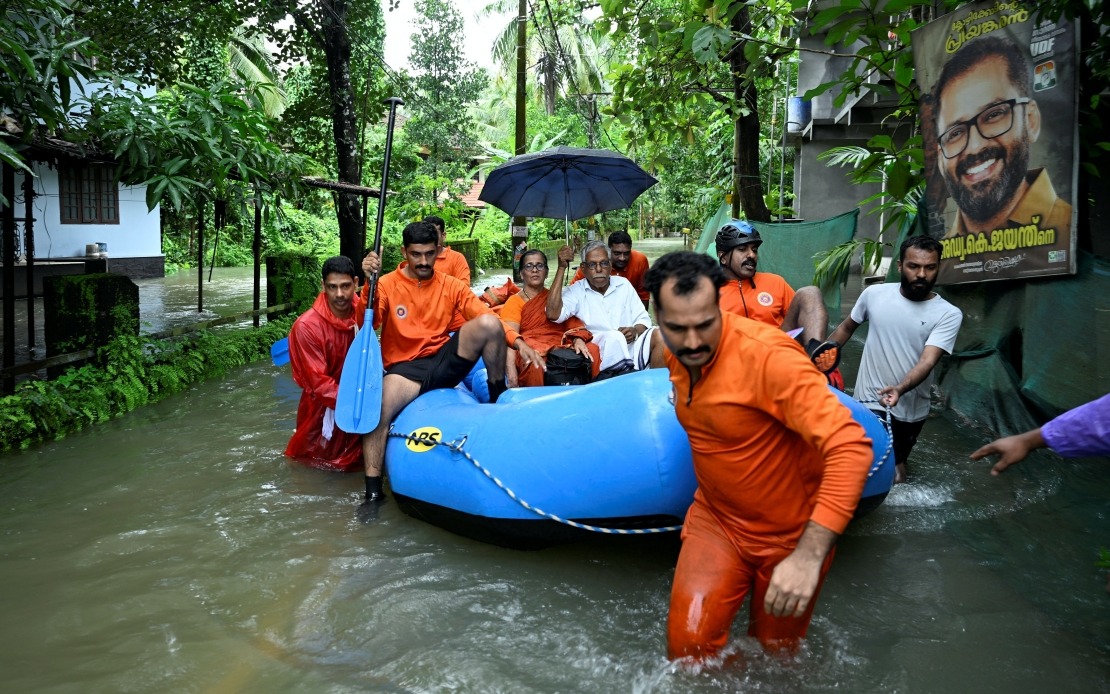
Kerala's worst monsoon disaster in recent times has claimed 26 lives, with the toll still rising as torrential rains continue to batter the southern Indian state. Chief Minister V D Satheesan disclosed the grim figures during a Wednesday press briefing, revealing that the catastrophe has fundamentally disrupted daily life for tens of thousands across multiple districts. The crisis underscores the vulnerability of Kerala's population during the southwest monsoon season, a phenomenon that has intensified with climate variability and demands urgent regional preparedness across South Asia.
Beyond the fatalities, the human toll extends to 11 injured and four missing persons, figures that remain fluid given ongoing rescue operations in flooded areas. The scale of displacement is particularly alarming: 27,048 residents have been evacuated from their homes, with authorities establishing 462 separate relief camps to provide shelter, food, and medical care. This mobilisation of relief infrastructure represents the state's maximum capacity and underscores how catastrophic the situation has become across vulnerable low-lying zones.
Chief Minister Satheesan announced enhanced compensation packages for bereaved families and those who have lost homes and possessions, signalling the government's acknowledgment of the disaster's severity. These relief measures are critical for affected communities, many of whom depend entirely on agriculture for their livelihoods. The economic impact extends beyond immediate losses: the government confirmed that 1,882 hectares of farmland have been damaged, affecting 23,537 farming households who face potential income collapse during this critical harvest season.
The disaster originated in northern Kerala, where districts including Kozhikode and Kannur experienced unprecedented rainfall from August 1 onwards. High-altitude areas in these districts proved particularly vulnerable, with steep terrain accelerating water runoff and triggering devastating landslides that buried communities and severed transport links. The high-range zones of northern Kerala, which typically experience heavy monsoon precipitation, have been overwhelmed by the sheer volume and intensity of water discharge, creating conditions that standard drainage and embankment infrastructure cannot manage.
Floodwaters persist in most low-lying regions, preventing residents from returning home and complicating relief distribution. Many houses remain submerged under metres of murky water, compounding the psychological trauma accompanying physical displacement. The slow recession of floodwaters suggests prolonged humanitarian challenges, as contaminated water breeds disease risks and prolonged camp life creates health and security vulnerabilities, particularly for women and children.
The India Meteorological Department has issued an orange alert—the second-highest warning level—for continued heavy rainfall, projecting widespread precipitation across Kerala, coastal Karnataka, and Telangana through August 11. This extended forecast suggests the crisis will persist for days, preventing displaced populations from returning home soon and heightening the risk of secondary disasters such as landslides and water-borne diseases. The meteorological projections fundamentally alter relief planning, as authorities must prepare for sustained operations rather than assuming rapid recovery.
For Malaysian readers and broader Southeast Asian observers, Kerala's crisis offers sobering lessons about monsoon vulnerability. The Indian state's sophisticated disaster management apparatus, large relief resources, and government-led coordination still struggle to fully contain such events, suggesting that even well-resourced regions remain exposed to climate-induced extremes. Malaysia and other regional economies should evaluate whether their own monsoon preparedness—particularly in urban flood-prone areas and agricultural zones—adequately accounts for escalating rainfall intensity driven by changing climate patterns.
The agricultural impact merits particular regional attention. With nearly 24,000 farming families affected across nearly 1,900 hectares, Kerala faces immediate food security challenges and longer-term rural economic disruption. Similar vulnerability exists across Southeast Asia's monsoon belts, where smallholder farmers lack crop insurance and emergency credit facilities to survive seasonal catastrophes. The crisis illustrates how natural disasters rapidly cascade into livelihood collapse, forcing rural-to-urban migration and expanding informal settlements in cities—a dynamic directly relevant to Malaysia's ongoing urbanisation patterns.
The displacement figures also reflect critical infrastructure gaps. The establishment of 462 relief camps suggests that Kerala's permanent shelter capacity for displaced persons is minimal, a common Southeast Asian challenge as rapid urbanisation outpaces social infrastructure development. These camps create temporary humanitarian stability but cannot substitute for permanent housing reconstruction, a process that typically extends months or years and strains government budgets significantly. Malaysian planners should assess whether current urban planning adequately anticipates disaster displacement scenarios, particularly in flood-prone states like Selangor, Pahang, and Terengganu.
Government compensation announcements, while necessary, often fail to fully restore livelihoods or rebuild homes to pre-disaster conditions. Affected families typically face documentation burdens, bureaucratic delays, and compensation inadequate for actual losses. The Malaysian experience with similar initiatives suggests that transparent, swift compensation mechanisms are crucial for maintaining public confidence and preventing long-term grievances. Kerala's authorities must ensure that enhanced compensation reaches vulnerable populations efficiently, avoiding corruption and administrative friction that typically plague large relief operations in developing economies.
The continuing meteorological threat through mid-August suggests that Kerala's crisis management institutions will face sustained pressure over coming days. Relief camp operations require constant supply chains, medical coverage, sanitation management, and security provisions—an exhausting coordination challenge that tests state capacity. For regional observers, the crisis demonstrates how climate variability can overwhelm even relatively advanced disaster response systems, underscoring the imperative for preventive measures including improved early warning systems, enhanced building codes for flood-prone areas, and integrated watershed management to reduce downstream flooding.
Communal responses and inter-state coordination will likely prove critical as the emergency extends. Kerala's neighbouring states may need to contribute resources or accept displaced persons, requiring regional cooperation frameworks. For Southeast Asia, such transnational dimensions of climate disasters remain underdeveloped, with limited mechanisms for cross-border emergency assistance or coordinated evacuation protocols. The Kerala crisis exemplifies why ASEAN and South Asian cooperation on monsoon disaster management deserves substantially greater investment and institutional development, particularly given projections that climate change will intensify extreme precipitation events across the region.

