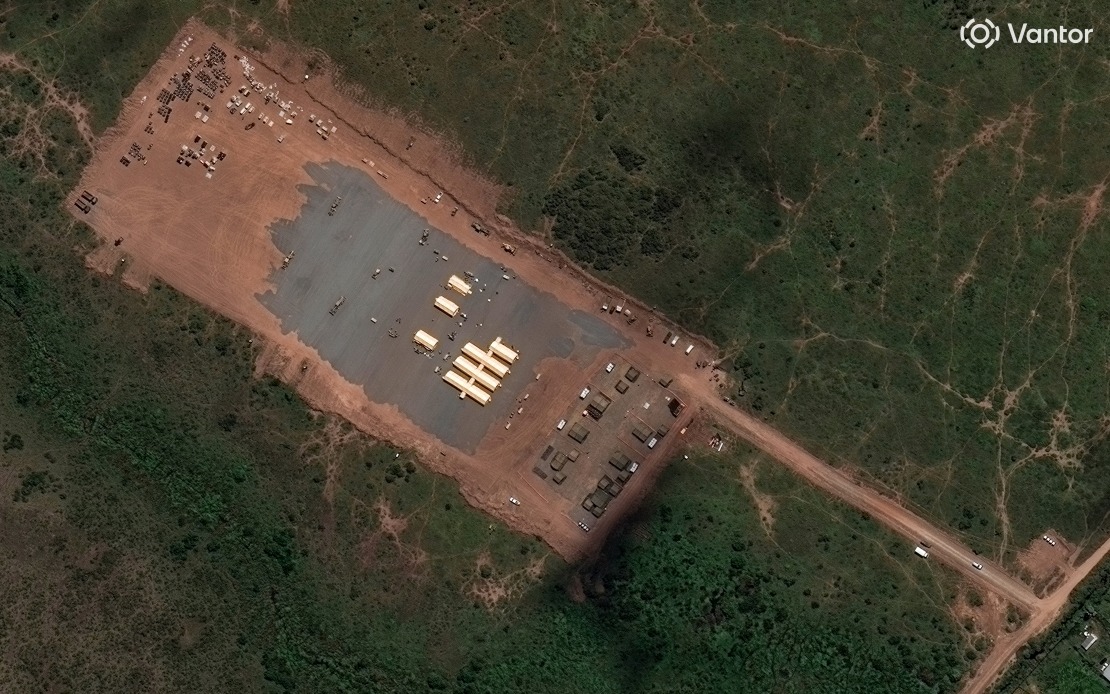
A Kenyan High Court judge has declared the country's health minister in contempt of court for failing to halt construction of a controversial quarantine facility designed to house Americans potentially exposed to Ebola. The ruling, handed down by Judge Patricia Nyaundi on Monday, marks a significant escalation in the dispute surrounding the 50-bed isolation centre at Laikipia Air Base in Nanyuki, located approximately 200 kilometres north of Nairobi. Health Minister Aden Duale was ordered to appear before the court for sentencing after Nyaundi found he had persistently overseen construction activities in direct violation of judicial directives issued in May and June.
The facility has become one of East Africa's most divisive public health projects, touching on broader questions about national sovereignty, disease preparedness, and the extent to which governments should defer to foreign powers in matters of domestic security. The quarantine centre was conceived as a safeguard for American citizens who might contract Ebola while participating in response operations related to outbreaks in the Democratic Republic of the Congo and neighbouring regions. However, since its inception, the project has drawn fierce resistance from civil society, local communities, opposition figures, and constitutional advocates who question both its necessity and the manner in which it was authorised.
The constitutional rights organisation Katiba Institute initiated the legal challenge by petitioning the High Court with concerns spanning constitutional propriety, public health ramifications, and procedural transparency. The group contended that such a facility represents a significant public health infrastructure decision that demands comprehensive stakeholder engagement and strict adherence to constitutional frameworks requiring public participation in matters affecting community welfare. The court accepted these arguments and issued a suspension order, yet the government's continued construction suggests either institutional dysfunction or deliberate defiance of judicial authority. This confrontation between the executive and judiciary reveals underlying tensions about how Kenya manages internationally-sensitive health infrastructure projects.
President William Ruto's subsequent disclosure that he personally approved the facility following a direct request from President Donald Trump substantially shifted the political dynamics surrounding the project. Ruto framed the arrangement as extending Kenya's longstanding health partnership with the United States, implicitly suggesting that refusing American requests carries diplomatic costs. This framing proved particularly controversial because it suggested that bilateral relations took precedence over constitutional procedures and public consultation requirements. The revelation transformed what might have been presented as a purely technical health initiative into an explicitly geopolitical matter, prompting deeper scrutiny of how much latitude Kenya's government grants to American security and health concerns.
Government defenders have emphasised Kenya's strategic vulnerability to infectious disease outbreaks, pointing to the country's role as East Africa's primary transportation, diplomatic, and commercial nexus. Officials argue that the facility represents prudent preparedness given Kenya's geographic and functional position as a regional hub where disease could rapidly spread across borders. From this perspective, the quarantine centre addresses a legitimate national interest in strengthening capacity to detect, isolate, and manage potential Ebola cases before they destabilise the region. The United States Embassy in Nairobi has reinforced this rationale by asserting that the facility poses no epidemiological threat to surrounding communities and contributes to broader regional disease surveillance and response capabilities.
Yet communities in Laikipia County have mounted sustained resistance, with protests reflecting deeper anxieties about top-down decision-making and foreign control over Kenyan territory. Demonstrators have accused authorities of systematically ignoring both public concerns and explicit court orders, effectively treating legal constraints as negotiable obstacles rather than binding constraints on executive power. The intensity of resistance escalated dramatically when at least three people were killed during protests, according to police reports, witness testimonies, and human rights documentation. These deaths transformed the dispute from an abstract constitutional matter into a tragic human toll, crystallising public anger about what residents perceive as government indifference to their safety and autonomy.
The judicial contempt finding represents an uncommon instance of Kenyan courts directly confronting ministerial defiance of their orders. By holding Duale personally accountable rather than merely suspending the project, Judge Nyaundi signalled that institutional legitimacy depends on executive compliance with judicial directives. The instruction that Duale appear for sentencing suggests potential consequences ranging from fines to imprisonment, though political considerations may moderate any penalties imposed. This development has broader implications for Kenya's separation of powers, testing whether courts possess sufficient institutional autonomy to restrain executive overreach when sensitive international relationships are implicated.
For Southeast Asian observers, Kenya's experience offers instructive parallels to regional debates about balancing public health infrastructure needs against constitutional safeguards and community consultation requirements. Several ASEAN nations have similarly grappled with decisions to host foreign military or health facilities, confronting tensions between bilateral partnership obligations and domestic stakeholder expectations. The Kenyan case demonstrates how inadequate public engagement and perceived foreign influence can mobilise significant resistance, even when underlying health objectives appear scientifically sound. The contempt ruling also illustrates how robust judiciaries can enforce accountability, though political pressure frequently constrains actual enforcement of penalties against senior officials.
The broader geopolitical context warrants attention as well. American health and security partnerships across Africa increasingly incorporate physical infrastructure elements that create permanent foreign footholds, triggering nationalist sensibilities and sovereignty concerns. Kenya's handling of this facility will likely influence how other African and Asian nations approach similar proposals, potentially setting precedents about what levels of executive autonomy are constitutionally permissible when major powers request infrastructure access. The intersection of disease preparedness with geopolitical competition means that quarantine facilities cannot be evaluated purely on epidemiological grounds; they inevitably carry symbolic and strategic meanings that resonate far beyond technical health considerations.
Looking forward, the contempt ruling creates significant pressure on the government to either formally cease construction and comply with court orders, or pursue legislative mechanisms to override or modify the judicial suspension. Either path carries political costs. Abandoning the project risks damaging the Kenya-United States relationship and appearing capitulating to court pressure, while pushing forward invites further contempt findings and potential international criticism about judicial independence. This impasse reflects the fundamental challenge facing Kenya: how to maintain important security partnerships with major powers while respecting domestic constitutional processes and community concerns. The resolution of this dispute will reverberate across East Africa and inform how other nations calibrate similar cross-border health infrastructure decisions.