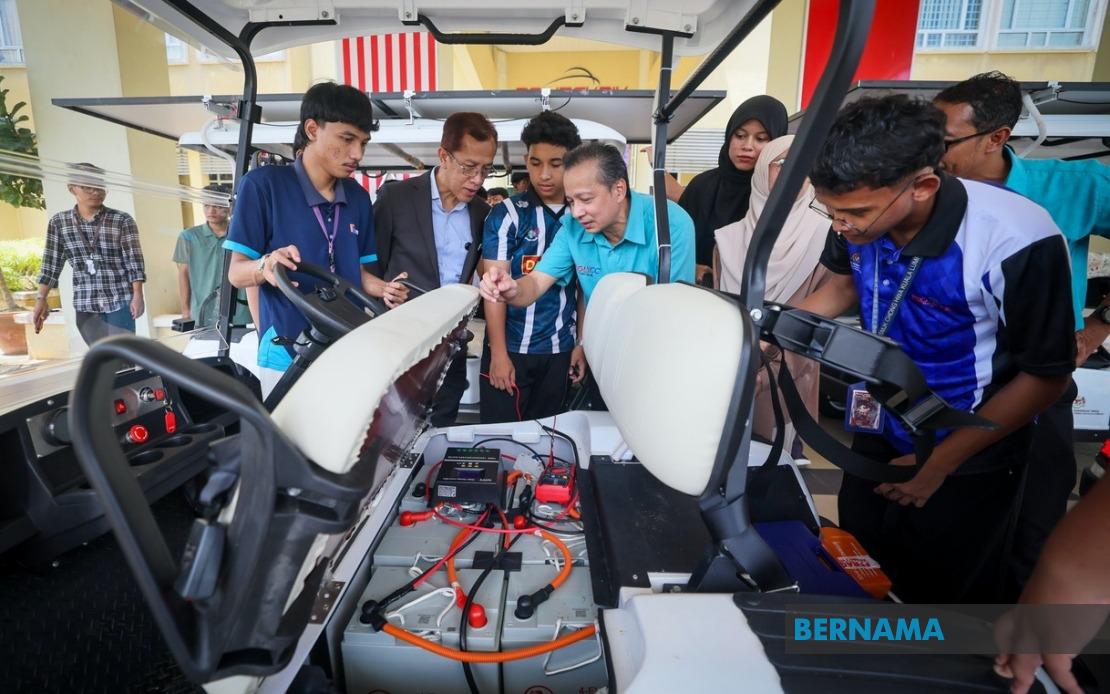
Jeli Kelantan Polytechnic has unveiled Kelantan's first solar-powered buggy cars, marking a significant step in the state's embrace of renewable energy technology and green skills training. The vehicles, showcased on July 26, represent the culmination of an intensive one-month development cycle led by 20 third-semester students pursuing the Diploma in Electrical Engineering (Green Energy) programme, under the supervision of lecturer Chung Boon Chuan.
The ambitious Solar Buggy Car Technology Innovation Project consumed nearly RM300,000 in resources and represents far more than a mechanical curiosity. Each buggy car features an integrated solar panel system that charges onboard batteries using sunlight, substantially reducing reliance on conventional electricity supply. The polytechnic now operates six completed units—four four-seater vehicles and two two-seaters—each representing approximately RM40,000 in development and installation costs. This hands-on approach transforms abstract principles of renewable energy into tangible, functional technology that students can directly apply and understand.
Polytechnic director Mohd Zamre Ab Rahman framed the project as a natural extension of the institution's broader sustainability mission. The development aligns with the polytechnic's commitment to operate as a genuinely green campus, progressively substituting fossil fuel dependency with renewable alternatives. Rather than remaining confined to laboratory experiments, the solar buggy initiative demonstrates how educational institutions can pioneer practical applications of emerging technologies while simultaneously preparing graduates for genuine industry demand. This dual purpose—educational and commercially viable—distinguishes the project from purely academic exercises.
The surge in student interest in the green energy programme itself testifies to shifting employment landscapes across Malaysia. The Diploma in Electrical Engineering (Green Energy) launched merely a year prior in July 2023, yet enrolment has doubled from 40 to 80 students for the current academic year. This expansion reflects both regional economic development and changing workforce expectations in Kelantan specifically. The state's energy infrastructure is evolving rapidly, with substantial solar farm investments materialising in localities such as Tok Uban and Pasir Mas, creating tangible employment pathways for graduates with green energy credentials.
Kelantan's emerging renewable energy sector provides essential context for understanding the polytechnic's strategic positioning. As Malaysia pursues its commitment to renewable energy targets and reduced carbon emissions, states like Kelantan are transitioning from traditional economic bases toward energy production hubs. The solar farm developments underway demonstrate serious state and federal commitment to this trajectory. For a polytechnic serving a historically agriculture-dependent region, pivoting toward green technology training represents intelligent workforce development, ensuring that local graduates possess marketable skills aligned with actual employer requirements.
Government support has fortified this institutional vision substantially. The Ministry of Higher Education allocated RM2 million to Jeli Kelantan Polytechnic during the previous fiscal year, specifically earmarked for upgrading laboratories and acquiring contemporary equipment for green energy education. This substantial investment signals recognition that technical vocational institutions require modern infrastructure to deliver credible training in rapidly advancing fields. Without adequately equipped facilities, even well-designed curricula cannot adequately prepare students for industry standards they will encounter post-graduation.
The commercialisation pathway outlined by director Mohd Zamre introduces another dimension to this initiative. The polytechnic has signalled willingness to accept orders from private organisations and government agencies seeking solar panel installations on buggy vehicles. This entrepreneurial stance transforms the institution from exclusively educational service provider into technology implementer and systems integrator. Students gain invaluable exposure to client management, project execution, troubleshooting, and real-world constraints that classroom instruction inevitably cannot fully simulate. Simultaneously, the polytechnic generates revenue streams that can reinvest into further infrastructure improvements and faculty development.
For Malaysian vocational education broadly, this project offers an instructive model. Increasingly, polytechnics and technical colleges must transcend traditional teaching paradigms and evolve into innovation hubs where learning integrates seamlessly with production. The compressed timeline—developing functional solar buggy systems within approximately one month—demonstrates what becomes possible when institutions combine motivated students, competent instructors, adequate resources, and clear technological objectives. This intensity contrasts sharply with conventional semester-long courses that may never culminate in functioning prototypes or market-ready applications.
The implications for Southeast Asian technical education extend beyond Kelantan's borders. As the region collectively pursues energy transition and net-zero objectives, demand for renewable energy expertise will intensify across Malaysia, Thailand, Vietnam, and Indonesia. Institutions that establish credible track records developing and deploying green technologies will attract international partnerships, student exchanges, and collaborative research opportunities. Jeli Kelantan Polytechnic's visible commitment positions it advantageously within these emerging networks, potentially attracting investment and talent from across the region.
Student capability demonstrated through this project deserves particular emphasis. The fact that third-semester students—individuals still early in their technical training—successfully engineered functional renewable energy systems speaks to programme design quality and pedagogical effectiveness. Rather than passively absorbing lectures about solar technology, these students engaged in authentic engineering problem-solving: designing systems, integrating components, troubleshooting failures, and achieving operational functionality. This experiential learning imparts confidence and capability that substantially exceeds what traditional examinations can measure.
Looking forward, the solar buggy initiative establishes momentum that the polytechnic should sustain and expand. Subsequent student cohorts could refine existing designs, improve efficiency metrics, reduce per-unit costs, or develop specialised variants serving different customer requirements. Publishing technical findings, presenting at professional conferences, and documenting lessons learned would elevate the project's profile within Malaysia's engineering and vocational education communities. External recognition and peer validation strengthen institutional reputation and attract superior student applicants.
The broader sustainability narrative merits attention as well. Each solar-powered buggy car displaced from conventional electricity dependency contributes marginally to reduced national grid demand and lower carbon emissions. Multiplied across numerous institutions and organisations adopting similar technologies, these cumulative impacts become genuinely material. Moreover, by demonstrating that functional renewable energy systems are genuinely achievable—not theoretical aspirations confined to wealthy developed nations—the project bolsters public and organisational confidence in Malaysia's green energy transition feasibility and economic viability.

