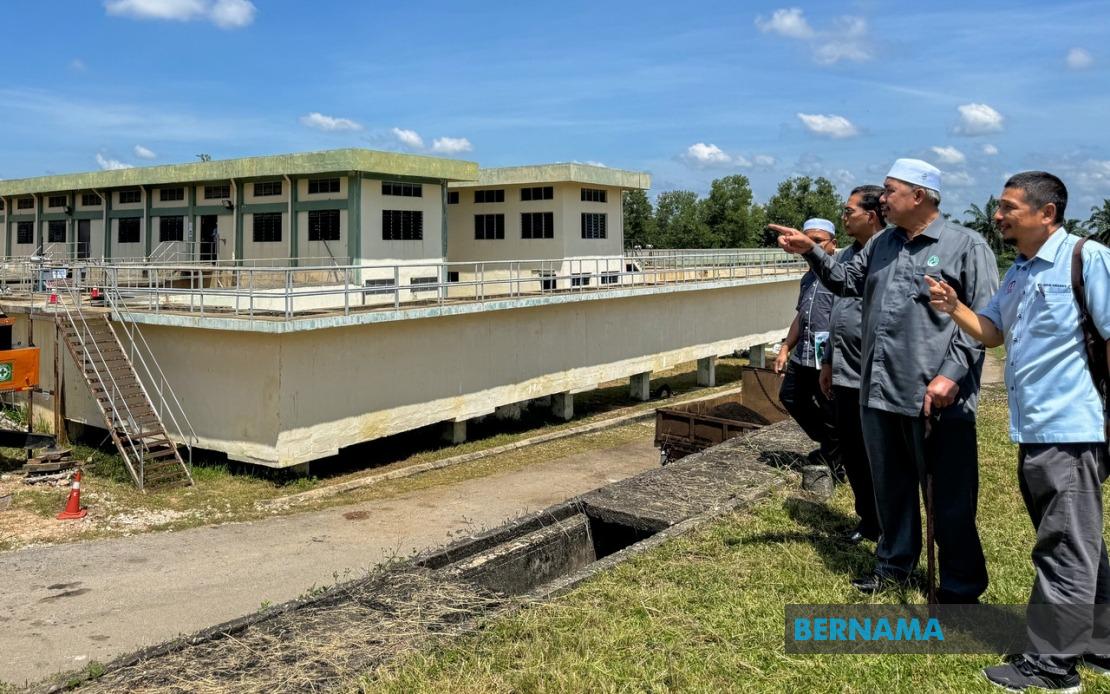
Residents across three districts in Kelantan are set to experience significantly improved water supply reliability starting in September, following completion of a major upgrade to the state's Merbau Chondong Water Treatment Plant. The RM11.5 million project will nearly double the facility's treated water production capacity, addressing longstanding supply constraints that have affected roughly 34,000 household and commercial account holders in Machang, Pasir Puteh, and southern Kota Bharu. The initiative represents a tangible step in the state government's broader effort to resolve water security challenges affecting a quarter-million user accounts across Kelantan.
The enhancement will boost the plant's daily output from 45 million litres to 80 million litres of treated water, a transformation made possible through the installation of advanced Xylem Underdrain Leopold filtration technology. According to Datuk Dr Izani Husin, chairman of the Kelantan Public Works, Infrastructure, Water and Rural Development Committee, this system enables the facility to process between 70 to nearly 90 million litres of raw water daily without compromising quality—a critical threshold the operator Air Kelantan Sdn Bhd had previously hesitated to cross. The constraint reflected genuine operational concerns; earlier attempts to increase throughput risked degrading the purity of distributed water, creating a dilemma between quantity and quality that the new infrastructure definitively resolves.
The filtration upgrade delivers tangible improvements in water quality metrics that directly impact consumer experience and health outcomes. The Nephelometric Turbidity Unit reading—the standard measure of water clarity and particle content—has been reduced from above 10 NTU to 3 NTU, bringing the supply well within international quality standards. For customers, this means clearer water emerging from taps, reduced sediment accumulation in household plumbing, and greater assurance regarding the safety of their domestic water supply. The technical refinement underscores how modern water treatment methods can simultaneously increase volume and enhance purity, addressing two previously competing objectives.
Completion of the upgrade is now expected by the end of July, with distribution through the enhanced system commencing in early September. This timeline reflects the coordination required between state authorities, water utility operators, and contractors to transition from legacy infrastructure to modernised treatment protocols without disrupting existing supply arrangements. The phased approach—finishing construction first, then initiating customer distribution—allows for system validation and operator training, reducing the risk of service interruptions during the transition period.
Even as this immediate upgrade addresses pressing supply deficits, state planners are advancing an ambitious longer-term vision that includes establishing dedicated treatment infrastructure to serve Machang's growing population and economic base. The proposed Machang 1 Water Treatment Plant, valued at RM120 million, would generate 50 million litres daily and is scheduled for completion by 2030. This facility represents strategic decentralisation of water treatment capacity, allowing the Merbau Chondong plant to redirect its enhanced output to other districts experiencing shortages rather than concentrating distribution demand on a single aging facility. The project is currently in the procurement phase, with final agreements between the Kelantan state government and Pengurusan Aset Air Berhad (PAAB) pending before contractor selection can proceed.
The phased expansion programme reflects realistic assessments of Kelantan's water infrastructure challenges. Air Kelantan Sdn Bhd has made progress resolving chronic supply issues, with approximately 70 percent of problems affecting the state's 270,000 user accounts now addressed. However, the operator has set a target of at least 90 percent resolution by 2035, indicating recognition that the remaining cases involve more complex technical or geographical constraints. This extended timeline suggests that while immediate interventions like the Merbau Chondong upgrade can unlock supply improvements relatively quickly, achieving comprehensive service stability requires sustained capital investment and infrastructure development across multiple years.
For Malaysian policymakers and regional water managers, Kelantan's experience illustrates how ageing water treatment facilities can become critical bottlenecks in state development. The previous operational ceiling at 45 million litres daily was not an insurmountable engineering barrier but rather reflected legitimate hesitancy about maintaining quality standards under stress. The Merbau Chondong upgrade demonstrates that introducing modern filtration technologies can overcome such constraints, enabling existing plants to serve substantially larger populations without requiring complete facility replacement. This approach offers relevant lessons for other Malaysian states managing rapid urbanisation and population growth with inherited infrastructure.
The geographic distribution of beneficiaries across Machang, Pasir Puteh, and southern Kota Bharu indicates that water supply constraints extend across multiple municipalities rather than concentrating in a single urban centre. This pattern suggests systemic capacity limitations in the northern Kelantan region rather than localised problems, reinforcing the logic behind building additional treatment plants rather than perpetually expanding existing facilities. The Machang 1 plant proposal specifically targets infrastructure concentration in one of the affected districts, a targeted response to demographic and demand patterns in that locality.
Accessibility and affordability considerations remain implicit in this infrastructure narrative. While the article does not address pricing or payment structures, the emphasis on serving 34,000 account holders—encompassing both residential and likely small commercial users—indicates that these supply improvements should broadly benefit households and small businesses throughout the affected districts. In Malaysian contexts where water security directly influences quality of life and economic productivity, enhanced supply stability translates into tangible benefits for agricultural operations, household consumption, and commercial activities.
The technical achievements also merit consideration within Malaysia's broader water sector modernisation trajectory. The adoption of Xylem Underdrain Leopold technology positions Kelantan alongside other regional authorities implementing contemporary treatment methods rather than relying on decades-old filtration approaches. As Southeast Asian nations face mounting pressure from climate variability, population concentration, and industrial demand, capacity building in water treatment becomes increasingly central to competent governance and sustainable development planning.

