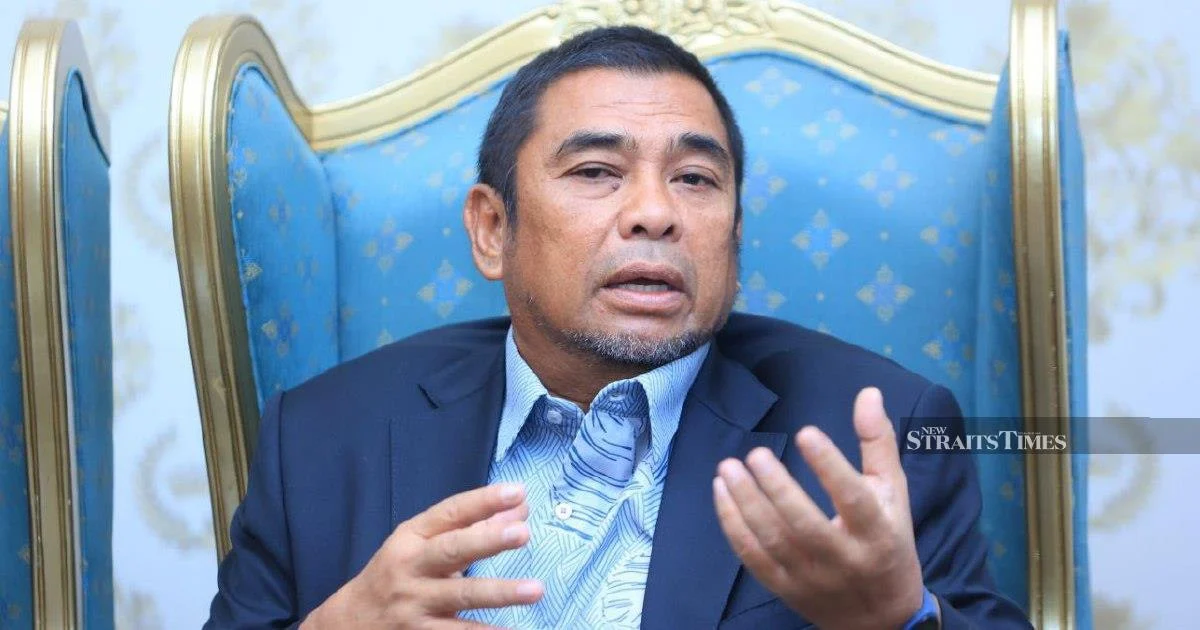
The Kelantan branch of Umno has used Pas's recent internal directive supporting Barisan Nasional (BN) candidates in the Johor state election as ammunition in its ongoing political dispute with the Islamist party, arguing that the instruction amounts to an implicit admission that previous accusations were baseless. The term "Umdap", which has circulated in Malaysian political discourse as a critical descriptor of Umno, has long been contested by the party, which views the label as a weapon deployed by rivals to undermine its political standing.
The strategic backdrop for this latest exchange lies in the complex realignment of Malaysian politics, where traditional alliances have fractured and reformed multiple times in recent years. Kelantan, a state where Pas has held considerable electoral influence, represents particularly fertile ground for such disputes. Umno's assertion that Pas's endorsement of BN candidates reflects a broader acknowledgement of shared political interests runs counter to the public positioning both parties have maintained, making the claim particularly pointed in the context of ongoing jostling for political advantage.
Pas's directive to its membership represents a tactical pivot that has implications extending well beyond the immediate Johor electoral contest. The instruction signals that despite public rhetorical distance between the two major Malay-Muslim political organisations, practical collaboration remains possible when circumstances warrant. From Kelantan Umno's perspective, such cooperation implicitly validates the party's legitimacy and suggests that previous attacks on its character were merely expedient criticism rather than principled opposition.
The "Umdap" terminology, which Umno has characterised as derogatory and politically motivated, has featured prominently in inter-party disputes. Kelantan Umno's framing of Pas's latest action as vindication reflects a broader strategy of delegitimising opposition criticisms by portraying them as tactical rather than substantive. This rhetorical move aims to reshape perceptions among Malay-Muslim voters who form the core electorate that both organisations compete for intensely.
Political analysts observing Malaysian electoral dynamics note that such interpretations of rival parties' actions are rarely neutral exercises in fact-finding; they represent attempts to narrate political developments in ways that advantage one's own position. Kelantan Umno's characterisation of Pas's directive therefore serves multiple functions simultaneously: it challenges the credibility of previous attacks, it suggests that ideological differences between the parties are less fundamental than claimed, and it positions cooperation as natural rather than opportunistic.
The Johor election context adds significance to this exchange. Both Umno and Pas maintain substantial bases within Johor's electorate, and the state represents contested political territory where either party's performance carries broader implications for national politics. Pas's instruction to support BN candidates thus carries practical consequence beyond symbolic value, potentially influencing voter behaviour among Pas supporters who might otherwise have fragmented across competing options.
Kelantan's particular importance in this dispute stems from the state's recent political history. As a Pas-governed entity, Kelantan has become a key proving ground for Islamist governance in Malaysia, and Umno's presence within the state constitutes a consistent challenge to Pas's political hegemony. The party's Kelantan chapter therefore speaks with special interest when discussing Pas's actions and what they reveal about inter-party dynamics.
The substance of the "Umdap" designation itself warrants consideration in evaluating Kelantan Umno's claims. Whether previous characterisations constituted serious substantive criticism or merely tactical labelling depends partly on the original context in which the term circulated. Umno's insistence that the label represented slander suggests it views the accusations as entirely without factual foundation, whereas critics might argue that any label used in political discourse carries at least some basis in perceived characteristics.
Looking forward, Pas's directive to support BN candidates may reshape how both parties engage with each other ahead of future electoral contests. If such cooperation becomes more routine or transparent, it could accelerate a broader political realignment already underway in Malaysian politics. Conversely, if the directive proves exceptional and temporary, it might be interpreted differently by different constituencies, with some viewing it as pragmatic coalition-building and others seeing opportunism.
For Malaysian voters attempting to navigate increasingly complex party alignments, the discourse surrounding Pas's directive and Umno's response illustrates how political narratives are actively constructed rather than passively observed. Kelantan Umno's interpretation of the directive as vindication against the "Umdap" label represents one available narrative among several possible readings of the same event, highlighting the extent to which electoral politics operates simultaneously in domains of action and discourse.

