Kelantan has successfully maintained forest coverage exceeding the national benchmark, with 778,708.34 hectares of forested land representing 51.79 per cent of the state's total area, the state legislative assembly heard on Monday. The figure demonstrates the northeastern state's ongoing alignment with the Peninsular Malaysia Forestry Policy, which mandates that at least half of the country's land mass remain under forest and tree cover. This achievement underscores Kelantan's commitment to balancing environmental stewardship with economic development, a tension that remains critical across Southeast Asia where rapid industrialisation often pressures natural resources.
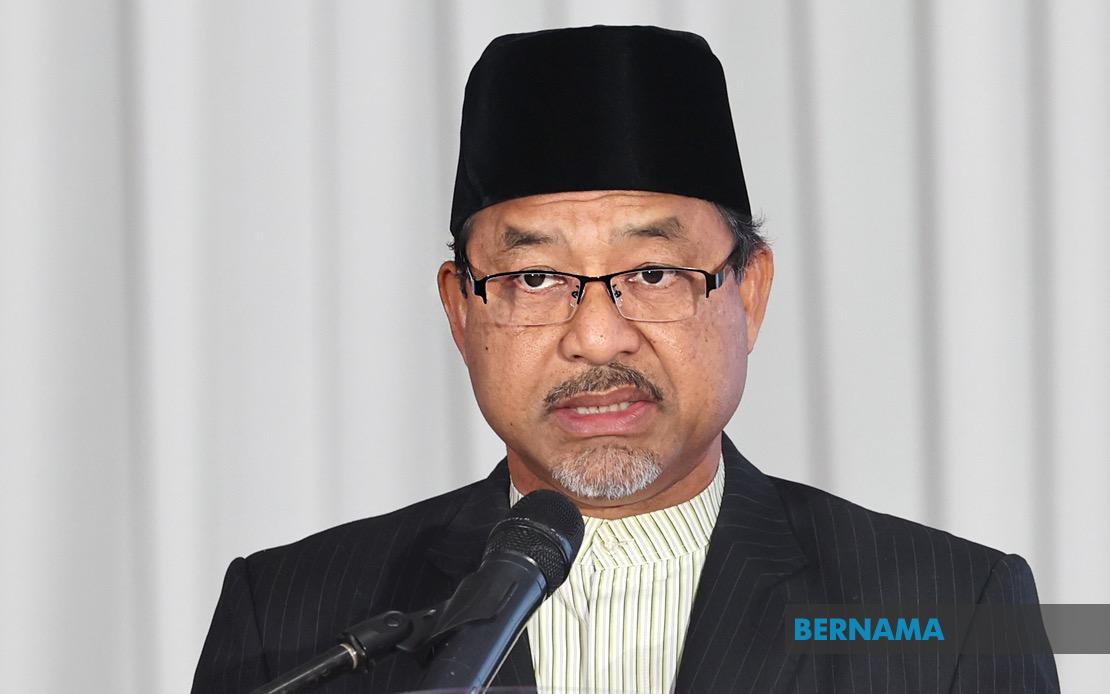
Menteri Besar Datuk Mohd Nassuruddin Daud attributed the sustained forest cover to a multi-pronged approach adopted by the state government working in concert with the Kelantan Forestry Department. The administration has prioritised the identification of government-owned land suitable for gazetting as Permanent Reserved Forests, a legal designation that provides stronger protection against unauthorised clearing and conversion. Additionally, the state has moved to gazette protected forests in accordance with the forest function classifications outlined in Section 10(1) of the National Forestry Enactment, a legal framework updated in 2025 to reflect evolving environmental standards across Malaysia.
Beyond formal land designation, Kelantan has embraced active restoration and afforestation initiatives. The state government participates in the broader Greening Malaysia campaign, which encompasses tree-planting programmes designed to expand forest coverage and enhance biodiversity in areas where natural forest has been degraded or lost. These programmes reflect a recognition among Malaysian policymakers that maintaining forest cover requires not merely preservation of existing reserves but also proactive regeneration of degraded landscapes. For Malaysian and regional observers, such initiatives carry significance as the country grapples with deforestation pressures arising from logging, agricultural expansion, and infrastructure development.
A defining feature of Kelantan's approach is its commitment to what state leadership describes as a balanced strategy—one that seeks to reconcile the protection of Permanent Reserved Forests with the legitimate economic aspirations of communities reliant on land-based activities. This philosophy acknowledges that blanket conservation without regard to livelihood needs often generates political resistance and proves unsustainable in practice. The state's framing emphasises sustainable development, a principle centred on meeting present requirements without compromising the capacity of future generations to satisfy their own needs. In the Malaysian context, where rural populations have traditionally depended on forestry and agriculture, this nuanced positioning carries political weight.
Technological innovation has emerged as a cornerstone of Kelantan's forest management strategy. The state government has deployed advanced monitoring systems to detect changes in forest area and identify potential encroachment at early stages, allowing for swift intervention before unauthorised conversion becomes entrenched. These systems leverage satellite imagery, geospatial analysis, and digital mapping tools to maintain real-time awareness of forest conditions across the state's vast reserves. The use of such technologies reflects a broader global trend toward data-driven environmental management and positions Kelantan as aligned with international best practices in forest governance.
Verification and enforcement mechanisms underpin the state's monitoring framework. Information regarding forest area changes or suspected encroachment is not immediately acted upon; instead, it undergoes verification through on-ground patrols and field inspections conducted by forestry personnel. This two-step process serves multiple purposes: it reduces false alarms arising from satellite imagery misinterpretation, it documents evidence for potential legal proceedings, and it ensures that enforcement action rests on a foundation of corroborated facts rather than algorithmic flagging alone. For Malaysia's forest management apparatus, which has periodically faced criticism regarding inconsistent enforcement, this methodical approach represents a response to demand for more rigorous accountability.
Kelantan's forest statistics assume particular importance within the broader Malaysian context. The state accounts for a substantial portion of Peninsular Malaysia's remaining natural forest, making its conservation trajectory consequential for national environmental targets and regional biodiversity. The northeastern state's success in maintaining above-threshold forest coverage provides a counterpoint to concerns about deforestation in other Malaysian jurisdictions and suggests that integrated management approaches combining legal protection, active restoration, technological monitoring, and community engagement can deliver measurable results. However, sustaining these gains over coming decades will require sustained political commitment and adequate resource allocation.
The state's forest cover figures also carry implications for Malaysia's international environmental obligations. The country has made commitments under various regional and global frameworks regarding forest conservation and climate action, targets that depend partly on constituent states like Kelantan meeting their respective thresholds. As Southeast Asia faces increasing scrutiny regarding its forest management practices—driven by concerns about carbon emissions, biodiversity loss, and transboundary environmental impacts—state-level achievements assume heightened diplomatic significance. Kelantan's maintenance of forest cover above the 50 per cent threshold thus contributes to Malaysia's capacity to credibly represent itself as an environmentally responsible developing nation.
Looking forward, the sustainability of Kelantan's forest cover depends on several interconnected factors. Population growth, economic development pressures, and shifts in agricultural practices will continue to generate competing claims on land. Climate change may alter forest composition and resilience, potentially complicating management objectives. Regional dynamics, including demand for Malaysian timber and agricultural commodities, influence incentive structures around land use. The state government's articulation of a balanced approach suggests awareness of these challenges, yet translating principle into practice requires navigating complex political economy dynamics and securing consistent funding for forestry operations. For policymakers across Southeast Asia wrestling with similar dilemmas, Kelantan's strategy—combining legal designation, active management, technological innovation, and stakeholder engagement—offers a model worthy of sustained attention and rigorous evaluation.

