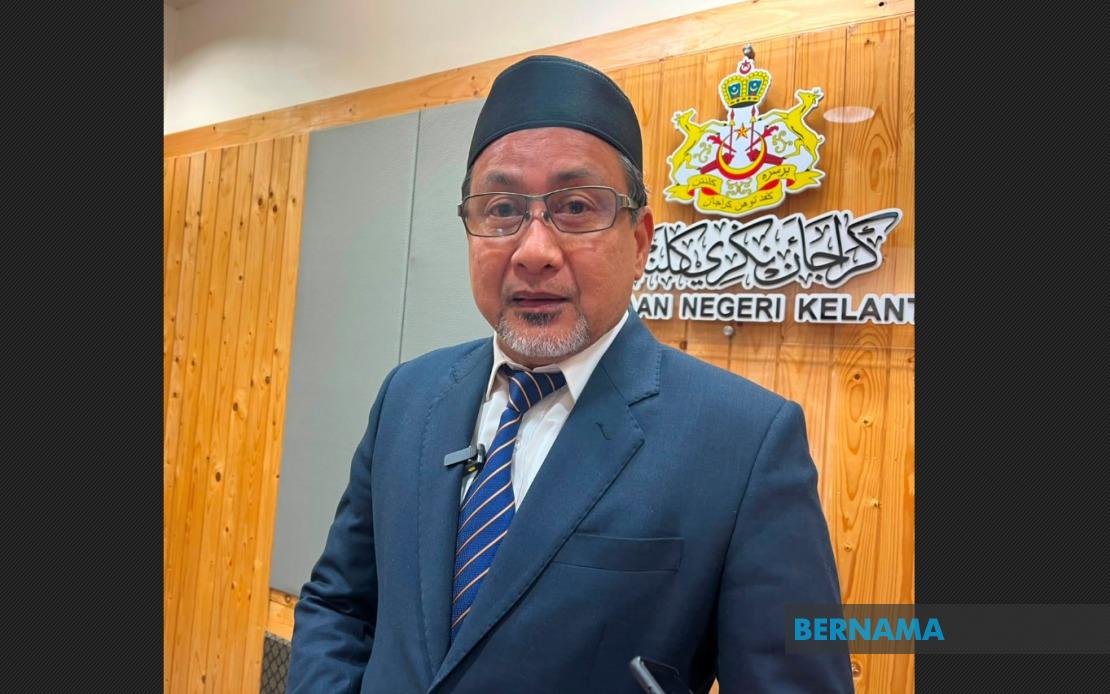
The Kelantan State Assembly has issued a directive requiring all Elite League matches to cease immediately whenever dangerous weather conditions emerge, with particular emphasis on thunderstorms and torrential downpours. The order comes in response to escalating safety concerns surrounding outdoor sporting events in the region, and represents a significant tightening of weather-related protocols across the state's competitive football landscape.
Zamakshari Muhamad, who chairs the state's Youth, Sports, NGOs and Community Unity Committee, articulated the government's reasoning during a press conference held at the Kota Darulnaim Complex in Kota Bharu. He underscored that protecting the welfare of athletes and all personnel associated with matches constitutes the administration's foremost concern. The committee chair elaborated that any occurrence of severe thunderstorm activity must trigger an immediate cessation of play, thereby eliminating the possibility of participants facing electrocution or other weather-related hazards.
The announcement follows a sobering incident that unfolded across the border in neighbouring Thailand. A player representing Golok FA was fatally struck by lightning during a Golok FA Cup fixture at Santiphap Stadium in Sungai Golok, Narathiwat province. In the same incident, a Malaysian national suffered injuries from the lightning strike. The tragedy underscores the very real dangers that outdoor sporting events face when meteorological conditions deteriorate rapidly, particularly in Southeast Asia where monsoon patterns frequently produce sudden, violent thunderstorms.
The timing of Kelantan's directive carries particular weight given its geographic positioning relative to the Thai border region. Communities in northern Kelantan experience similar climatic patterns to those in nearby Narathiwat, meaning lightning strike risks are not theoretical but rather embedded within the local seasonal weather dynamics. By implementing proactive suspension protocols now, state authorities aim to prevent replicating the circumstances that led to the cross-border fatality. The directive effectively acknowledges that no sporting competition, regardless of its prestige or commercial value, justifies exposing participants to potentially fatal atmospheric conditions.
Beyond the immediate weather safety mandate, Kelantan's government has simultaneously moved to regulate the use of the state's name in connection with sporting and community initiatives. This secondary policy shift arose from a separate controversy involving the Kelantan International Marathon, which attracted significant social media attention after organisers allegedly collected entry fees before subsequently cancelling the event. Complicating matters further, the marathon organisers maintained no official relationship with the state government, yet their use of the Kelantan nomenclature created public confusion about the event's legitimacy and official sanction.
Zamakshari clarified that henceforth, any programme—whether organised by non-governmental organisations or private entities—seeking to incorporate the name "Kelantan" must first obtain formal approval from the state administration. This regulatory framework addresses a growing problem whereby external parties exploit place-name recognition to lend credibility to ventures that lack genuine government endorsement. The requirement effectively establishes a gatekeeping mechanism preventing fraudulent or misrepresented events from trading on the state's brand and reputation.
The marathon controversy reveals vulnerabilities in how state names and branding function within the modern digital landscape. When participants commit money to events that subsequently vanish, with organisers positioned outside state control, individual residents and investors suffer reputational and financial damage. The Kelantan government's intervention reflects recognition that brand management now constitutes a legitimate governmental concern in protecting both citizen interests and the state's own credibility in an era where viral misinformation spreads instantaneously across social platforms.
For the broader Malaysian sporting context, Kelantan's weather suspension directive offers a template that other state associations might consider adopting. Monsoon seasons affect multiple regions across the country annually, yet formal protocols mandating match cancellations during lightning threats remain inconsistently implemented. State-level uniformity could establish clearer expectations across football-playing communities regarding when conditions have become genuinely unsafe. This standardisation might also encourage facility managers and match organisers to invest in weather monitoring technology and rapid communication systems.
The dual-pronged approach—addressing both immediate safety and administrative oversight—reflects an evolution in how Malaysian state governments conceptualise their sporting stewardship responsibilities. Rather than merely licensing events, authorities increasingly recognise obligations to ensure conditions support safe participation while simultaneously protecting the integrity of state institutions against misuse of their identity. This represents a maturation of governance frameworks surrounding sports administration at the sub-national level.

