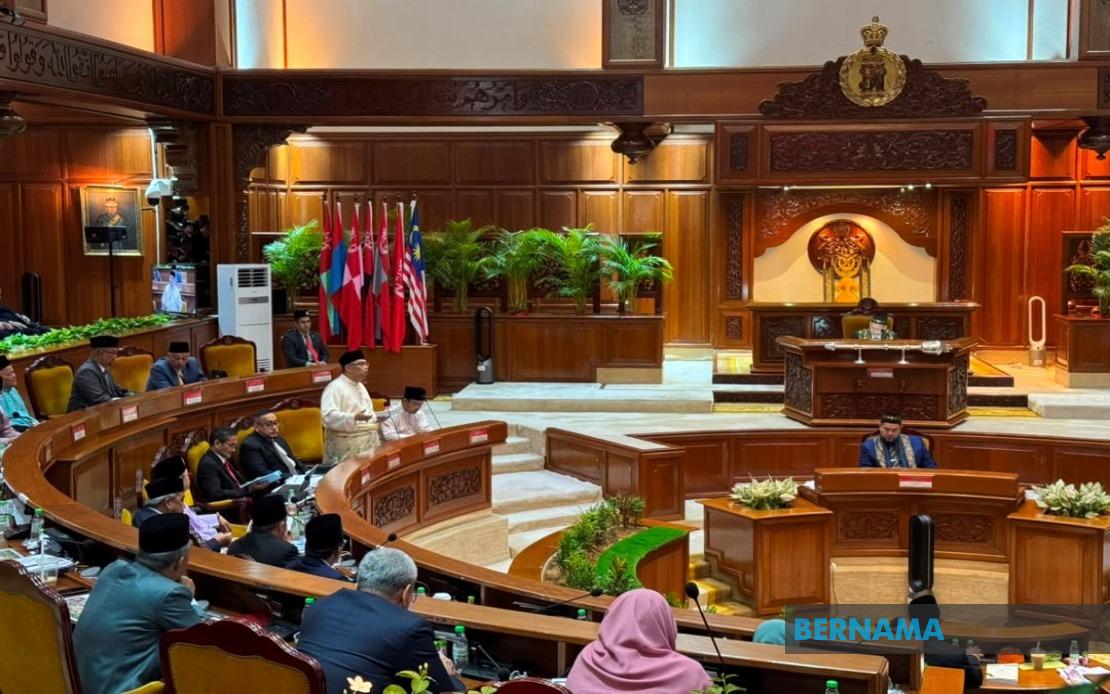
The Kelantan state legislative assembly has successfully passed the Syariah Criminal Offences (Kelantan) Bill 2026, representing a carefully reconstructed legal framework designed to address shortcomings identified by Malaysia's highest court. Introduced by Deputy Menteri Besar Datuk Dr Mohamed Fadzli Hassan and subsequently tabled by Menteri Besar Datuk Mohd Nassuruddin Daud, the Bill received unanimous approval following debate and winding-up speeches, with Kelantan state assembly Speaker Datuk Mohd Amar Nik Abdullah presiding over the historic sitting.
The new legislation comprises nine distinct sections containing 62 clauses and supplementary schedules, representing a comprehensive overhaul of Kelantan's approach to Syariah criminal offences. The Bill introduces multiple substantive reforms intended to address both technical and jurisdictional concerns, including revised provisions governing obligatory prayer observance, protections for bodily integrity and organ safeguarding, intellectual safeguards, and a restructured penalty framework. Particularly notable is the legislation's prioritisation of whipping as a primary punishment mechanism alongside an updated compound settlement procedure, reflecting the state's determination to maintain robust enforcement mechanisms within constitutional boundaries.
This legislative development carries significant weight given Kelantan's contentious legal history. In February 2024, Malaysia's Federal Court delivered a landmark 8-1 decision that invalidated 16 of 18 provisions contained in the Kelantan Syariah Criminal Code (I) Enactment 2019, fundamentally challenging the state's legislative authority. The court determined that numerous provisions exceeded the state legislature's constitutional competency, as certain offences fell under exclusive federal jurisdiction. This ruling emerged following a petition initiated by a Kelantan-based lawyer, triggering broader debate throughout Malaysia regarding the constitutional division of powers between federal and state governments in administering Syariah criminal law.
Menteri Besar Mohd Nassuruddin emphasised that the new Bill underwent meticulous development processes before reaching the assembly floor, stressing that its creation was neither hasty nor superficial. He articulated that the legislation represents a revitalisation grounded in careful enhancement across multiple developmental stages, positioning it as a natural evolution rather than a fundamental departure from existing frameworks. The Menteri Besar explicitly referenced continuity with foundational principles already embedded within the 2019 enactment, suggesting that the 2026 Bill attempts to preserve legislative intent whilst navigating Federal Court constraints.
The debate involved six state assemblymen representing constituencies spanning Pasir Tumboh, Melor, Galas, Jelawat, Kota Lama, and Chempaka, indicating broad engagement across the state's political establishment. This multi-constituency participation demonstrates that the Bill attracted substantive discussion prior to its passage, though the unanimous approval suggests fundamental alignment among assemblymen regarding the revised framework's necessity and content. The absence of dissenting voices points to recognition that Kelantan needed legislative renewal to address the Federal Court's constitutional objections.
For Malaysian observers, this development illuminates ongoing tensions within the federation's constitutional architecture. States possessing concurrent Syariah jurisdiction—including Kelantan, Terengganu, and others—operate within carefully delineated boundaries established by the Federal Constitution. The 2024 Federal Court judgment effectively narrowed these boundaries, restricting state legislative capacity in matters the court deemed federal prerogatives. Kelantan's response demonstrates how state governments navigate such constraints through legislative reconstruction rather than confrontation.
The international dimension merits consideration as well. Southeast Asian nations with federal structures combining secular and religious legal systems remain relatively uncommon, making Malaysia's ongoing constitutional negotiation particularly significant. How Kelantan resolves tensions between state Syariah jurisdiction and federal authority influences broader regional conversations regarding religious law and federalism.
For ordinary Malaysians, particularly Kelantan residents, the practical implications remain unclear without detailed clause analysis. The Bill's emphasis on whipping penalties and bodily integrity protections suggests substantive criminal justice reforms, yet the extent to which these provisions will survive potential future constitutional challenge remains speculative. Observers note that comprehensive constitutional clarity may ultimately require Federal Court adjudication of the 2026 Bill itself.
The legislative passage also reflects Kelantan's political circumstances. The state remains governed by parties emphasising Islamic governance and conservative Syariah interpretations, making strong Syariah criminal legislation a priority consistent with prevailing political ideology. The unanimous passage suggests cross-party acceptance that some revamped framework was necessary and preferable to legislative paralysis following the 2024 Federal Court decision.
Moving forward, legal scholars and civil society organisations will scrutinise whether the 2026 Bill's provisions successfully withstand constitutional challenge. The Bill's architects clearly attempted to address federal jurisdiction concerns through careful drafting, yet similar confidence accompanied the 2019 enactment before the Federal Court intervened. This cycle may repeat unless fundamental clarification emerges regarding constitutional boundaries between federal and state Syariah legislative authority.
The passage also carries implications for other states contemplating Syariah criminal legislation or reform. Kelantan's experience demonstrates both the possibilities and limitations of state-level religious law-making within Malaysia's constitutional framework, providing instructive precedent for legislative initiatives elsewhere.
Ultimately, Kelantan's new Syariah Criminal Offences Bill represents a measured attempt to maintain robust religious law provisions whilst acknowledging Federal Court constitutional constraints. Whether this legislative reconstruction succeeds remains an open constitutional question, but its unanimous passage signals that Kelantan's political establishment views revamped legislation as preferable to the legislative void created by the 2024 court decision.

