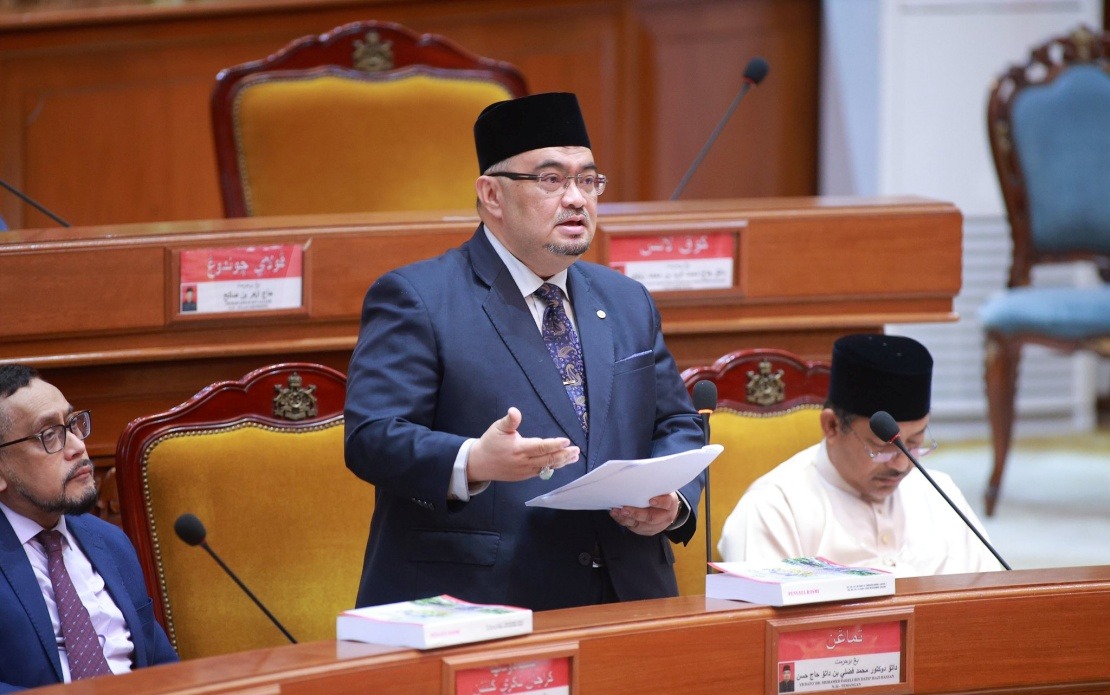
Kelantan's state government has intensified its battle against illegal land exploitation, opening 63 investigation papers related to encroachment and unlawful mining operations from January through June this year. The coordinated enforcement push reflects mounting official concern over resource theft in the eastern state, with Datuk Dr Mohamed Fadzli Hassan, the Deputy Menteri Besar, outlining the scale of the problem and authorities' response during a Kelantan State Legislative Assembly session in Kota Bharu.
The 63 cases emerged from 77 separate enforcement sweeps concentrated in four problem zones: Gua Musang, Kuala Krai, Jeli, and Tanah Merah districts. These locations have long been identified as epicentres of unlawful mining and land occupation, suggesting that despite previous control measures, illicit operations continue to flourish. The disparity between the number of operations and investigation papers—77 against 63—indicates that some enforcement actions resulted in multiple charges or combined charges within single investigation dossiers, reflecting the complexity of cases involving networked operators.
A significant outcome of these field operations has been the seizure of 65 excavating machines and related mining equipment, with authorities valuing the confiscated assets at RM15.8 million. The removal of heavy machinery represents a deliberate strategy to dismantle the operational capacity of illegal mining networks. Excavators and bulldozers form the backbone of large-scale land clearance and mineral extraction, so their confiscation effectively hampers repeat offences and raises the financial cost of resuming illegal activities for perpetrators. This asset-focused enforcement approach echoes successful anti-crime strategies elsewhere in Malaysia and Southeast Asia, where targeting logistics and equipment has proven more effective than relying on prosecutions alone.
The investigation papers have been forwarded to the Prosecution Unit of the Kelantan Land and Mines Office for subsequent legal proceedings. This institutional pathway ensures that cases move beyond initial enforcement toward formal prosecution, though delays and case backlogs remain a persistent challenge within Malaysia's justice system. The role of the dedicated Mines Office unit signals that Kelantan recognises illegal mining as a specialised criminal category requiring dedicated prosecutorial expertise rather than generalised handling through ordinary courts.
When pressed on whether middlemen, financiers, or protected operators exist within these networks—a concern that assembly members from both PAS and BN parties raised—Mohamed Fadzli acknowledged the likelihood of complex supply chains. He committed to police referrals and deeper investigations once intelligence identifies such figures, signalling awareness that surface-level enforcement against individual miners or equipment operators leaves the underlying economic structure intact. Many illegal mining syndicates in Malaysia operate through layers of intermediaries who shield principals from direct liability, a problem that has historically complicated enforcement in Sabah, Sarawak, and Kelantan alike.
The deputy state leader emphasised that authorities already possess knowledge of land ownership patterns, which provides a foundation for tracing financial interests and operational control. This statement hints at a transition from reactive enforcement—stopping specific illegal acts—toward proactive investigation of property records and financial flows. Such intelligence-led approaches require coordination between land registry bodies, taxation authorities, and law enforcement, a level of inter-agency collaboration that remains inconsistent across Malaysian states.
Recognising the inadequacy of existing penalties, the state government has initiated discussions with the Kelantan Land and Mines Office to strengthen criminal sanctions for repeat violations. Current penalties, it appears, have proven insufficient to deter organised operators from resuming activities after brief enforcement pauses. Stiffer fines and longer imprisonment terms could raise the threshold at which illegal mining remains economically rational for perpetrators, though enforcement consistency matters equally. A RM500,000 fine means little if prosecution probability remains low, a dynamic that Kelantan's authorities must address alongside legislative reforms.
The concentration of illegal mining in Gua Musang and surrounding districts reflects broader regional geography. Gua Musang, straddling Kelantan and Pahang, sits atop mineral deposits and within an area where indigenous land rights disputes and historical logging concessions create regulatory ambiguity. This complex tenure backdrop allows informal operators to exploit legal grey zones, claiming quasi-legitimate access to resources. Similar dynamics exist across Sarawak and Sabah, where remote geography and competing land claims enable illegal extraction to flourish despite official policies against it.
For Malaysian investors and policymakers watching Kelantan's approach, the crackdown signals official seriousness but also exposes implementation challenges. Opening 63 investigation papers in six months suggests sustained institutional effort, yet outcomes—conviction rates, deterrence effects, recidivism data—remain unpublished. The absence of prosecutorial statistics makes it difficult to assess whether investigations translate into convictions and whether convicted parties face sentences severe enough to discourage continued operations or investment in illegal ventures.
The political dimensions merit attention as well. PAS-led Kelantan has faced criticism over environmental stewardship, particularly regarding forest protection and mineral resource management. This visible crackdown demonstrates responsiveness to legislative scrutiny and signals that state authorities take environmental and resource governance seriously, potentially shoring up legitimacy among constituents concerned about land degradation and ecological damage. Yet opposition members' questions about protected operators and middlemen suggest scepticism remains about whether enforcement reaches powerful interests or remains confined to lower-level perpetrators.
Beyond Kelantan, this enforcement surge reflects a nationwide pattern. Illegal mining and land encroachment drain state revenue, destabilise local communities, and degrade ecosystems across Malaysia. Peninsular states lack Sabah and Sarawak's exclusive regulatory control over minerals, creating coordination challenges between state and federal authorities. Kelantan's emphasis on seizing equipment and pursuing investigations into leadership structures offers lessons for other eastern corridor states struggling with similar problems, though resource constraints and political will ultimately determine success.
Moving forward, sustainable control of illegal mining in Kelantan will require not only tougher penalties and asset seizure but also income alternatives for affected communities, improved land administration to reduce tenure disputes, and consistent inter-agency coordination. The state government's willingness to review penalties and pursue upstream perpetrators suggests strategic thinking, yet implementation over months and years will test institutional capacity and political commitment.

