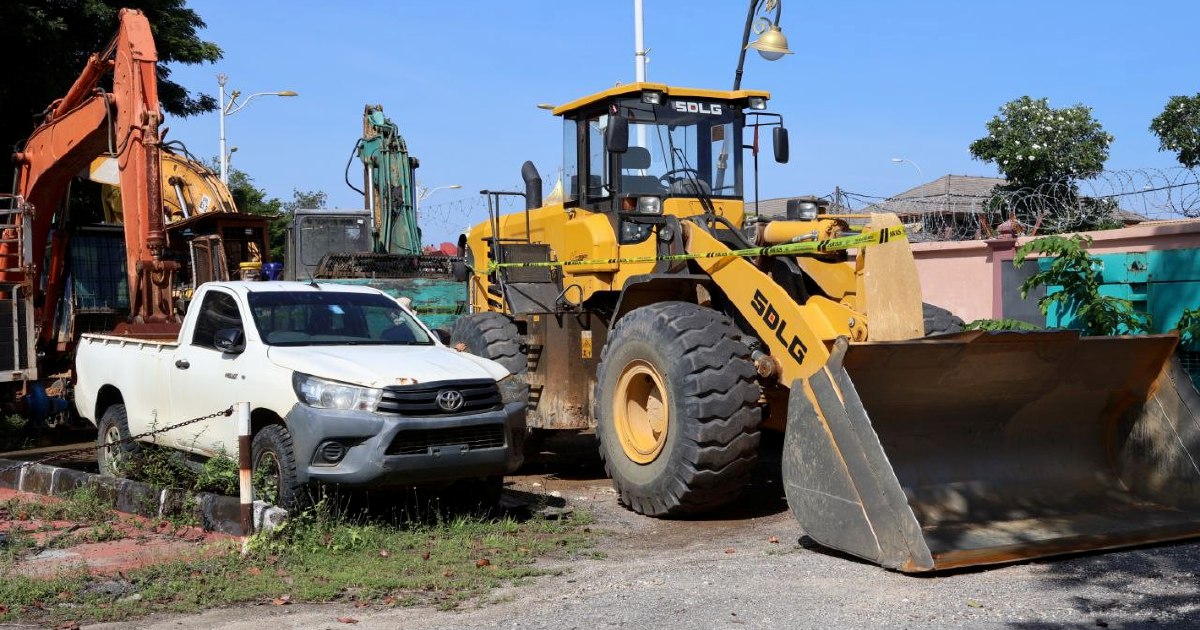
The Kelantan government has launched a comprehensive investigation into what appears to be a significant illegal gold extraction venture operating in the Gua Musang district, following the discovery and seizure of industrial-grade equipment estimated to be worth RM4.2 million. The discovery marks another instance of unauthorised mineral extraction in one of Malaysia's most resource-rich states, raising fresh concerns about enforcement challenges across the region's mining sector.
The confiscation of the heavy machinery represents a substantial intervention in underground economic activity that had apparently escaped official detection for a considerable period. The scale of equipment seized suggests the operation had reached an advanced stage of development, capable of processing substantial quantities of ore and sediment to extract gold at a commercial level. Authorities in Kota Baru confirmed that formal investigation procedures have now been initiated to uncover the full scope of the illegal mining network.
Gua Musang, situated in the interior of Kelantan, has historically been vulnerable to informal mining activities due to its geographical characteristics and relative remoteness from urban centres. The district's geological composition makes it particularly attractive to those seeking precious metals, creating ongoing administrative challenges for state regulators tasked with maintaining order across vast tracts of relatively undeveloped terrain. The lack of consistent surveillance infrastructure in such areas often enables criminal enterprises to establish operations with limited immediate risk of discovery.
The investigation will likely focus on identifying the operators behind the scheme, understanding the duration of the illegal extraction, estimating the quantity of gold that may have been extracted, and tracing the distribution channels used to sell the extracted material. These inquiries typically prove complex, as underground mining networks frequently involve multiple layers of operatives, from site managers to buyers and transporters, many of whom maintain deliberately obscure connections to avoid law enforcement detection.
Illegal gold mining operations present multifaceted challenges beyond simple regulatory breach. Environmental damage from uncontrolled excavation can contaminate water sources, destabilise hillsides, and destroy habitat across significant areas. The absence of safety protocols at informal mining sites puts workers at severe risk of injury and death, with inadequate protective equipment and unstable working conditions creating dangerous conditions. Furthermore, the revenue generated through such operations represents untaxed income that evades government coffers whilst simultaneously undercutting legitimate mining enterprises that operate under licensing and comply with regulatory frameworks.
For Malaysia's broader mining sector, illegal operations undermine the commercial viability of authorised ventures by introducing cheap, unregulated competition into commodity markets. Licensed operators must absorb costs associated with environmental compliance, worker safety systems, and tax obligations, placing them at a disadvantage against clandestine competitors who incur no such expenses. This market distortion has implications for government revenues, employment standards, and environmental protection across multiple states where mining activity occurs.
The recovery of RM4.2 million in seized equipment demonstrates that substantial capital investment characterises these illegal enterprises, suggesting organised rather than opportunistic activity. The machinery represents not merely a loss to operators but evidence of the financial resources available to underground mining networks. Understanding the source of funding for such equipment purchases could reveal connections to larger criminal organisations or informal financing mechanisms that merit investigation by authorities concerned with organised crime.
Kelantan's formal investigation paper opens pathways to potential prosecution under relevant mining legislation, environmental laws, and potentially laws addressing organised criminal activity depending on the findings. The evidence already gathered through the machinery seizure provides a foundation for building cases against identified individuals. Successful prosecutions can serve as deterrents, though their effectiveness depends on consistent enforcement and credible sanctions applied to convicted parties.
The incident reflects ongoing tension between resource extraction and regulatory oversight across Southeast Asia more broadly. Malaysia, Vietnam, and neighbouring nations continue grappling with illegal mining as informal operators seek profits from precious metals and minerals despite legal prohibitions. The economic pressures driving individuals into such work, combined with the technical feasibility of small-scale mining operations and relatively modest penalties in some jurisdictions, perpetuate the persistence of illegal ventures despite government efforts.
Coordinated approaches involving better surveillance, community reporting mechanisms, international cooperation on metal sales tracking, and enhanced penalties may strengthen enforcement capacity. Improving livelihood alternatives in resource-rich regions could reduce the motivation for individuals to participate in illegal mining. Kelantan's investigation will contribute data about operational methods, though translating such knowledge into systemic improvements requires sustained commitment from multiple government agencies and consistent resource allocation.
As the investigation progresses, authorities will likely establish whether this represents an isolated operation or forms part of a broader network extending across Kelantan or neighbouring states. The sophistication evident from the machinery seizure suggests investigation may yield insights into how such operations coordinate logistics, conceal activity, and distribute product through apparently legal commerce channels. Such findings could inform strategies for detecting and disrupting similar schemes across Malaysia's mining regions.

