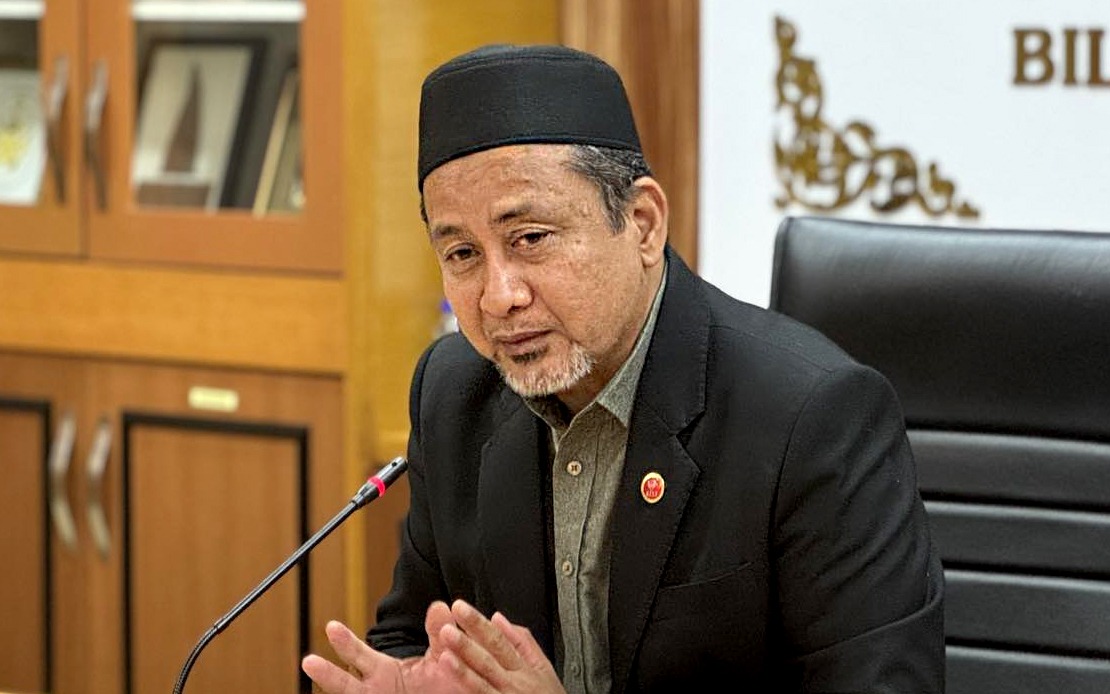
Kelantan's state government has unveiled an ambitious dual-track development initiative designed to nurture its athletic talent while ensuring they have pathways to academic achievement. The Kelantan Sports Council has established a partnership with Yayasan Kelantan Darulnaim, commonly known as YAKIN, to administer a system of education loans and scholarships targeting aspiring university students who compete in sports. This move reflects a strategic shift in how the state perceives athlete development—no longer viewing sport and education as competing priorities but rather as complementary investments in human capital.
Zamakhshari Muhamad, chairman of the state's Youth, Sports, NGOs and Community Unity Committee, framed the initiative within the broader philosophy that sustained athletic success requires a foundation of educational attainment. He explained that the programme represents the Kelantan state government's commitment to fashioning a more holistic development model for its sporting personnel. By formalising financial support mechanisms through YAKIN, the state has effectively removed one significant barrier that often forces talented young athletes to choose between pursuing competitive sport and obtaining tertiary qualifications.
The scope of the initiative extends beyond generic financial assistance. Athletes demonstrating exceptional academic performance at both the Sijil Pelajaran Malaysia and Sijil Tinggi Persekolahan Malaysia examinations will qualify for dedicated excellence incentives, creating tangible recognition for those who maintain dual achievement in athletics and academics. This tiered approach acknowledges that not all student-athletes occupy the same circumstances, and rewards those who demonstrate particular academic prowess separate from their sporting credentials.
The underlying structure already existed through what Kelantan terms its Special Programme. Athletes enrolled in the Imtiyaz initiative receive monthly allowances, funding allocations to compete domestically and internationally, along with provisions for specialised sporting equipment and nutritional support. However, the introduction of education financing through YAKIN represents a qualitative expansion of this framework. By directly addressing university access costs, the state removes what had previously been an implicit ceiling on athlete development—the assumption that financial constraints would determine whether talented competitors could pursue higher education.
Kelantan's holistic approach to athlete welfare extends considerably beyond performance enhancement and educational costs. The state government has incorporated provisions recognising that athletes face ordinary life challenges: financial assistance is available to those experiencing natural disasters, accidents, marriage-related expenses, and bereavement. This demonstrates a philosophical commitment to viewing athlete support as part of broader social responsibility rather than narrowly instrumentalising spending purely toward competitive outcomes. Such provisions also likely enhance retention of talented individuals within the Kelantan system, as athletes know their welfare concerns will receive institutional attention.
The implementation architecture reveals considerable sophistication in how Kelantan has structured the initiative. Rather than operating in isolation, the programme deliberately integrates multiple institutional players: the National Sports Council provides overarching framework and coordination, state education and youth departments contribute infrastructure and information networks, while both public and private higher education institutions participate as delivery mechanisms. This multi-stakeholder approach reduces the likelihood of implementation gaps and creates redundancy ensuring support reaches athletes regardless of their chosen institution.
For Malaysian student-athletes more broadly, the Kelantan model offers valuable lessons about reconciling competitive sporting ambitions with educational advancement. Many countries have grappled with the structural challenge of preventing athletic recruitment from disrupting academic pathways, and Kelantan's approach—explicit financing combined with institutional coordination—addresses this directly. The programme implicitly acknowledges that state-sponsored athletes should not regard university education as a contingency plan for those who fail professionally, but rather as an integrated component of athlete development from the outset.
The regional significance of this initiative merits consideration. Southeast Asian nations frequently struggle to balance investment in competitive sport with broader educational development. Kelantan's willingness to allocate resources across both domains simultaneously, rather than treating them as fiscal trade-offs, suggests a confidence in long-term state capacity and a rejection of false choice narratives that often constrain public investment in youth development. This precedent may influence how other Malaysian states conceptualise athlete support.
Zamakhshari articulated an ambitious vision for how the combined initiatives should function psychologically and developmentally. He expressed confidence that comprehensive support—spanning financial, nutritional, competitive, and educational dimensions—would motivate Kelantan athletes toward excellence across multiple life domains simultaneously. This reflects recognition that sustained motivation requires institutional validation across multiple achievement domains, not merely sporting contexts. Athletes who receive affirmation that their educational progress matters institutionally, not merely as a personal responsibility, demonstrate different psychological engagement with their studies.
The practical mechanics of how YAKIN will administer these loans and scholarships remain to be specified in operational guidelines. Critical questions about repayment terms, eligibility criteria, award amounts, and coordination with existing higher education financing mechanisms will determine whether this initiative achieves its stated objectives. The effectiveness of such programmes often hinges on accessibility—whether administrative complexity becomes a barrier obscuring nominally available benefits from those most needing them.
Implementation timeline and funding commitments will prove equally crucial. State government officials did not provide specific details regarding programme launch dates, projected participant numbers, or annual budget allocations. These material details will shape whether this represents a transformative initiative or a symbolic gesture with limited practical reach. Kelantan's track record in athlete support will provide some indication of likely implementation rigour, though new partnerships sometimes accelerate previously constrained programmes.
The initiative's success metrics deserve careful definition. Beyond tracking the numbers of athletes receiving loans and scholarships, stakeholders should monitor whether beneficiaries complete their degrees, whether they maintain competitive performance during their studies, and whether they subsequently engage professionally with their qualifications. Such longitudinal assessment would distinguish genuine impact from administrative activity, and would provide evidence for whether other Malaysian states should emulate the model.

