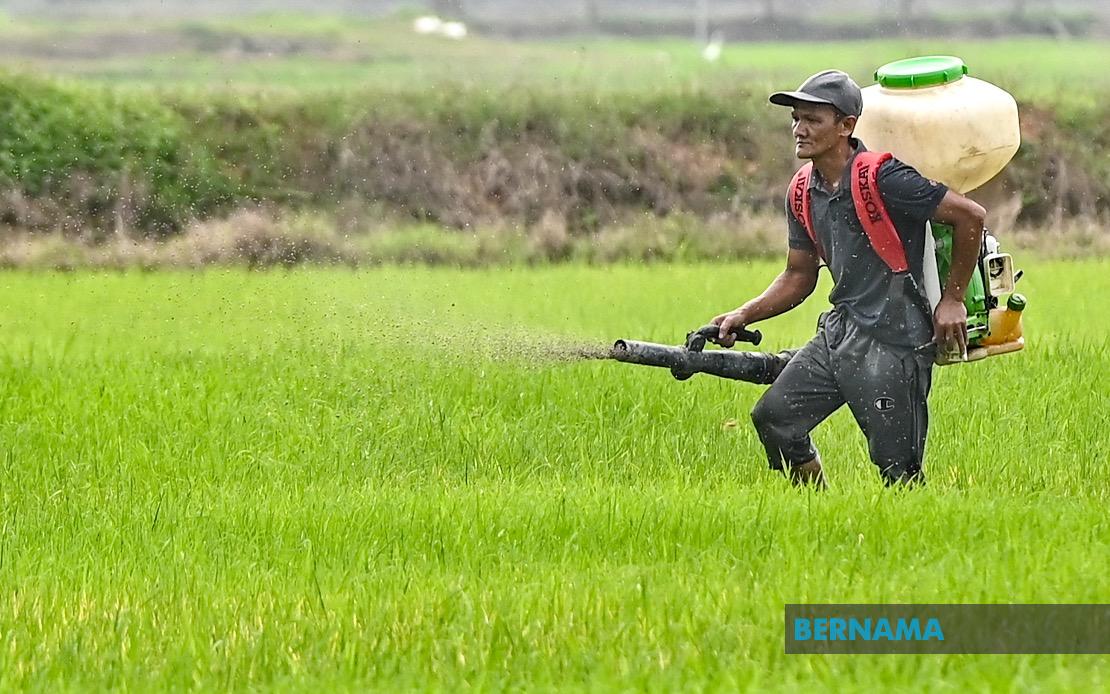
The Kelantan state government has announced a substantial financial commitment to revitalise its agriculture sector, pledging RM3.64 million this year to drive forward a comprehensive suite of 10 development projects. Speaking during a session of the State Legislative Assembly in Kota Bharu on August 12, Datuk Tuan Mohd Saripudin Tuan Ismail, who chairs the State Agriculture, Agro-Food Industry and Commodity Committee, detailed how the funding addresses multiple dimensions of agricultural expansion, from cultivating dormant land to fostering entrepreneurship across the production chain.
The scope of Kelantan's agricultural roadmap spans crop diversification and intensification, with particular emphasis on reviving underutilised farmland and scaling up padi cultivation alongside high-value commodity crops. The state is also prioritising horticultural development through expanded vegetable and fruit production, recognising the potential for premium crops to generate higher returns for smallholder farmers. This multi-pronged crop strategy reflects an understanding that sustainable agricultural growth requires not just channelling funds into traditional staples but also encouraging farmers to transition toward more profitable ventures that respond to evolving consumer demand.
Commercial agriculture has become a focal point for state investment, with the Kelantan State Agriculture Development Corporation (PKPNK) emerging as the vehicle for scaling production beyond subsistence farming. The corporation is operationalising advanced cultivation techniques at Rong Chenok Agro Valley, deploying chilli fertigation systems to optimise water use and nutrient delivery, while simultaneously developing controlled-environment farming for honeydew melons and hydroponic vegetables. These initiatives signal a deliberate shift toward precision agriculture and technology-driven productivity gains, positioning Kelantan to compete with other Malaysian states in supplying high-quality fresh produce to regional markets.
The livestock sector represents another cornerstone of Kelantan's agricultural diversification strategy. More than 380 breeders across the state have accessed government support programmes spanning cattle, goats, sheep, deer, buffalo, and quail production, coupled with assistance in procuring essential equipment and inputs. This inclusive approach to livestock development acknowledges that rural livelihoods depend on multiple income streams and that broadening the species portfolio reduces farmer vulnerability to commodity price fluctuations or disease outbreaks affecting any single animal husbandry system.
Fisheries and aquaculture have emerged as particularly promising growth areas for Kelantan, commanding substantial policy attention and financial resources. In the current fiscal period, RM382,094 has been channelled to support 122 fish and prawn breeders, whilst the broader aquaculture sector demonstrated resilience with 2025 production reaching 7,901.74 tonnes valued at RM76.2 million. The state has set an ambitious target of 8,000 tonnes for the current year, suggesting confidence in continued sectoral expansion despite market headwinds affecting global seafood trade.
Beyond direct production incentives, Kelantan has invested substantially in hatchery infrastructure and genetic stock enhancement to underpin fisheries development. State efforts have resulted in the construction of more than 130 artificial hatcheries whilst 1.26 million fish and prawn fry have been released into public waters to sustain wild populations and support artisanal fishers. The PKPNK facility itself boasts considerable breeding capacity, producing up to one million catfish fry and 500,000 tilapia fry annually, whilst its white prawn operation at Pantai Geting in Tumpat generates approximately 400,000 kilogrammes yearly, establishing a significant supply chain for downstream processing and distribution.
The state government recognises that production capacity alone cannot translate into sustainable farmer prosperity without robust marketing infrastructure and reliable distribution channels. As of June 2025, approximately 1,560 entrepreneurs had accessed support from 74 marketing infrastructure facilities and 99 marketing outlets established through state initiatives. This ecosystem of retail and wholesale touchpoints reduces the intermediation burden on smallholder producers and enables direct access to consumer markets, thereby improving profit margins across the agricultural value chain.
The Kota Bharu Rural Transformation Centre (RTC) exemplifies Kelantan's commitment to establishing integrated agro-food hubs that simultaneously serve as production aggregation points, processing facilities, and retail spaces. Since its inception in 2012, the RTC has provided workspace to approximately 800 entrepreneurs engaged in agricultural commerce, generating cumulative sales exceeding RM4.16 billion across its operational lifetime. This track record demonstrates that infrastructure investment in market access yields measurable economic returns and creates employment opportunities for rural communities beyond primary production.
Kelantan's agricultural investment strategy carries implications extending beyond state boundaries. As a major rice-producing state and emerging aquaculture hub, Kelantan's productivity improvements contribute directly to national food security objectives and reduce Malaysia's dependence on imported protein and staple crops. In an era of climate volatility and fragmented global supply chains, building regional capacity in protein production and horticultural output provides a buffer against external shocks whilst generating employment and income in rural areas experiencing population outmigration.
The financial allocation and programmatic breadth outlined by Datuk Tuan Mohd Saripudin underscore a deliberate state-level commitment to agriculture that contrasts with national policy emphasis on services and high-tech industries. This prioritisation reflects Kelantan's comparative advantage in land and water resources as well as the sector's pivotal role in absorbing rural labour and sustaining traditional livelihoods. Whether the investments yield proportionate productivity gains and income improvements for beneficiary farmers will depend substantially on extension service quality, input cost management, and market price stability—factors extending beyond government control but requiring coordinated public and private sector engagement.
Looking forward, Kelantan's agricultural trajectory will be shaped by climate adaptation capacity, youth engagement in farming, and integration with regional trade mechanisms. The current investment phase represents necessary foundational work, yet sustained sectoral transformation requires complementary investments in skills development, climate-resilient farming practices, and market linkages that extend beyond Kelantan's borders into neighbouring states and the broader Southeast Asian region.

