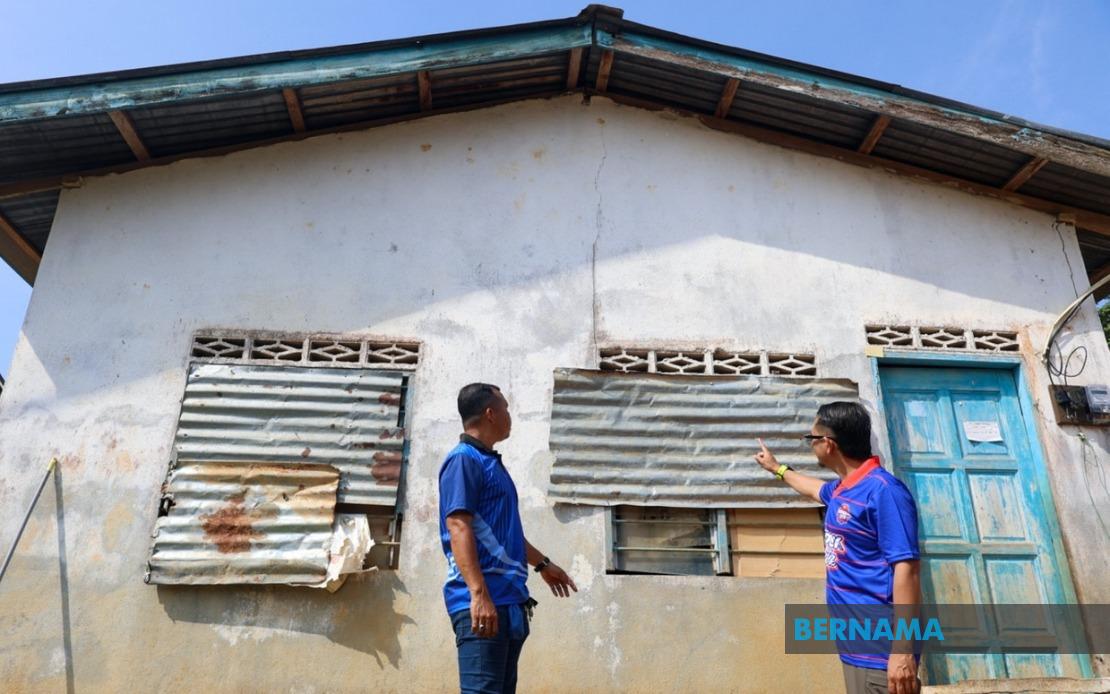
The Kelantan government has mapped out a comprehensive set of interventions aimed at addressing the pressing challenges faced by 1,524 Orang Asli inhabitants spread across the Pasik Resettlement Scheme and Kampung Kuala Wok. Following on-site assessments conducted in early August, Nenggiri Assemblyman Mohd Azmawi Fikri Abdul Ghani announced that officials have zeroed in on five critical areas demanding urgent state attention, signalling a structured approach to tackling the multifaceted difficulties confronting these marginalised communities in Kelantan's interior.
The most immediate concern centres on the structural integrity of residential properties throughout both settlements. During visits to the remote locations on August 3 and 4, government teams documented widespread deterioration of existing housing stock, with numerous dwellings requiring substantial intervention. Roofs have deteriorated to unsafe conditions, structural components show signs of age-related damage, and electrical wiring poses genuine safety hazards to residents. Beyond remedial work, Mohd Azmawi Fikri noted that the communities have articulated a parallel need for new housing construction to accommodate demographic growth, particularly among newly married couples seeking to establish independent households. The assemblyman indicated that these housing expansion proposals will require coordination with the Department of Orang Asli Development, suggesting that the resolution of this issue will involve multiple bureaucratic levels and potentially extended timelines for implementation.
A distinctive and ongoing threat emerges from the elephant populations inhabiting the forested regions surrounding these settlements. Since 2022, wild elephants have maintained an increasingly intrusive presence that has fundamentally altered the daily existence of residents, creating a persistent state of vulnerability and constraining normal activities. The animals have been documented disrupting agricultural endeavours, damaging property, and creating acute safety hazards that residents must navigate constantly. This wildlife management challenge represents a particularly complex problem, as it requires coordination between forestry authorities, wildlife agencies, and state government resources to develop viable mitigation strategies that protect both human communities and animal populations.
Electricity supply constitutes another foundational infrastructure gap affecting quality of life and economic opportunity in these settlements. The absence of reliable electrical power limits possibilities for educational advancement, healthcare delivery, and small-scale economic activity that might otherwise generate household income. Addressing this deficit would represent a significant step toward basic modernisation in areas that currently operate with severe infrastructure constraints that most urban Malaysians would regard as unacceptable.
Supply chain accessibility presents a logistical nightmare that underscores the geographic isolation of these communities. The assemblyman specifically highlighted the government's consideration of including RON95 petrol within the Essential Goods Distribution Programme, reflecting the acute scarcity that emerges when the nearest petrol station lies approximately 50 kilometres distant. This distance alone explains why basic commodity procurement becomes a major undertaking requiring advanced planning and significant expenditure on fuel and vehicle wear.
The geographic remoteness of RPS Pasik and Kampung Kuala Wok fundamentally constrains all aspects of community life and government service delivery. Residents cannot access either location using standard vehicles, requiring four-wheel-drive transportation to navigate treacherous terrain connecting these settlements to the nearest major town at Gua Musang. The round-trip journey alone spans approximately 200 kilometres, transforming what would constitute a routine errand in urban areas into a major expedition consuming entire days and incurring substantial transportation costs. This geographic reality creates cascading consequences across multiple domains, from education access to emergency medical response to basic commercial transactions.
The Jualan Rahmah programme represents the government's attempt to extend subsidised retail operations to economically disadvantaged populations, though implementing such schemes in geographically isolated communities presents unique logistical challenges. Expanding or optimising this programme for settlements like RPS Pasik and Kampung Kuala Wok would require reconsidering distribution routes and supply frequency to match the extraordinary transportation barriers these residents face.
Mohd Azmawi Fikri's announcement reflects a growing political recognition within Kelantan's administration that Orang Asli populations have historically experienced relative neglect in development planning and resource allocation. The identification of these five priority needs represents a baseline acknowledgment of deprivation, though actual implementation will prove substantially more challenging than initial assessment and announcement. The coordination required across multiple state and federal agencies, coupled with the extraordinary logistical difficulties imposed by geography, suggests that meaningful progress will require sustained political will and budget commitment extending well beyond the initial announcement phase.
For Malaysian policymakers and observers, the Kelantan situation underscores persistent equity gaps within the country's development landscape. While Malaysia has achieved substantial economic advancement and infrastructure development in urban and more accessible rural regions, remote indigenous communities continue operating with infrastructure standards far below national norms. The gap between urban and interior Orang Asli populations raises fundamental questions about inclusive development and whether current structures and resource allocation mechanisms adequately serve marginalised communities situated far from economic centres.
The government's structured approach to needs identification represents a methodologically sound beginning, but the real test will emerge through implementation and sustained resource commitment. Creating sustainable improvements in housing quality, establishing viable elephant mitigation frameworks, extending reliable electrical infrastructure, and improving commodity access will require not merely identifying needs but mobilising financial resources, technical expertise, and administrative capacity on scales that match the challenge's magnitude. For the 1,524 residents of these settlements, the conversion of identified priorities into tangible improvements will determine whether government recognition translates into meaningful enhancement of their living conditions and economic prospects.

