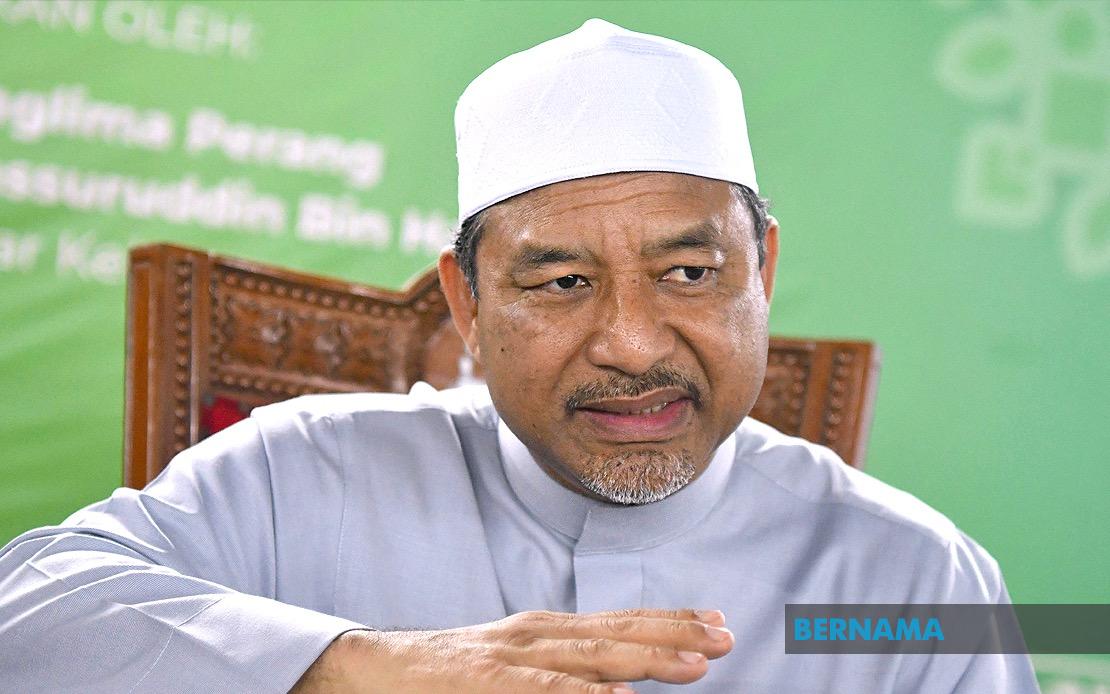
The Kelantan government has reaffirmed its approach to cultural preservation, committing to maintain the state's artistic heritage provided it remains consistent with Islamic teachings. Menteri Besar Datuk Mohd Nassuruddin Daud made the declaration at the closing ceremony of the Kelantan Arts Festival (FKRK) 2026 in Pasir Puteh, underscoring how the state views its centuries-old cultural traditions as both irreplaceable community assets and engines for tourism development.
The Menteri Besar's remarks illuminate a nuanced position Kelantan has adopted toward cultural management. Rather than dismissing inherited artistic practices outright, the state government evaluates them through an Islamic lens and, where necessary, refines them to eliminate elements deemed incompatible with religious principles. This calibrated strategy reflects an understanding that wholesale rejection of traditional forms would sever cultural continuity, whereas selective refinement allows communities to maintain their heritage whilst respecting contemporary religious sensibilities.
Kelatan's approach to cultural heritage extends beyond mere preservation. Mohd Nassuruddin emphasised that the state views its vast repository of performing arts, traditional games, handicrafts, and culinary practices as embodiments of Malay-Muslim wisdom deserving transmission to future generations. These cultural expressions, he argued, carry philosophical depth and reflect the accumulated insights of communities across centuries. The state government therefore positions itself as a custodian rather than a censor, tasked with maintaining these traditions' authenticity while ensuring their evolution occurs within defined moral and religious boundaries.
Historically, some traditional performances faced restrictions in Kelantan due to perceived conflicts with Islamic teachings. The government's current stance suggests flexibility on this front. According to Mohd Nassuruddin, authorities no longer object to reviving previously restricted performances once practitioners remove the specific elements considered problematic and cease using them. This iterative approach permits cultural practitioners and government officials to engage in dialogue about adaptations, potentially opening pathways for forms that were once banned to resurface in modified contexts.
The leadership credits Islam's long historical presence in Kelantan with nurturing a distinctive cultural ecosystem. Unlike narratives that pit Islamic and traditional cultures in opposition, Kelantan's administrators assert that Islamic development in the state has actively cultivated knowledge, artistic expression, language, and customs rooted in religious values. This framing suggests cultural identity in Kelantan is fundamentally syncretic—shaped simultaneously by Malay traditions and Islamic influences that have intertwined for generations.
The FKRK 2026 festival, which concluded on the day of the Menteri Besar's remarks, served as a practical expression of this cultural vision. Organised jointly by the Ministry of Tourism, Arts and Culture alongside the National Culture and Arts Department (JKKN) Kelantan, the four-day event functioned as more than entertainment. It provided a gathering space for heritage practitioners to exchange knowledge, generate economic activity through tourism, and showcase Kelantan's distinctive cultural character to external audiences.
A particular focus of recent state efforts involves reviving traditional games, including gasing uri, congkak, dam aji, and tating. The Menteri Besar highlighted the significance of these activities in counterbalancing technological influence on younger Malaysians' lifestyles. By institutionalising traditional games through festivals and public initiatives, Kelantan positions itself as defending childhood and leisure practices rooted in local communities against homogenising digital culture.
For Malaysian policymakers and cultural observers, Kelantan's model offers instructive contrasts to approaches elsewhere in the country. The state demonstrates that celebrating heritage need not require either uncritical acceptance of all practices or aggressive suppression of traditional forms. The willingness to engage in refinement—to ask which elements of inherited practices genuinely conflict with contemporary values and which can coexist harmoniously—suggests a third path between cultural preservation and modernisation.
The economic dimensions deserve equal attention. By framing cultural preservation as tourism development, Kelantan links heritage maintenance to livelihood generation for artisans, performers, hospitality workers, and related sectors. This economic interdependence creates incentives for broader community investment in cultural continuity. Festival attendance, craft production, performance opportunities, and food tourism generate revenue whilst distributing cultural authority beyond government agencies to practitioners themselves.
The FKRK 2026 closing ceremony remarks also signal Kelantan's confidence in the sustainability of its cultural identity. Rather than treating traditional practices as fragile antiquities requiring protective isolation, the government presents them as living, adaptable traditions capable of remaining vibrant within contemporary contexts. This perspective implies that cultural vitality depends on communities' organic engagement with their heritage rather than state preservation alone.
The implications extend across Southeast Asia, where multiple Muslim-majority jurisdictions navigate similar tensions between cultural preservation and religious observance. Kelantan's explicit articulation of a framework for such negotiation may offer a model for reflection elsewhere. The state demonstrates that cultural authenticity and religious commitment need not exist in zero-sum relationships, provided institutions facilitate ongoing conversation between practitioners, religious scholars, and communities about what refinement entails.
Moving forward, the durability of Kelantan's approach will depend partly on how religious and cultural authorities resolve inevitable disagreements about specific practices. The framework Mohd Nassuruddin outlined provides conceptual space for such negotiations but ultimately relies on goodwill from multiple stakeholders. Whether contested forms like certain traditional dances, theatrical genres, or ceremonial practices will actually be rehabilitated under this refined approach remains to be seen. What emerges clearly is that Kelantan's leadership views cultural heritage not as an obstacle to Islamic development but as an asset to be managed thoughtfully for present communities and future generations.

