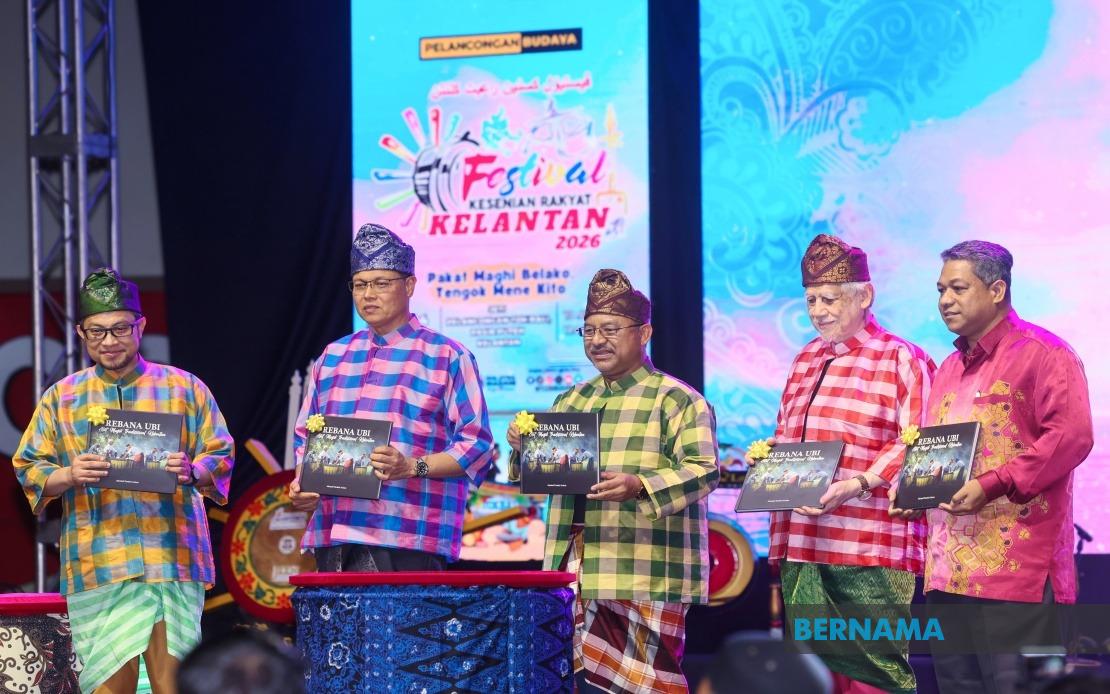
The Kelantan Arts Festival (FKRK) 2026 concluded its four-day run at Tok Bali Tourism Jetty in Pasir Puteh this week, establishing itself as a significant platform for strengthening social cohesion while preserving the distinctive cultural expressions that define the northeastern state. Running from July 1 to 4, the festival demonstrated how cultural programming can serve broader national objectives, particularly the Malaysia MADANI framework that emphasises unity and shared heritage across Malaysia's diverse population.
Organised jointly by the Ministry of Tourism, Arts and Culture (MOTAC) through its National Department for Culture and Arts (JKKN), the festival drew upon Kelantan's deep wellspring of artistic tradition. The event's centrepiece was the 'Titih Bonda Pusaka Ayahanda' special performance, which functioned as both tribute and teaching moment—showcasing how traditional art forms remain living practices capable of evolving to reflect contemporary Malaysian identity. The performance deliberately incorporated a multi-racial percussion ensemble, a programmatic choice that underscored how artistic collaboration transcends ethnic and religious boundaries, embodying the harmony that Malaysia MADANI seeks to cultivate across the nation's communities.
The roster of performing artists reflected Kelantan's standing as a repository of Malaysian cultural knowledge. Established figures including Roy Kapilla and Amy Search shared the stage with classical arts specialists such as Datuk Dr Lim Swee Tin, while ensembles representing specific traditions—notably the Dikir Barat Kala Mahajara group and the Mak Yong Kijang Mas troupe—provided audiences with authentic performances of distinctly Kelantanese art forms. This intergenerational mix of veteran performers and traditional ensembles created an environment where established reputations rubbed shoulders with institutional knowledge, potentially nurturing younger artists' connections to their heritage.
Beyond the main stage performances, FKRK 2026 structured substantial participatory opportunities that transformed passive spectators into active cultural learners. Children's traditional dance competitions allowed younger Malaysians to engage physically with heritage arts, while the Mek and Awe Comey competition—essentially a traditional costume fashion showcase—demonstrated how heritage dress remains contemporary rather than merely historical. The ADABI cooking competition positioned culinary traditions within the festival's broader celebration, recognising that food constitutes an essential dimension of cultural identity often overlooked in festivals prioritising performance arts. These competitions served dual purposes: they provided competitive platforms for practitioners while enabling visitors to appreciate the technical skill and aesthetic refinement embedded in what might otherwise seem like quaint or dated practices.
The festival's structural approach extended beyond formal competitions into experiential programming. Folk sports demonstrations introduced visitors to recreational traditions that remain integral to Kelantan's cultural fabric, while craft product sales created economic opportunities for artisans and merchants dependent upon cultural tourism. The inclusion of government agencies and non-governmental organisations (NGOs) as exhibition participants broadened the festival's scope beyond entertainment, positioning cultural celebration as an instrument of development and community engagement that resonates across Malaysia's governance structures.
A community feast served as the festival's most inclusive moment, collapsing distinctions between performer and audience, professional and amateur, to create shared space for celebration. Such mechanisms prove particularly valuable in Malaysian contexts where food functions as a primary idiom of communal identity and intercommunal understanding. By embedding the feast within cultural programming, organisers reinforced connections between artistic expression and everyday social practice—the notion that culture permeates daily life rather than existing as rarefied specialist activity.
Kelantan Menteri Besar Datuk Mohd Nassuruddin Daud's officiating of the opening ceremony signalled state government commitment to cultural infrastructure and programming. The presence of State Tourism, Culture, Arts and Heritage Committee chairman Datuk Kamarudin Md Nor and JKKN director-general Mohd Amran Mohd Haris demonstrated institutional seriousness regarding the festival's significance within broader cultural policy. This high-level attendance reflected recognition that cultural programming contributes measurably to governance objectives centred on social cohesion, heritage preservation, and community development.
The festival's collaborative structure—involving MOTAC, JKKN, the Kelantan state government, Nasrom Travel Sdn Bhd, the Pasir Puteh Land and District Office, and Pasir Puteh District Council—illustrated how cultural initiatives function most effectively when distributed across multiple institutional actors. This polycentric approach to festival organisation distributes responsibility, mobilises diverse resources, and creates stakeholder investment among organisations that might otherwise operate in isolation. For Malaysian readers across the peninsula, this model suggests how medium-sized cultural festivals can achieve substantial impact without requiring the resources or logistical complexity associated with mega-events.
FKRK 2026's location in Pasir Puteh carries geographical and symbolic significance. Tok Bali Tourism Jetty positions the festival within tourism infrastructure, acknowledging that cultural preservation increasingly intersects with economic development through heritage tourism. This reality, neither lamentable nor celebratory in itself, shapes how contemporary Malaysian festivals operate—cultural programming must simultaneously serve artistic, communal, and economic functions. The Kelantan Arts Festival demonstrates how these objectives need not conflict; instead, cultural tourism can generate resources enabling sustained investment in artistic training, performance opportunities, and heritage documentation.
For Southeast Asian observers and Malaysian policymakers, the festival exemplifies how national governments can leverage cultural programming to reinforce political messaging around unity and cohesion. The explicit connection to Malaysia MADANI—the government's governing framework emphasising prosperity, solidarity, and integrity—demonstrates how cultural events function as practical instantiations of abstract political principles. Rather than merely articulating values through rhetoric, the festival manifested those values through performances, competitions, and communal gatherings that made unity tangible and experiential.
The festival's emphasis on Kelantan's distinctive heritage also serves important functions for regional cultural preservation. As Southeast Asian nations modernise and urbanise, state-supported programs documenting and celebrating traditional arts prevent knowledge attrition and ensure younger generations maintain connections to ancestral practices. FKRK 2026 contributed to this preservation effort while simultaneously demonstrating that heritage arts need not languish in museums or academic institutions—they thrive in public spaces where communities gather and perform for one another.
Looking forward, the success of FKRK 2026 invites reflection on how similar programming might expand across Malaysia's states. Each region possesses distinctive artistic traditions worthy of celebration and investment. If the Kelantan model proves replicable, Malaysian cultural infrastructure could become increasingly decentralised and rooted in specific communities rather than concentrated in major urban centres. Such decentralisation would strengthen grassroots cultural engagement while distributing cultural tourism benefits more equitably across the nation.

