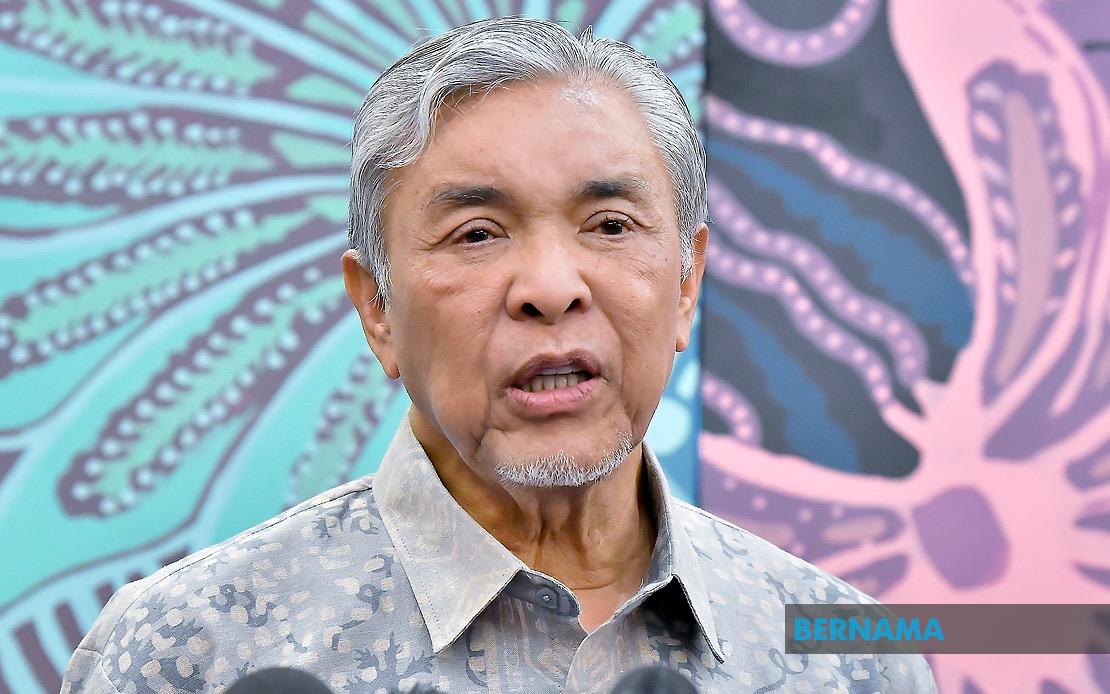
Deputy Prime Minister Datuk Seri Dr Ahmad Zahid Hamidi has moved to address public concerns about the South East Johor Development Authority's (KEJORA) expansion plans, emphasizing that the initiative centres on orchestrating coordinated development across the region rather than securing ownership of properties within the affected districts. Speaking during an official ceremony in Kota Tinggi, Ahmad Zahid, who also holds the portfolio of Rural and Regional Development Minister, acknowledged that misconceptions had circulated regarding KEJORA's intentions, and he took the opportunity to set the record straight about the fundamental purpose of the expansion proposal.
The clarification comes as KEJORA seeks to broaden its operational footprint to encompass additional areas in south-eastern Johor, a region experiencing accelerated transformation. The authority has established itself as a significant driver of infrastructure and economic development in the state, with officials pointing to concrete metrics to justify the expansion. According to Ahmad Zahid, KEJORA's portfolio demonstrates exceptional performance, with implemented projects achieving a 98.3 per cent success rate. This strong operational foundation, he argued, provides compelling justification for expanding the authority's mandate to oversee development across a larger geographic area.
A key area benefiting from KEJORA's development initiatives is Pengerang, a district situated in the district's southern reaches that has undergone rapid transformation in recent years. The growth trajectory in Pengerang has been fuelled by substantial mega-projects and an expanding tourism sector, which have attracted investment and population movement to the locality. By extending KEJORA's coordinating authority over a wider territory, regional officials believe the development agency can better synchronize infrastructure, ensure consistency in planning standards, and facilitate more efficient resource allocation across the expanded area.
Ahmad Zahid highlighted the backing garnered from stakeholders regarding the proposal, noting that a public feedback study commissioned by KEJORA had yielded substantial support. The survey results indicated that 96 per cent of respondents favoured the expansion initiative, suggesting broad acceptance among residents and business interests within the potentially affected zones. This public endorsement represents a significant factor in the proposal's progression through the institutional channels required for implementation.
Despite the strong internal support and operational justification, Ahmad Zahid emphasized that any formal advancement of the expansion proposal remains contingent upon constitutional approval. The implementation of the KEJORA expansion would require the consent of His Majesty Sultan Ibrahim, the reigning King of Malaysia, and the Regent of Johor, Tunku Mahkota Ismail. This requirement reflects the constitutional framework governing state-level administrative changes in Johor and underscores the necessity for formal royal endorsement before substantive expansion measures can proceed.
The financial commitment to KEJORA's development activities demonstrates the government's sustained investment in the region's growth trajectory. Ahmad Zahid disclosed that the Rural and Regional Development Ministry has allocated approximately RM138 million to KEJORA specifically earmarked for development projects across the region. This substantial budget allocation has already enabled the completion of 107 comprehensive programmes, with an additional 350 smaller-scale projects scheduled for implementation under the funding envelope. The scope and scale of these initiatives illustrate the government's determination to drive systematic development across south-eastern Johor.
Alongside the expansion proposal, senior government officials have articulated complementary recommendations designed to address administrative and infrastructure gaps in rapidly developing areas. Datuk Seri Azalina Othman Said, Minister in the Prime Minister's Department (Law and Institutional Reform) and Member of Parliament for Pengerang, has proposed that Pengerang should be elevated to official district status in recognition of its accelerated development trajectory. Ahmad Zahid has publicly endorsed this proposal, acknowledging that Pengerang's sustained growth necessitates corresponding administrative restructuring to handle mounting governance demands. Alongside administrative reconfiguration, Azalina has advanced the proposal to construct a new hospital facility to serve Pengerang's expanding population and address healthcare accessibility challenges created by rapid demographic growth.
The synchronization of the KEJORA expansion proposal with district status elevation and healthcare infrastructure development represents a coordinated regional development strategy aimed at ensuring that administrative structures, planning mechanisms, and essential services evolve in tandem with economic and population growth. For southeastern Johor, particularly Pengerang, this multi-faceted approach signals sustained governmental commitment to managing growth systematically rather than allowing development to proceed without corresponding institutional and service provision adjustments.
For Malaysian observers and regional stakeholders, the KEJORA expansion initiative underscores the government's continued reliance on specialized development authorities as vehicles for coordinating growth in high-potential zones. The authority model, which concentrates planning and coordination functions within a dedicated institutional framework, has become increasingly prevalent across Malaysia's federal and state governments. The strong performance metrics cited for KEJORA suggest this approach has delivered tangible results in its existing operational zone, and the expansion proposal represents an effort to extend these coordination benefits across a broader geographic canvas.
The public support figures cited by Ahmad Zahid also merit consideration within the broader context of development and governance in Malaysia. The reported 96 per cent support rate, based on KEJORA's own survey, suggests that residents and stakeholders in the expansion zone view the development authority's involvement positively, or at least regard the expansion as preferable to alternative governance arrangements. This sentiment may reflect satisfaction with KEJORA's track record, confidence in its operational capacity, or broader recognition that coordinated development frameworks can deliver more systematic outcomes than fragmented or uncoordinated approaches.
Looking forward, the expansion proposal's progression will depend upon securing royal approval and navigating any regulatory or administrative procedures required under Johor's constitutional framework. Should the expansion proceed, KEJORA would operate across an enlarged territory, potentially encompassing additional districts and administrative zones within south-eastern Johor. This expansion would effectively position the authority as a more comprehensive regional development coordinator, capable of influencing planning, infrastructure investment, and development priorities across a substantially larger footprint. For stakeholders in affected areas, the expansion could signal increased professional oversight of development initiatives and more systematic coordination of public and private investment flows.

