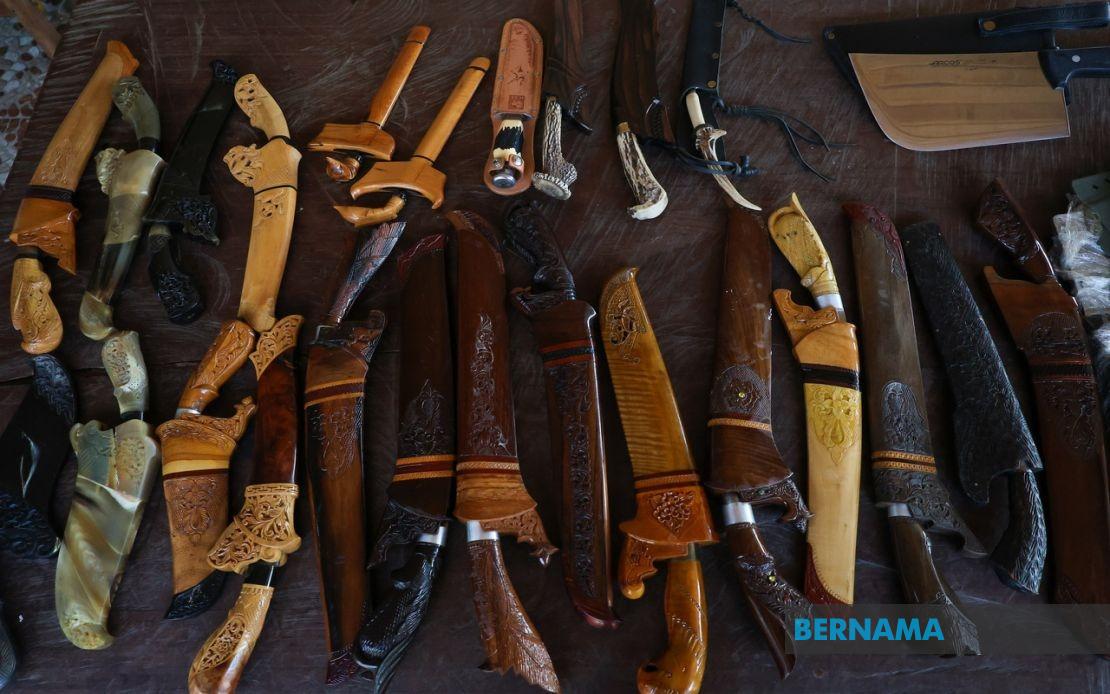
In Kelantan, a state renowned for its artistic heritage, one man's treasure trove of more than 100 traditional and modern weapons represents far more than mere collector's curiosity—it embodies a cultural reckoning with disappearing craftsmanship. Ahmad, 71, has become an unlikely custodian of his region's blacksmithing legacy at a moment when the knowledge and skill of master metalworkers face extinction as senior practitioners die without training successors to inherit their techniques.
The centrepiece of Ahmad's collection includes an iconic bird-headed golok, a traditional Kelantan machete whose distinctive hilt design carries profound historical resonance. The bird motif traces its lineage to the Petalawali bird figure once adorning the ancient boats of the Kelantan Sultanate, vessels that historically navigated crucial diplomatic and trade missions. This ornamental choice was never merely decorative; it represented the convergence of functional design and cultural identity that characterised the region's metalworking tradition. The curved hilt provides ergonomic advantage for the wielder, yet simultaneously serves as a canvas for artistic expression that individualises each blade according to the craftsman's vision and skill.
Ahmad's entry into this world of traditional weaponry occurred relatively recently, roughly two decades ago, when he assisted a friend engaged in blacksmithing to fabricate weapon hilts and scabbards. What began as collaborative work evolved into passionate collecting, reflecting a broader recognition that contemporary circumstances threatened the permanence of these crafts. His estimated RM20,000 collection now spans machetes, knives, swords, and keris blades acquired from an unexpectedly diverse international geography—Germany, Sweden, Denmark, England, the United States, Japan, China, Spain, and Portugal all contributed pieces. Among his particularly treasured acquisitions are a knife featuring a Sarawak deer-antler hilt and a keris fashioned from black kemuning wood with golden kemuning wood embellishments.
The preservation of such weaponry demands disciplined maintenance regimens that many casual collectors overlook. Ahmad maintains dedicated climate-controlled cabinet storage and conducts systematic inspections every three months, applying protective oil to blades to forestall oxidisation and deterioration. This methodical approach reflects comprehension that these objects, once created, cannot be indefinitely restored if neglected. Each piece represents irreplaceable knowledge crystallised into steel; the moment its creator passes, particular techniques and aesthetic choices vanish unless documented or transmitted.
Ahmad articulates clearly the stakes underlying his custodianship. He observes that whenever a master blacksmith dies, an irretrievable portion of accumulated craft knowledge and technical expertise disappears unless deliberately transmitted to the next generation. This intergenerational rupture has become increasingly severe throughout Kelantan as younger people pursue other livelihoods and formal apprenticeship structures have eroded. The economic viability of traditional metalworking has diminished against mass-produced alternatives and other employment opportunities in the modern economy.
What distinguishes handcrafted pieces in Ahmad's assessment is their authenticity and distinctiveness. Every carving reflects the individual maker's distinctive identity and creative sensibility, rendering each blade a singular work of heritage bearing its own narrative. This uniqueness, paradoxically, becomes more valuable as fewer craftspeople remain capable of producing such work. The scarcity is not engineered marketing strategy but genuine cultural attrition.
Despite receiving overtures from collectors willing to purchase individual pieces from his assemblage, Ahmad has resisted all inducements to sell. This principled stance reflects recognition that many objects in his possession were created by blacksmiths who have since died, rendering their particular workmanship impossible to replicate or replace. Selling would constitute betrayal of those deceased masters whose legacies he has assumed responsibility for safeguarding. His collection functions simultaneously as museum, memorial, and educational resource.
The preservation question extends beyond Ahmad's personal collection to encompass broader policy considerations regarding Malaysia's material heritage. Traditional weapon-making encompasses technical knowledge, aesthetic sensibilities, and cultural symbolism that merit institutional recognition and support. Without deliberate intervention—whether through apprenticeship subsidies, museum acquisitions, or cultural funding mechanisms—the loss will accelerate as aging practitioners retire.
Ahmad's vision articulates an integrated approach that neither freezes craft in nostalgic amber nor surrenders its identity to commercial imperatives. He advocates for innovation that sustains and develops traditional blacksmithing while scrupulously preserving the artistic identity, technical excellence, and cultural values that define the practice. This balancing act requires cultural confidence and material investment from communities and government bodies capable of valuing heritage beyond immediate economic return.
The bird-headed golok and its companions in Ahmad's cabinet represent more than historical curiosities or decorative objects. They embody generational transmission of skill, aesthetic judgment, and cultural memory. As Malaysia urbanises and globalises, institutions must consider how traditional crafts persist and evolve. Ahmad's determination to maintain his collection signals that custodianship still matters, even as the broader blacksmithing tradition of Kelantan faces an uncertain future without systemic support and new practitioners willing to dedicate themselves to mastering ancestral techniques.

