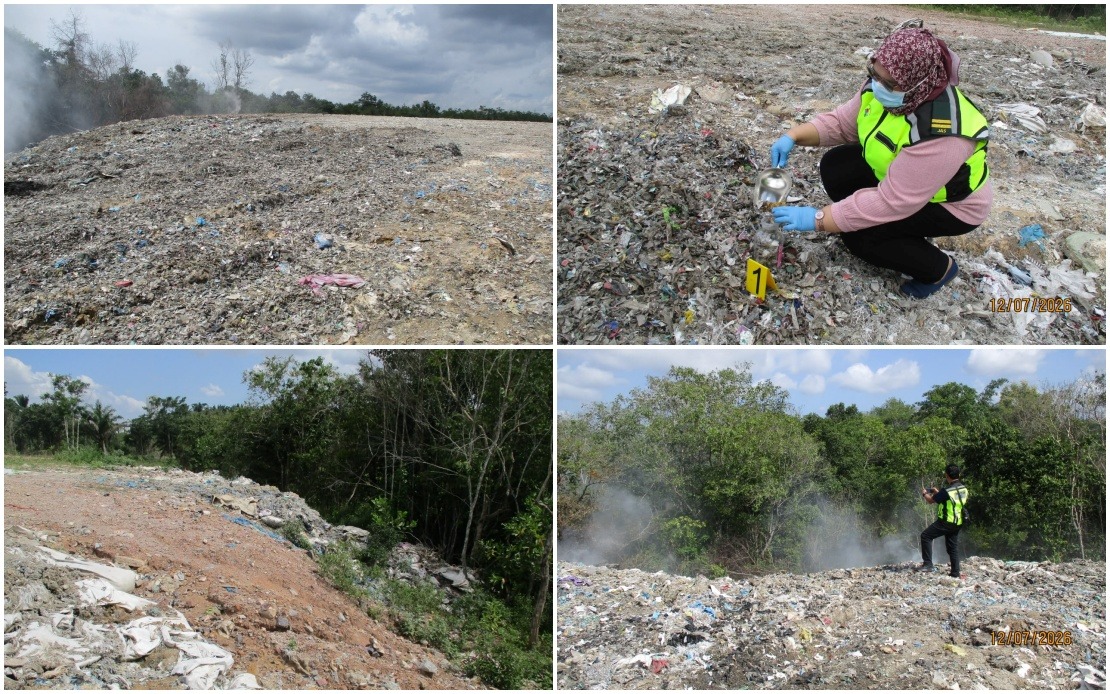
Environmental authorities in Kedah have uncovered an illegal solid waste disposal facility operating in Bukit Banyan near Sungai Petani, complete with open burning activities that prompted public complaints about noxious odours in the neighbourhood. The discovery emerged after the state Department of Environment responded to concerns raised by residents, launching an investigation that exposed widespread violations of Malaysia's environmental regulations and waste management protocols.
Sharifah Zakiah Syed Sahab, the Kedah DOE director, detailed the findings in an official statement, noting that the illicit operation had dumped approximately 250 square metres of domestic waste across a cleared plot of land. The site exhibited clear signs of open burning, which investigators determined was being conducted deliberately to extract valuable metals from discarded materials—a dangerous and environmentally destructive practice commonly employed by unscrupulous waste collectors seeking to recoup scrap metal value at the expense of public health and environmental safety.
The investigation established that the dumping operation lacked any form of official authorisation from the director-general of the Environment Ministry, a fundamental requirement for all waste disposal activities in Malaysia. This absence of regulatory approval represents one of two major legal violations identified at the site. Preliminary evidence suggests the contractor responsible for collecting domestic waste from industrial operations throughout the district may have deliberately chosen this remote location to bypass proper waste management channels and avoid disposal fees associated with licensed facilities.
Environmental authorities moved swiftly to gather evidence, collecting solid waste samples from the affected area for comprehensive laboratory analysis at the Department of Chemistry. These samples will establish the precise composition of materials being burned and determine whether hazardous or toxic substances were involved in the open burning, which could trigger additional charges and escalate health concerns for surrounding residents who may have inhaled smoke containing dangerous particulates and chemical compounds.
The case now falls under formal investigation protocols established by Malaysia's Environmental Quality Act 1974. Authorities are pursuing charges under Section 29A(1), which addresses unlawful open burning on land parcels, and Section 34A(6), which covers the operation of sanitary solid waste landfill facilities without proper approval from regulatory bodies. These charges carry potential penalties including significant fines and imprisonment, though the severity depends on whether this represents a first-time offence or part of a pattern of environmental violations.
The discovery in Bukit Banyan exemplifies a persistent challenge facing Malaysian environmental regulators: the informal waste recovery sector, which operates outside official channels to extract value from discarded materials. While the recycling and metal recovery industry plays a legitimate economic role, uncontrolled operations that resort to open burning create serious public health hazards and environmental contamination. The practice releases toxic heavy metals and particulate matter into the atmosphere while potentially contaminating soil and groundwater at disposal sites.
Kedah's DOE has escalated the matter to the Solid Waste and Public Cleansing Management Corporation, commonly known as SWCorp, which holds enforcement authority over waste management violations across the nation. SWCorp will assume primary responsibility for monitoring investigations, pursuing legal action, and ensuring compliance with federal waste disposal standards. This inter-agency coordination reflects Malaysia's multi-tiered approach to environmental enforcement, where state departments identify violations while federal bodies handle prosecution and sanctions.
The incident raises broader questions about waste management oversight in industrial zones, where contractors collect materials from numerous sources before transporting them to final disposal or recovery facilities. Regulatory gaps in this supply chain create opportunities for unscrupulous operators to divert waste to unauthorised dumpsites where disposal costs are zero and environmental safeguards are ignored. Strengthening tracking mechanisms and increasing surprise inspections at suspected illegal sites remains essential to combat this practice.
For residents in affected areas like Bukit Banyan, exposure to open burning emissions poses documented health risks including respiratory infections, cardiovascular strain, and long-term complications from inhaling particulate matter and toxic gases. Communities downwind from such operations face environmental justice concerns, as industrial waste externalities are borne disproportionately by those living nearest illegal disposal sites. The discovery underscores the importance of public vigilance—the initial complaints that triggered the DOE investigation demonstrate how community reporting remains crucial when formal monitoring systems have limited resources.
The enforcement action also highlights Malaysia's commitment to strengthening environmental compliance despite the commercial pressures facing waste management operators. As the nation pursues higher standards for environmental protection and circular economy principles, cracking down on illegal dumping and open burning becomes increasingly important. State environmental departments must balance this enforcement responsibility with adequate funding and staffing to conduct regular patrols and investigations of suspected violations.
Moving forward, authorities will need to address root causes driving contractors toward illegal disposal practices, including potentially high fees at licensed facilities and limited convenient options for hazardous or mixed-composition waste streams. Enhanced enforcement action, coupled with regulatory clarity about approved disposal pathways and reasonable fee structures, could encourage greater compliance among waste handlers. The Bukit Banyan case serves as a reminder that environmental violations often reflect systemic gaps requiring comprehensive policy solutions rather than enforcement actions alone.

