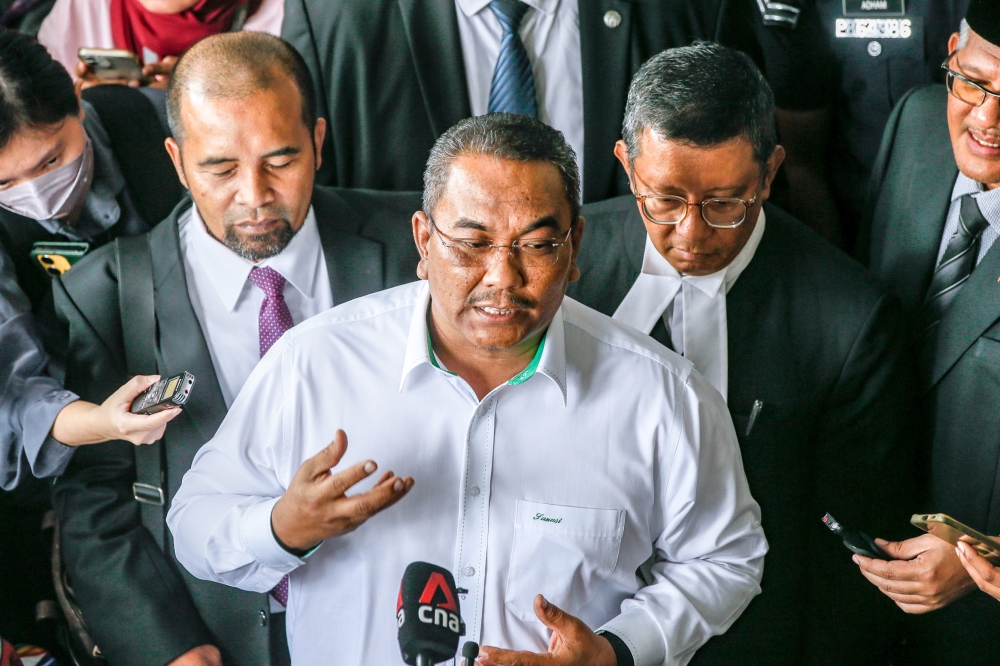
Kedah Menteri Besar Datuk Seri Muhammad Sanusi Md Nor has escalated a political dispute by issuing formal letters of demand to DAP politician Nga Kor Ming and two other individuals, accusing them of deliberately twisting his remarks to harm his standing. The legal action, announced from the state capital Alor Star, represents a significant hardening of rhetoric between the Kedah leadership and opposition figures aligned with the Democratic Action Party, one of Malaysia's most prominent Chinese-based political organizations.
The dispute centres on allegations that Sanusi's statements were misrepresented in ways that could mislead the public and damage his credibility as a senior elected official. By resorting to formal legal demands, Sanusi has signalled his intention to pursue the matter through formal channels rather than relying on public rebuttals alone. Letters of demand typically precede potential defamation suits or other civil proceedings, serving as a formal notice of grievance and an opportunity for the recipients to respond before further legal action is contemplated.
Nga Kor Ming holds significant influence within DAP structures and the broader opposition coalition, making this confrontation noteworthy in Malaysian political circles. His involvement suggests the dispute extends beyond localized Kedah politics into national-level factional tensions. The targeting of multiple individuals indicates Sanusi believes the alleged distortion was part of a coordinated effort rather than an isolated incident, though the specific nature of the contested remarks has not been detailed publicly.
This confrontation occurs within the context of Malaysia's fractious political landscape, where state-level governments frequently clash with federal opposition elements over policy direction and public narrative. Kedah, governed by PAS through Sanusi, has experienced ongoing tensions with DAP-aligned state assemblypersons and federal opposition figures. Such disputes often reflect broader ideological and racial-political divisions that characterize Malaysian electoral competition.
For Malaysian readers and regional observers, the incident highlights how political rivalries increasingly migrate into the legal sphere, with politicians weaponizing defamation and misrepresentation claims as tactical instruments. This pattern has become more pronounced in recent years, as various state leaders and national figures have issued similar legal demands against opponents. The approach raises questions about the boundary between legitimate political critique and actionable misrepresentation in Malaysia's evolving democratic culture.
The DAP's potential response will be closely watched, as the party has previously contested accusations of distorting public figures' statements. The organization has substantial legal resources and experience defending against such claims. How Nga Kor Ming and his co-respondents address the letter of demand may set precedent for similar disputes within Malaysian politics. Their response could either defuse tensions or escalate the conflict into protracted litigation.
From a constitutional perspective, Malaysian law does provide avenues for political figures to challenge statements they believe misrepresent their positions. However, courts have established relatively high thresholds for establishing defamation, particularly when public statements and political speech are involved. Sanusi's decision to pursue formal legal action suggests confidence that the alleged distortions meet legal standards for actionable misrepresentation, or alternatively, reflects an intention to exert reputational and procedural pressure on opponents.
The timing of this action warrants consideration within Kedah's broader political trajectory. As a state where PAS-led coalitions face ongoing electoral competition from DAP and other opposition forces, disputes between the chief minister and opposition figures can influence voter perceptions and party dynamics. Legal actions against opposition politicians may resonate differently across Kedah's diverse constituencies, potentially consolidating support among certain voter segments while antagonizing others.
Regional implications also merit attention, particularly given DAP's role in multiracial politics across Malaysia and its presence in several state governments. Tensions between PAS-governed states like Kedah and DAP-linked opposition figures reflect ongoing negotiations over power-sharing arrangements and policy priorities in Malaysia's complex federal system. These disputes occasionally impact negotiations at national political levels, where DAP and PAS-aligned parties must occasionally cooperate despite mutual suspicions.
The incident also reflects broader patterns in Malaysian political communication, where public figures increasingly dispute the accuracy of media reporting and political opponent statements. Rather than relying solely on counter-statements or media engagement, politicians now frequently employ legal mechanisms to challenge narratives they contest. This shift raises important questions about whether legal systems should adjudicate political speech disputes or whether such matters are better resolved through public debate and electoral accountability.
Looking ahead, observers should monitor whether additional legal actions follow this initial step, whether the targeted individuals respond formally, and what courts ultimately decide regarding the contested statements. The outcome may influence how Malaysian politicians approach criticism and counter-narrative strategies in an increasingly litigious political environment. For Southeast Asian democracies watching Malaysian developments, this situation illustrates both the strengths and potential vulnerabilities of legal systems tasked with mediating political conflicts.

