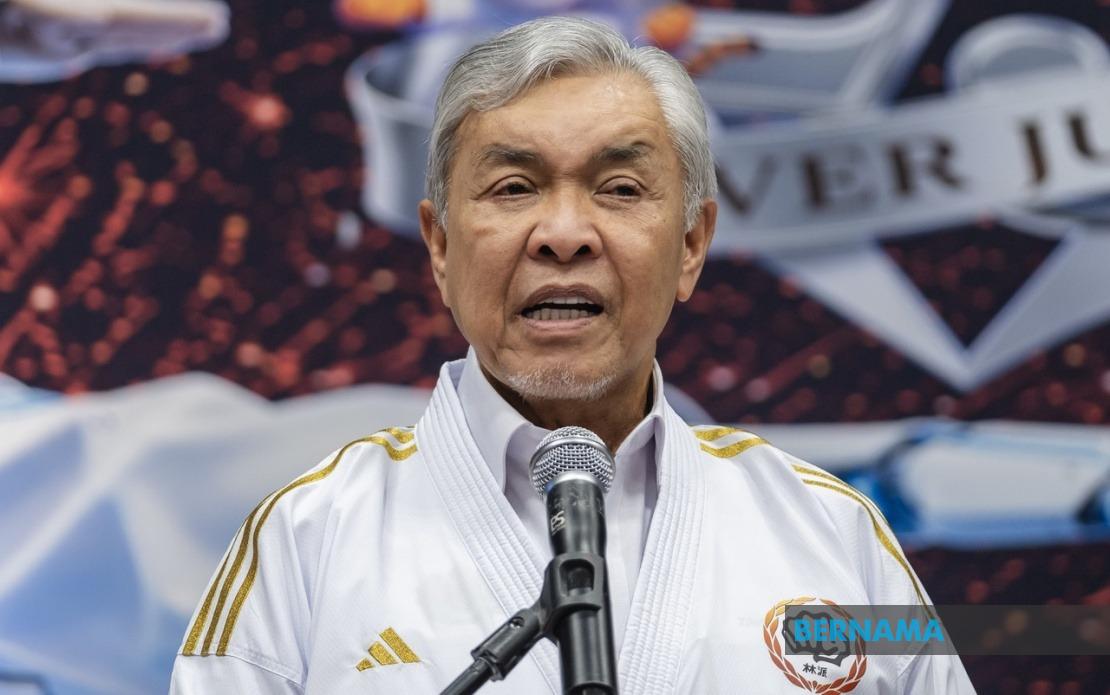
The proposal to establish karate as an official discipline within the Malaysian Schools Sports Council (MSSM) championships is poised for Cabinet consideration within the coming week, according to Deputy Prime Minister Datuk Seri Dr Ahmad Zahid Hamidi. Speaking after the International Open Karate Championship 2026 at Titiwangsa Stadium in Kuala Lumpur, Ahmad Zahid, who chairs the Cabinet Committee on Sports Development, confirmed that he would formally present the matter to his Cabinet colleagues and coordinate with Education Minister Fadhlina Sidek to evaluate karate's suitability for inclusion in the prestigious school sports calendar.
The timing of this policy push reflects growing momentum within Malaysia's karate community to institutionalize the sport at the secondary school level. The International Open Karate Championship 2026, currently underway at Titiwangsa Stadium, represents the tournament's 25th consecutive edition and underscores the sport's deep institutional roots in the region. This year's edition has drawn unprecedented participation, with more than 1,850 competitors representing 17 countries, demonstrating both the local depth and international standing of Malaysian karate.
Putrajaya Karate Association president Datuk P. Thiagu, who doubles as the championship's organizing authority, articulated a compelling case for formal school-level recognition. Thiagu emphasized that karate has already achieved substantial popularity within Malaysian school environments, a grassroots phenomenon that policymakers might leverage for systematic talent identification and development. The association argues that official MSSM inclusion would formalize what is already becoming an organic trend, converting informal school participation into structured competitive pathways that could identify and nurture young athletes of exceptional promise.
The significance of MSSM inclusion extends beyond mere administrative categorization. The MSSM championships represent the primary competitive avenue through which Malaysian school athletes gain visibility, secure sponsorships, and attract attention from national sports bodies. Without official MSSM status, even thriving sports struggle to access the infrastructure, funding, and institutional legitimacy that MSSM designation confers. For karate, which has been growing substantially in recent years but remains outside the formal school sports hierarchy, Cabinet approval would represent a watershed moment in the sport's institutional development within Malaysia.
Karate's position within Malaysian education currently resembles that of several other martial arts and emerging disciplines—widely practiced, increasingly popular among youth, yet formally unrecognized within the national school sports framework. This structural gap has likely constrained the sport's potential by limiting the talent pipeline, reducing coaching resources directed toward school programs, and reducing media coverage of school-level competitors. The push for MSSM inclusion directly targets these constraints by seeking to embed karate within the machinery of official school sports administration.
The international dimension of karate's Malaysian presence also strengthens the domestic inclusion argument. With 17 nations represented at this year's championship and a quarter-century tournament history, karate demonstrates that Malaysia possesses competitive infrastructure and institutional experience befitting an officially recognized school sport. The championship's scale and international character position Malaysia as a regional hub for karate development, a status that formal school-level recognition could amplify considerably.
From a sports development perspective, karate offers particular pedagogical advantages that appeal to education authorities. The martial art emphasizes discipline, respect, and character development alongside physical capability—qualities that align directly with holistic education objectives that Malaysian schools increasingly emphasize. Unlike some competitive sports, karate can accommodate practitioners of varying body types and physical attributes, potentially broadening participation while reducing barriers to entry for students who might not excel in conventional team sports or athletics.
The Cabinet's forthcoming review will likely weigh several considerations beyond the merits of karate itself. MSSM expansion necessarily requires assessment of resource allocation, coaching capacity, facility availability, and administrative bandwidth. Malaysia's education system must balance innovation in youth sports with fiscal responsibility and practical implementation constraints. However, given that karate already exists as an established competitive ecosystem in Malaysian schools, formal recognition would primarily involve coordination rather than creation of entirely new infrastructure.
Education Minister Fadhlina Sidek's role in evaluating the proposal will prove pivotal. Her ministry must determine whether karate meets established criteria for MSSM inclusion, consider how inclusion might affect existing sports programs, and assess whether schools nationwide possess sufficient interest and capacity to sustain karate competitions. The consultation process between Ahmad Zahid's sports development committee and Sidek's education ministry will likely involve dialogue with state education authorities and school administrators who possess direct knowledge of grassroots demand.
For Southeast Asian sports development more broadly, karate's potential MSSM inclusion holds interpretive significance. The region has increasingly recognized martial arts as valuable components of youth development and international sporting identity. Malaysia's consideration of formal karate inclusion reflects a broader regional trend toward diversifying school sports offerings beyond traditional colonial-era sports like football, badminton, and athletics. Karate's discipline-oriented philosophy and its suitability for mixed-gender competition position it well within contemporary educational frameworks.
The timeline for Cabinet deliberation remains deliberately flexible, with Ahmad Zahid indicating only that the matter would be raised "next week" without specifying an exact decision date. This measured pace suggests the government intends serious policy consideration rather than pro forma approval. Multiple stakeholder consultations likely precede formal Cabinet discussion, ensuring that any decision reflects educational, administrative, and sporting perspectives comprehensively.
Should the Cabinet approve karate's MSSM inclusion, implementation would follow through a structured process involving ministerial coordination, state education authority notification, competition format development, and coaching accreditation. The Putrajaya Karate Association would presumably become the sport's official governing body within the MSSM framework, though detailed governance arrangements remain to be determined. Karate's supporters recognize that inclusion represents merely the beginning of a longer integration process rather than an endpoint.

