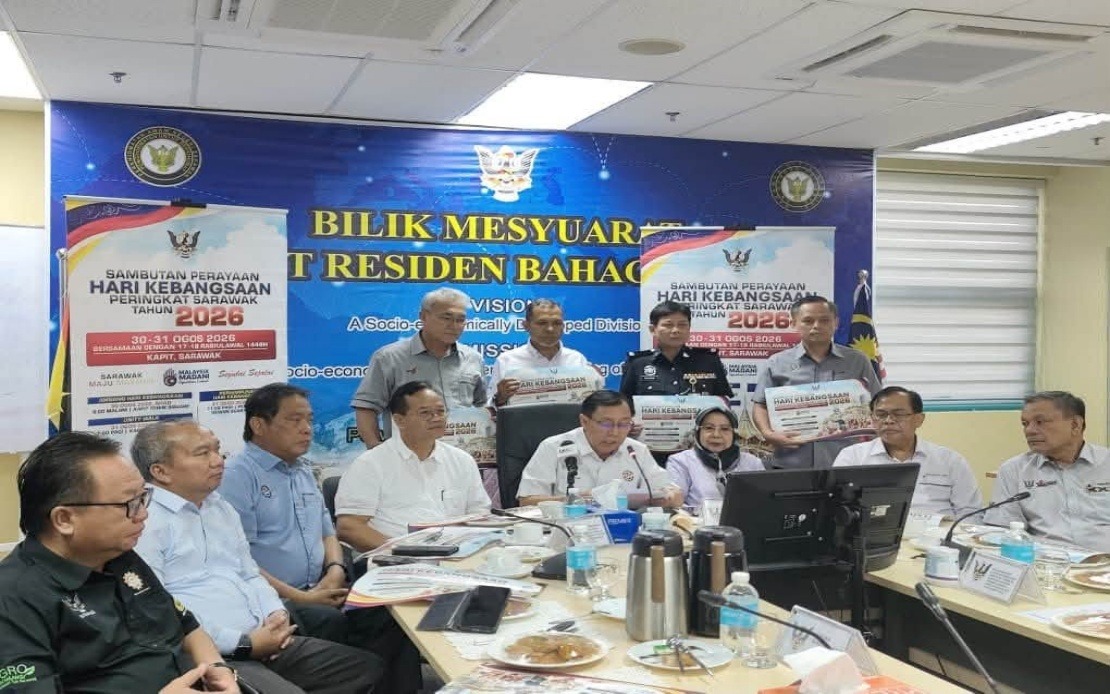
Kapit has been selected as the venue for Sarawak's state-level National Day celebration on August 30 and 31, with organisers planning a comprehensive programme designed to kindle patriotic sentiment whilst strengthening social bonds across communities. The two-day event represents an opportunity for residents across the Kapit Division and neighbouring areas to participate in commemorative activities that emphasise national unity and reflect on Malaysia's independence journey.
Datak Seri Dr Stephen Rundi Utom, the Sarawak Food Industry, Commodity and Regional Development Minister and official coordinator of the celebration, outlined the strategic objectives underpinning the event's design. Beyond the conventional role of honouring Malaysia's independence, organisers intend the celebration to serve as a vehicle for promoting cohesion amongst diverse populations, acknowledging the sacrifices made by preceding generations of leaders, and reinforcing the interconnectedness binding Malaysian society together. This multi-layered approach reflects a growing recognition amongst state authorities that National Day observances can function as more than ceremonial exercises, instead becoming platforms for deeper societal engagement and reflection.
The celebration's itinerary comprises three principal components spread across the two-day period. Events commence on the evening of August 30 with the National Day Eve celebration at Kapit Town Square, creating an informal gathering space where communities can begin festivities. The following morning at 7 am, participants are invited to join the Unity Walk, a symbolic exercise in collective participation that physically embodies the theme of togetherness. The ceremonial centrepiece unfolds at 11 am on August 31 at the grounds of Dewan Suarah Kapit, where the formal National Day Gathering will convene with official proceedings and speeches.
State leadership will feature prominently throughout the proceedings, signalling the importance Sarawak's government places on the occasion. Sarawak Governor Tun Dr Wan Junaidi Tuanku Jaafar is confirmed to attend both the Unity Walk and the National Day Gathering, ensuring gubernatorial representation across the major events. Sarawak Premier Tan Sri Abang Johari Tun Openg is scheduled to attend the National Day Gathering, bringing the highest echelon of state executive authority to the main ceremony. Their presence underscores the occasion's significance within Sarawak's civic calendar and demonstrates commitment from senior officials to direct engagement with constituencies beyond Kuching.
Kapit's selection as host carries particular implications for East Malaysian representation and regional development considerations. Situated in the interior of Sarawak, Kapit Division has historically played important roles in the state's cultural and economic fabric. Hosting a state-level National Day celebration positions the town prominently within Sarawak's ceremonial landscape whilst providing visibility and resources to an area often peripheral to major state events concentrated in urban centres. This geographical choice reflects broader patterns of state governance seeking to distribute significant occasions across diverse regions.
For Malaysian readers and policymakers monitoring federalism and state autonomy, Sarawak's hosting of its own state-level National Day celebration represents an established practice reflecting constitutional provisions granting states considerable latitude in organising civic observances. The existence of parallel state celebrations alongside the federal National Day on August 31 illustrates the multi-layered nature of Malaysian nationalism, where state identity and national identity coexist within the constitutional framework. This practice, particular to Malaysia's federal structure, differs from unitary systems where National Day celebrations typically follow uniform nationwide patterns.
Organisers have specifically emphasised inclusivity in invitation strategies, explicitly extending participation opportunities to Kapit Division residents and people from surrounding areas. This targeted outreach acknowledges geographical realities that may render travel challenging for those in more remote locations, whilst simultaneously encouraging broader participation from neighbouring divisions. Such demographic considerations are particularly relevant in Sarawak, where dispersed settlement patterns and limited transportation infrastructure necessitate deliberate accessibility planning for state-level events.
Recognising potential attendance constraints, organisers have incorporated broadcast and digital access mechanisms to broaden participation beyond those physically present. Television coverage through TVS and simultaneous streaming via official social media channels operated by Sarawak Public Communications Unit (UKAS) extend event access to remote communities with telecommunications connectivity. This multi-platform distribution strategy acknowledges contemporary expectations regarding public access to state functions whilst accommodating technological capacities varying across Sarawak's diverse populations.
The deliberate programming of multiple events across two days, rather than concentrating activities into single-occasion ceremonies, reflects evolving understandings of community engagement. The informal evening activation, morning participatory walk, and formal midday gathering collectively create varied opportunities for different demographic groups to engage meaningfully. This graduated approach proves particularly valuable for areas like Kapit, where population diversity, age ranges, and physical capabilities vary significantly, ensuring the celebration remains accessible and relevant across generations and circumstances.
From a broader Southeast Asian perspective, Sarawak's organised approach to state-level National Day celebrations illustrates how federal structures within the region navigate tensions between national cohesion and regional distinctiveness. Malaysia's constitutional framework permits such differentiation, fostering what might be termed patriotic federalism, whereby multiple layers of governance simultaneously reinforce both national and subnational identities. Understanding these dynamics illuminates how Malaysia addresses unity challenges differently than unitary neighbours, though similar multi-layered identity dynamics operate throughout Southeast Asia's diverse political contexts.

