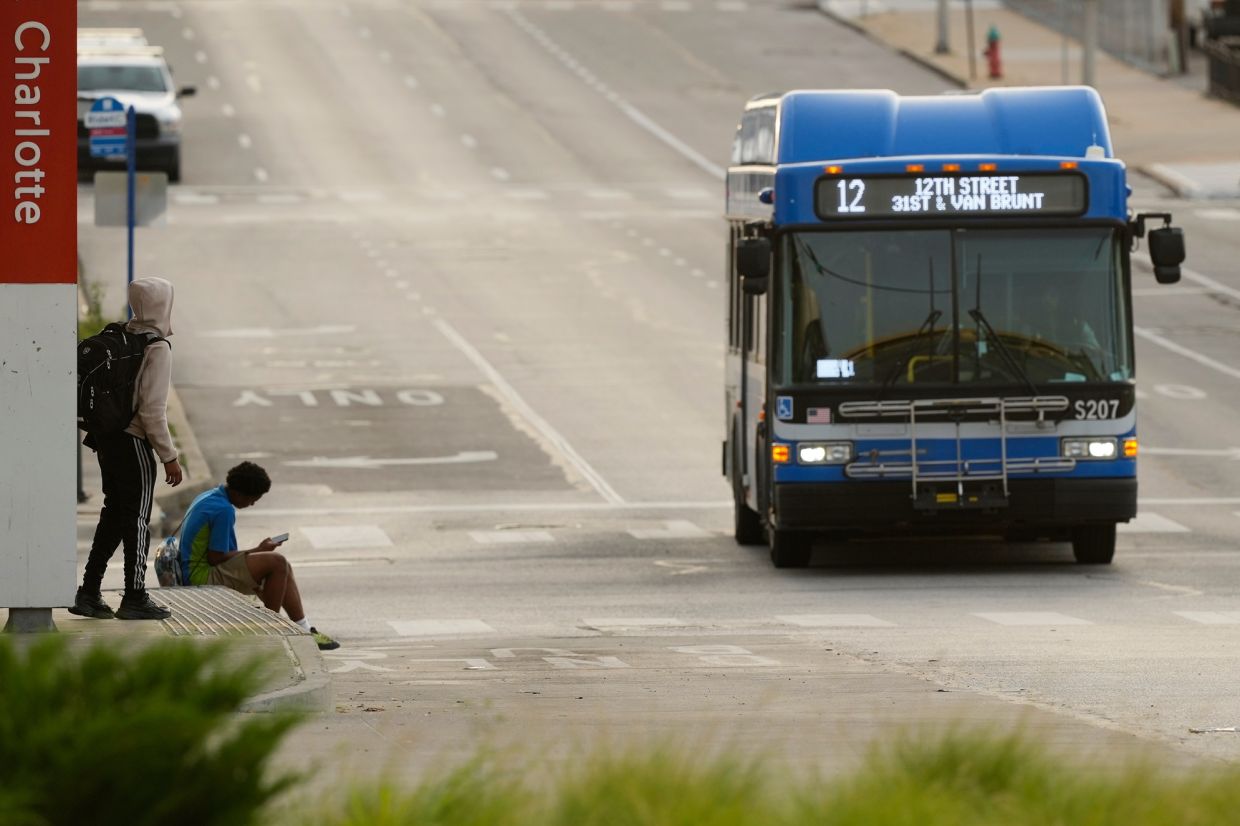
Kansas City, Missouri is moving forward with a controversial plan to deploy facial recognition software on public transit buses, marking what many observers view as a defining test case for artificial intelligence-powered surveillance in American transportation networks. The technology, supplied by Tennessee-based SafeSpace Global, would scan passengers against watchlists encompassing banned riders, missing persons, and individuals flagged by law enforcement, potentially identifying threats in real time. This initiative has elevated the city to the forefront of a contentious national conversation about whether the purported security benefits of algorithmic identification justify the privacy implications of monitoring passengers in shared public spaces.
The undertaking represents genuinely uncharted terrain in American transportation. "The idea of running face recognition on a camera that is pointed on live spaces in public is a line that until recently has never really been crossed in the last 25 years," observed Jay Stanley, senior policy analyst for the American Civil Liberties Union's Project on Speech, Privacy and Technology. The distinction matters considerably: while security cameras have long been standard on buses and in transit hubs, the automated identification capability introduces a qualitatively different surveillance mechanism. Previous deployments of facial recognition in American cities—most notably in Tampa's Ybor City neighbourhood following the 9/11 attacks—faced immediate community resistance and were ultimately abandoned. New Orleans police secretly operated facial recognition systems in violation of local ordinances, and Detroit's programs prompted sufficient backlash to force policy reconsideration, though the technology itself was not scrapped. Kansas City's initiative thus arrives at a moment when regulatory frameworks remain fragmented and public sentiment deeply divided.
Missouri's state government declined to fund the project as originally anticipated, citing concerns specifically about the facial recognition component. Undeterred, Kansas City Transportation Authority leadership proceeded to cobble together financing from local sources and federal allocations. Tyler Means, the authority's chief mobility and strategy officer, framed the technology as an evolutionary rather than revolutionary development. "Privacy is always a tricky thing," Means acknowledged. "We've always had cameras on our buses. It's just new technology. I think in time it'll smooth over and people will realise, 'Well, it didn't really feel any different.' " This assertion—that incremental technological advancement will eventually feel unremarkable—sits uncomfortably with historical patterns of surveillance scope creep, a phenomenon that has repeatedly confounded initial assurances about limited application.
SafeSpace Global, the company architecting the surveillance infrastructure, has previously deployed similar facial recognition systems in nursing homes to monitor resident egress, in correctional institutions, and in schools. Kansas City's buses represent the company's inaugural venture into transportation-scale public surveillance. According to the operational model presented by the company, camera feeds would be checked instantaneously against active watchlists generated whenever missing persons, banned riders, or law enforcement-designated individuals are reported. Should the system fail to detect a match or identify a security concern, facial biometric data would not be retained. Video footage from the cameras would revert to the depot at day's end, with standard video archives maintained on local servers for up to five years. Scott Boruff, SafeSpace Global's CEO, characterised the process as temporally circumscribed: "It's not sitting there filming all the time," he stated. "It just captures the face and goes away."
Privacy advocates remain deeply sceptical of such assurances. Stanley warned that technological scope restrictions prove nearly impossible to enforce once artificial intelligence systems become embedded in municipal operations. "It may be used for a very narrow watch list today, but there are very good reasons to think it'll expand over time," he cautioned. This concern reflects documented precedent: surveillance technologies implemented under narrow mandates have repeatedly expanded to encompass broader applications than initially authorised or publicly disclosed. Will Owen, communications director of the Surveillance Technology Oversight Project, framed Kansas City residents as prospective test subjects: "City residents should not be guinea pigs for transit systems to test Silicon Valley's latest unproven, biased surveillance tech," he remarked, highlighting both the experimental nature of deployment and documented concerns about algorithmic bias in facial recognition systems.
Proponents of the initiative argue that security cameras are already ubiquitous throughout urban environments, including aboard Kansas City's buses, and that some law enforcement agencies have responsibly employed facial recognition to identify suspects from video evidence. Moreover, they note that other municipalities have deployed AI-powered systems on buses without generating comparable controversy—though the applications differ significantly. Several cities have installed cameras equipped with license plate recognition algorithms to identify vehicles illegally occupying bus lanes or violating parking regulations. While privacy advocates express reservations about these automated enforcement mechanisms, they distinguish between systems monitoring vehicular infractions and those capable of identifying and recording individual faces in transit spaces where people have no expectation of intensive biometric surveillance.
James Craig, Detroit's former police chief, represents a law enforcement perspective favouring controlled deployment. Craig acknowledged that his department experienced substantial public backlash regarding facial recognition surveillance and consequently restructured policies governing how the technology could be utilised without abandoning the system entirely. He remains an advocate for facial recognition when implemented with rigorous oversight mechanisms. "If the police department or the city doesn't have the insights to build in strong policies, transparent policies and accountability, the knee-jerk reaction is, 'Well, let's just ban it,' " Craig observed, suggesting that categorical prohibitions represent an overcautious response to implementation failures rather than inherent technological defects.
The deployment timeline has encountered multiple obstacles. Originally scheduled for installation during spring ahead of World Cup matches in Kansas City, the initiative was postponed just before launch. Technical challenges—specifically the necessity to upgrade Wi-Fi routers sufficiently robust to simultaneously support facial recognition cameras and new fare collection systems—contributed to delays. State funding withdrawal proved consequential as well, underscoring the financial fragility of municipal surveillance projects. Despite these setbacks, Means expressed confidence that deployment would proceed within the calendar year at expanded scale, potentially encompassing thirty buses rather than the nine originally envisioned in the pilot phase.
Ryana Parks-Shaw, serving as Kansas City mayor pro tem and City Council member, characterised the deferral positively. "I think they need to take their time and do it right," Parks-Shaw stated. "I believe that any use of this kind of technology must be approached carefully, transparently and with clear guardrails." Her framing suggests that deliberative implementation—subject to transparent public discourse and explicit governance constraints—may distinguish responsible deployment from surveillance normalisation. Yet history demonstrates that such guardrails frequently erode once systems become operationally entrenched and institutional interests accumulate around their continuation.
For the World Cup period, transit authorities substituted traditional security approaches in lieu of facial recognition technology. Means explained the contingency: "We're kind of going old school to address what we hoped the technology would do," he noted, indicating plans to deploy approximately forty additional officers throughout transit stops and centres. This recourse to labour-intensive human monitoring rather than algorithmic surveillance underscores both the technological ambitions driving the facial recognition project and the persistent viability of conventional security protocols. The contrast illuminates an uncomfortable truth animating the broader surveillance policy debate: sophisticated technological systems often appeal primarily because they promise to accomplish through automation what society already accomplishes through existing institutional mechanisms, introducing novel privacy dimensions without necessarily delivering commensurate security enhancements.
For Malaysian observers and Southeast Asian policymakers, Kansas City's experience carries instructive implications. As regional cities modernise transit infrastructure and embrace smart city initiatives, the decision whether to incorporate facial recognition surveillance at deployment phase—rather than retrofitting systems after establishment—will prove consequential. The fragmented American regulatory landscape, where local jurisdictions navigate surveillance expansion with minimal federal constraint, contrasts with governance models elsewhere. Kansas City's trajectory demonstrates how initial technical and financial obstacles may prove temporary, while institutional and surveillance architecture ultimately persists. The city's determination to proceed despite state funding withdrawal and public scepticism suggests that once municipal commitments to particular surveillance technologies crystallise, reversing course becomes progressively more difficult regardless of evolving public sentiment or demonstrated efficacy questions.

