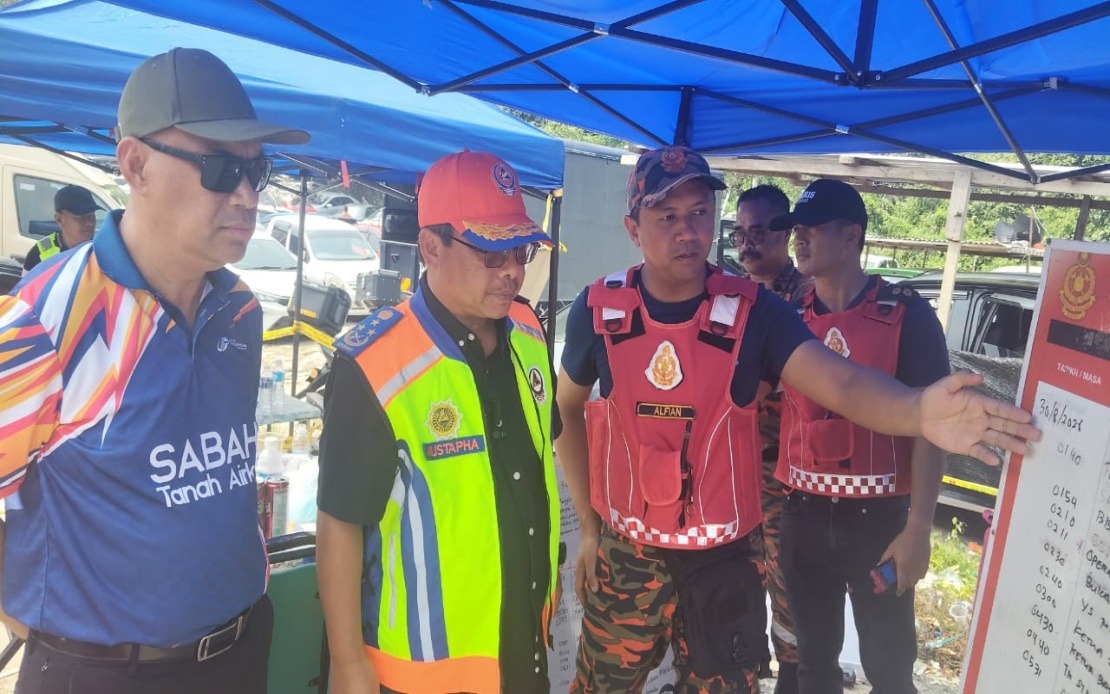
A fire that swept through Kampung Lok Buta in Kota Kinabalu early Friday morning has left a community devastated, with three young children among the dead and more than 200 homes reduced to ash. The disaster struck at 1.40 am, unfolding with terrifying speed through the tightly-knit residential area in Numbak. The tragedy has prompted immediate intervention from federal and state authorities, who are now mobilising resources to support the displaced families and coordinate the investigation into the blaze's origins.
Among those who perished were siblings Nana Abdullah, aged 4, and Mohd Asrul Abdullah, aged 6, along with their 8-year-old cousin Nurfarahdilah Mohd Tajihah. The deaths represent the human cost of what officials have characterised as a major emergency requiring coordinated disaster management. Datuk Mustapha Sakmud, the Minister in the Prime Minister's Department overseeing Sabah and Sarawak affairs and Member of Parliament for Sepanggar, visited the site to assess the scale of the devastation and commence relief operations.
In response to the scale of displacement, authorities have activated two temporary relief centres at Dewan Kampung Likas and Dewan Damai to shelter the more than 200 victims left homeless by the fire. These facilities serve as centralised hubs for registration and coordination of assistance efforts, while also providing a structured mechanism for distributing donations from both governmental and private sources. The establishment of formal relief infrastructure demonstrates the recognition that a disaster of this magnitude requires systematic rather than ad-hoc responses.
Kota Kinabalu City Hall has formally declared Kampung Lok Buta a disaster zone, a designation that opens pathways for enhanced emergency funding and coordination protocols. This official status also facilitates inter-agency collaboration and ensures that emergency services can mobilise resources without bureaucratic hindrance. Such declarations carry significant implications for recovery timelines and the scope of assistance available to affected residents under Malaysian disaster management frameworks.
A particular concern for authorities is the impact on students whose education has been disrupted by their displacement. Mustapha emphasised during his site visit that officials must identify all school-age victims—those attending primary and secondary schools, tertiary institutions, and technical and vocational training programmes—to prevent the disaster from derailing their academic progress. He announced plans to brief the Ministry of Education about the situation, seeking to ensure that affected students receive compensatory support and can resume their studies without significant interruption.
The coordination effort extends to the highest levels of government, with Mustapha indicating that the situation will be brought before a Malaysia Agreement 1963 Implementation Action Council meeting that will include Prime Minister Datuk Seri Anwar Ibrahim and Sabah Chief Minister Datuk Seri Hajiji Noor. This elevates the disaster from a municipal to a national policy matter, reflecting the scale of the humanitarian challenge and the political imperative to respond comprehensively. The involvement of these leaders signals that reconstruction and long-term support mechanisms may be structured beyond routine disaster protocols.
Datuk Seri Dr Sabin Samitah, who serves as both Kota Kinabalu City Hall mayor and chairman of the District Disaster Management Committee, was present during Mustapha's inspection. His dual role positions him at the intersection of municipal governance and emergency management, making him crucial to coordinating the practical response. Mustapha called for urgent meetings between DBKK and relevant agencies to chart a comprehensive assistance strategy that addresses both immediate humanitarian needs and longer-term recovery priorities.
Initial financial assistance has been committed to the families of the three deceased children, though officials have not yet disclosed the quantum or eligibility criteria for such support. The provision of immediate cash assistance represents a standard component of government disaster response, though critics in past incidents have questioned whether such sums adequately address the trauma and material losses incurred by bereaved families. The decision to prioritise family support signals the government's acknowledgment of the particular tragedy represented by the loss of young lives.
The fire's destructive capacity—consuming over 200 residential structures in a single incident—underscores the vulnerability of densely-populated informal settlements to conflagration. Kampung Lok Buta, like many residential areas in Kota Kinabalu, likely features structures built in close proximity with potentially limited fire-suppression infrastructure. The incident raises broader questions about building codes, fire safety standards, and preventative measures in similar communities across Sabah and Malaysia more widely. While initial relief efforts focus on immediate victim support, the longer-term policy implications may drive discussions about urban planning and safety regulations.
As search and rescue operations conclude and relief coordination intensifies, the focus will shift toward understanding how the fire originated and whether preventive measures might reduce the likelihood of similar disasters. Emergency responders and investigators will examine whether electrical faults, cooking accidents, or other factors triggered the blaze. Simultaneously, social services must address the psychological and material needs of over 200 displaced residents, many of whom have lost their homes and possessions entirely. The coming weeks will test both the capacity of Kota Kinabalu's institutions and the broader Malaysian disaster management system to coordinate a response proportionate to the scale of this tragedy.

