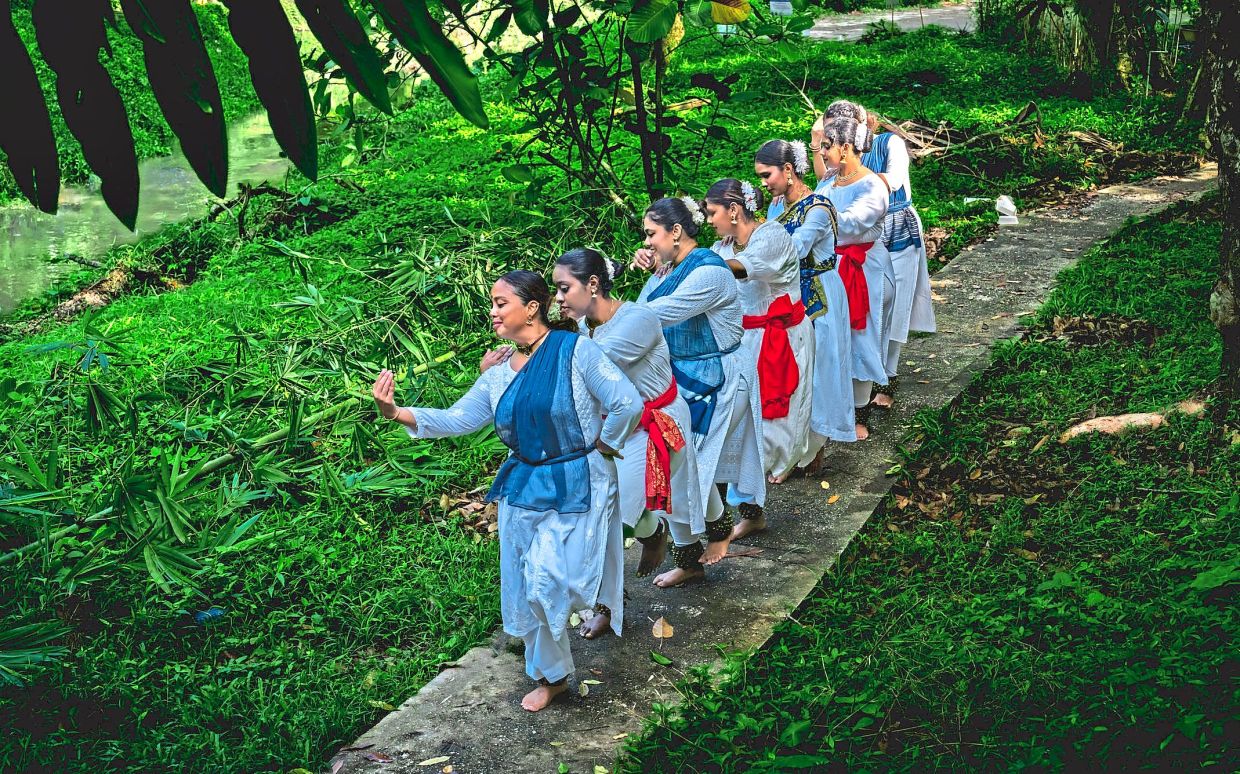
Three decades after its establishment, Kuala Lumpur-based Kalpana Dance Theatre (KDT) stands as a rare survivor in Malaysia's unpredictable and financially precarious performing arts landscape. Founded by Shangita Namasivayam, the company has navigated constant industry upheaval through deliberate artistic reinvention, arriving at its milestone anniversary with an ambitious production that weaves together classical tradition, contemporary environmental concerns, and community activism in ways that extend far beyond the stage.
To mark the occasion, Namasivayam is staging a thematic bharatanatyam concert on August 8 at the Shantanand Auditorium in Temple of Fine Arts, Kuala Lumpur. The production's conceptual framework centres on two of India's most significant rivers—the Ganges in the north and the Cauvery in the south—using these waterways as vessels for exploring humanity's relationship with nature and the pressing resource crises facing contemporary society. The Ganges, sacred in Hindu tradition and India's most culturally emblematic river, stands in dialogue with the Cauvery, historically called the "Ganga of the South" and foundational to agricultural prosperity across southern India. Both rivers have shaped centuries of Indian folk and classical artistic expression, inspiring countless performances that blend mythology, regional musical traditions, and spiritual symbolism.
Namasivayam articulates the production's central metaphor with poetic precision: the Ganges represents compassion's shoreline, a place where spiritual transgression dissolves, while the Cauvery embodies maternal abundance and flourishing life. Yet her artistic vision extends beyond metaphorical abstraction into urgent environmental messaging. By coupling bharatanatyam—one of India's most rigorous and codified classical dance forms—with explicit climate narratives, the production demands that audiences and dancers alike confront water scarcity, pollution, and ecosystem degradation as contemporary realities demanding immediate action. Namasivayam emphasizes that water constitutes the Earth's most critical resource, and that current patterns of abuse and neglect towards rivers and oceans represent a civilisational failure that younger generations must recognize and reverse.
This educational imperative shaped the production's development strategy in unexpected ways. Rather than confining dancers to rehearsal studios, Namasivayam directed them toward direct environmental engagement, establishing a partnership with The Alliance of River Three (ART!), a Malaysian volunteer-driven conservation organization founded in 2018 by Kennedy Michael. ART! operates through community-centred methodology, building River Three Parks, coordinating weekly cleanup operations, and implementing long-term ecosystem restoration schemes focused primarily on rehabilitating the Klang River. The organization's track record earned recognition as a Golden Hearts Awards winner in 2020, cementing its credibility as a serious environmental actor. Since January, KDT's dancers have participated in hands-on restoration work at Taman Melawati River Three SDG Park and the Mid Valley location, projects ART! plans to complete by 2030 as part of Malaysia's sustainable development framework.
For Namasivayam, this groundedness in actual conservation labour represents a necessary corrective to what she perceives as generational disconnection from physical reality. She notes with some astonishment that contemporary young performers rarely engage in activities that literally dirty their hands, suggesting that the tactile, unglamorous work of river cleanup constitutes invaluable pedagogical experience extending far beyond technical dance training. This approach reframes the artist's social responsibility: rather than performing activism as symbolic gesture, KDT dancers become active participants in environmental restoration, their bodies engaged in both artistic creation and ecological repair.
The production's creative architecture developed through sustained collaboration with internationally recognised artistes based in Chennai, India. Choreographer PT Narendran, musician OS Arun, and scriptwriter Dr Va Ve Subramanian brought specialized expertise to months of conceptual development, their deep familiarity with Namasivayam allowing for the kind of artistic trust and shared aesthetic vision that distinguishes genuinely collaborative work from mere contracted assembly. The 90-minute presentation features 54 dancers ranging from six to 62 years old, including performers with disabilities, structured as an ensemble work without featured soloists—a democratic choreographic choice that privileges collective expression over individual virtuosity. The script, composed in Tamil with English narration, achieves poetic density while maintaining accessibility across generational and linguistic boundaries, binding together philosophical inquiry with lyrical richness.
The music ensemble comprises 30 musicians, and logistical constraints necessitated training Malaysian artists to collaborate with international specialists rather than importing the entire creative team. This pragmatic approach yielded pedagogical benefits that Namasivayam emphasizes as among the production's most valuable outcomes. When young Malaysian dancers train intensively with master artistes carrying decades of accumulated knowledge and stylistic sophistication, they absorb far more than technical refinement—they internalize entire philosophical frameworks, encounter diverse interpretative approaches to bharatanatyam's foundational vocabularies, and develop nuanced understanding of how tradition permits and encourages evolution. Such mentorship relationships prove instrumental in cultivating dancers as thinking artists rather than mere technique repositories, equipped to interrogate classical forms and position them within contemporary contexts.
Sustaining such ambitious artistic work demands navigating perpetual financial precarity, a reality that frames Namasivayam's determination as something approaching heroism within Malaysia's underfunded cultural sector. She openly acknowledges the struggle to resource performances, yet insists that providing stage experience for young dancers represents a non-negotiable obligation that extends beyond conventional pedagogy. Classroom instruction, however excellent, cannot replicate the distinctive energy that performance demands—the heightened focus, physical precision, emotional transparency, and collective synchronisation that stage presentation requires. By prioritizing regular performance opportunities despite funding constraints, Namasivayam positions KDT as custodian of living heritage, ensuring that bharatanatyam remains embodied practice rather than archived tradition. The August production thus simultaneously celebrates the company's institutional survival and reaffirms its foundational commitment to nurturing the next generation of Malaysian dancers as thoughtful practitioners positioned to carry this classical form forward into increasingly complex cultural and environmental futures.

