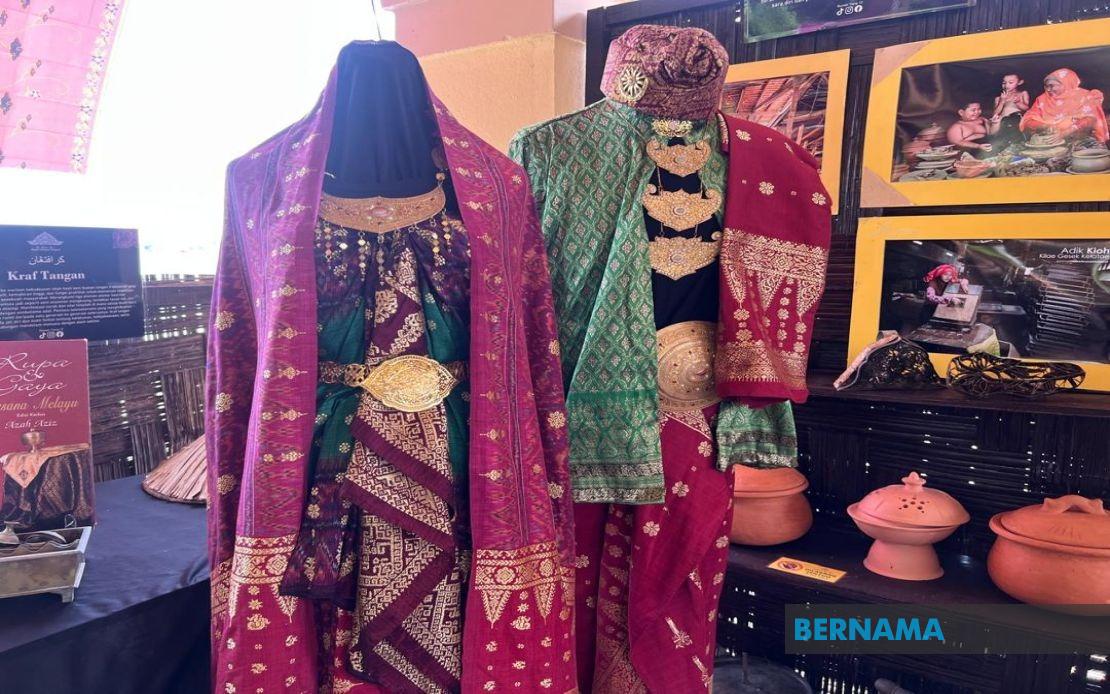
Kain Lima, one of Malaysia's most sophisticated traditional textiles, stands at a critical juncture as the number of skilled artisans capable of producing this delicate fabric dwindles. The distinctive weaving technique that has defined this heritage craft for generations faces potential extinction unless immediate steps are taken to document and transmit knowledge to younger craftspeople. At the recent Festival Kesenian Rakyat Kelantan held in Tok Bali, heritage custodians highlighted the growing urgency of preserving this cultural treasure before it becomes merely a historical artifact.
The artistry embedded within Kain Lima distinguishes it fundamentally from other Southeast Asian textiles. Rather than relying solely on metallic threads as seen in songket, Kain Lima employs a labour-intensive tied or tie-dye technique that combines multiple coloured threads before the weaving process begins. This methodical preparation phase demands exceptional precision, with craftspeople carefully orchestrating the arrangement of each motif to achieve the fabric's signature colour-reflection effect. The resulting patterns emerge only after this intricate preparatory work transforms into the actual weaving, a process that cannot be rushed or mechanised without destroying the textile's essential character.
Nik Mohd Murdani Nik Hassan, caretaker of Galeri Rumah Tiang 12 in Kelantan, explained that distinguishing authentic Kain Lima from conventional songket requires trained eyes attuned to its specific structural qualities. The patterns, weaving density, and materials used all bear witness to the textile's distinct origin and method. For those unfamiliar with traditional fabrics, such distinctions remain invisible, yet specialists recognise immediately the hallmarks of genuine Kain Lima production. This knowledge gap itself represents part of the preservation challenge, as fewer individuals today possess sufficient expertise to identify, evaluate, and appreciate these textiles.
The market value of Kain Lima reflects both its technical complexity and historical significance. Contemporary pieces command prices ranging from RM3,000 to over RM4,000, depending on variables including age, motif complexity, condition, and the finesse exhibited in the weaving itself. These figures testify to the textile's enduring worth among collectors and heritage enthusiasts, yet rising prices sometimes create barriers for ordinary Malaysians to access and wear these fabrics. Historically, Kain Lima occupied an elevated position within Malay society, draped across royalty in the form of sarongs, shawls, and ceremonial dress that announced both wealth and cultural standing.
The transformation of Kain Lima from living tradition to museum piece reflects broader challenges facing traditional crafts across Southeast Asia. Generational transmission of specialised knowledge requires extended apprenticeship periods that conflict with modern economic pressures facing younger Malaysians. Few young people possess the patience or financial security to spend years mastering techniques that offer uncertain financial returns in contemporary markets. Meanwhile, the global textile industry's shift towards industrial production has reduced the cultural spaces where traditional weaving occurs naturally as part of community life. What once represented everyday luxury within royal courts and elite households has become progressively more marginalised within contemporary Malaysian society.
Recognising these dangers, heritage institutions have begun proactive preservation efforts. Galeri Rumah Tiang 12, which expanded its mission since 2020, now actively showcases Kain Lima collections assembled by private collectors across the region. These exhibitions serve multiple purposes simultaneously: they document existing pieces for posterity, they educate the public about textile distinctions that most Malaysians have never learned to recognise, and they create spaces where contemporary craftspeople can encounter authentic examples of their cultural inheritance. The gallery functions as both museum and educational hub, attempting to rebuild the cultural infrastructure necessary for appreciating traditional textiles.
Younger artisans increasingly recognise the value of engaging with heritage textile traditions, though often through innovative rather than strictly preservationist approaches. Nur Anira Akmal Che Abdul Aziz, a 34-year-old handicraft maker from Pasir Mas, represents an emerging cohort attempting to bridge traditional knowledge with contemporary creative expression. Her visits to heritage exhibitions serve multiple functions: they provide inspiration for new designs, deepen her understanding of traditional motifs and production philosophies, and connect her work to a broader continuum of Malaysian cultural expression. Rather than viewing tradition and innovation as opposing forces, such practitioners seek synthesis that respects historical knowledge while developing contemporary relevance.
The implications of Kain Lima's decline extend beyond individual textiles to encompass Malaysia's broader cultural identity. Traditional textiles encode historical narratives, religious symbolism, and technical knowledge accumulated across centuries. When craft traditions disappear, entire dimensions of understanding Malaysian history and society vanish alongside them. Neighbouring countries including Indonesia and Thailand have invested significantly in textile heritage preservation, recognising that these materials represent irreplaceable cultural assets that distinguish nations within an increasingly homogenised global marketplace. Malaysia's approach remains comparatively modest, with preservation efforts dependent largely upon private collectors and individual initiatives rather than coordinated national programmes.
The economic sustainability of heritage crafts presents one of the most vexing challenges facing preservation efforts. Master weavers require income sufficient to support themselves and potentially train apprentices, yet market prices for traditionally-produced textiles must remain within reach of ordinary consumers to maintain cultural vitality. This tension between economic viability and accessibility has no simple solution, yet several potential pathways merit exploration. Government support for heritage craft training, premium markets emphasising ethical production and cultural authenticity, and educational programmes building appreciation among younger Malaysians might collectively address the crisis without requiring choice between preservation and accessibility.
Festival programming like the Kelantan Arts Festival serves crucial roles within this preservation ecosystem by creating visibility and gathering spaces where heritage practitioners and enthusiasts converge. Such events remind the broader public that these traditions remain living practices rather than historical relics, and they provide platforms for knowledge transfer and intergenerational dialogue. Yet festivals alone cannot sustain endangered crafts; they represent necessary but insufficient interventions requiring complementary efforts spanning education, market development, and institutional support.
The window for meaningful intervention remains open but narrowing. Each master weaver who passes without transmitting knowledge represents irreplaceable loss, while each year of declining practice erodes the community structures and cultural context within which these textiles achieved their original significance. Malaysia possesses both the institutional capacity and collective wealth necessary to preserve Kain Lima and related heritage textiles, should political leadership prioritise cultural preservation alongside economic development. The question remaining is whether such prioritisation will materialise before these intricate, labour-intensive fabrics become accessible only through museum displays rather than worn as living expressions of Malaysian identity.

