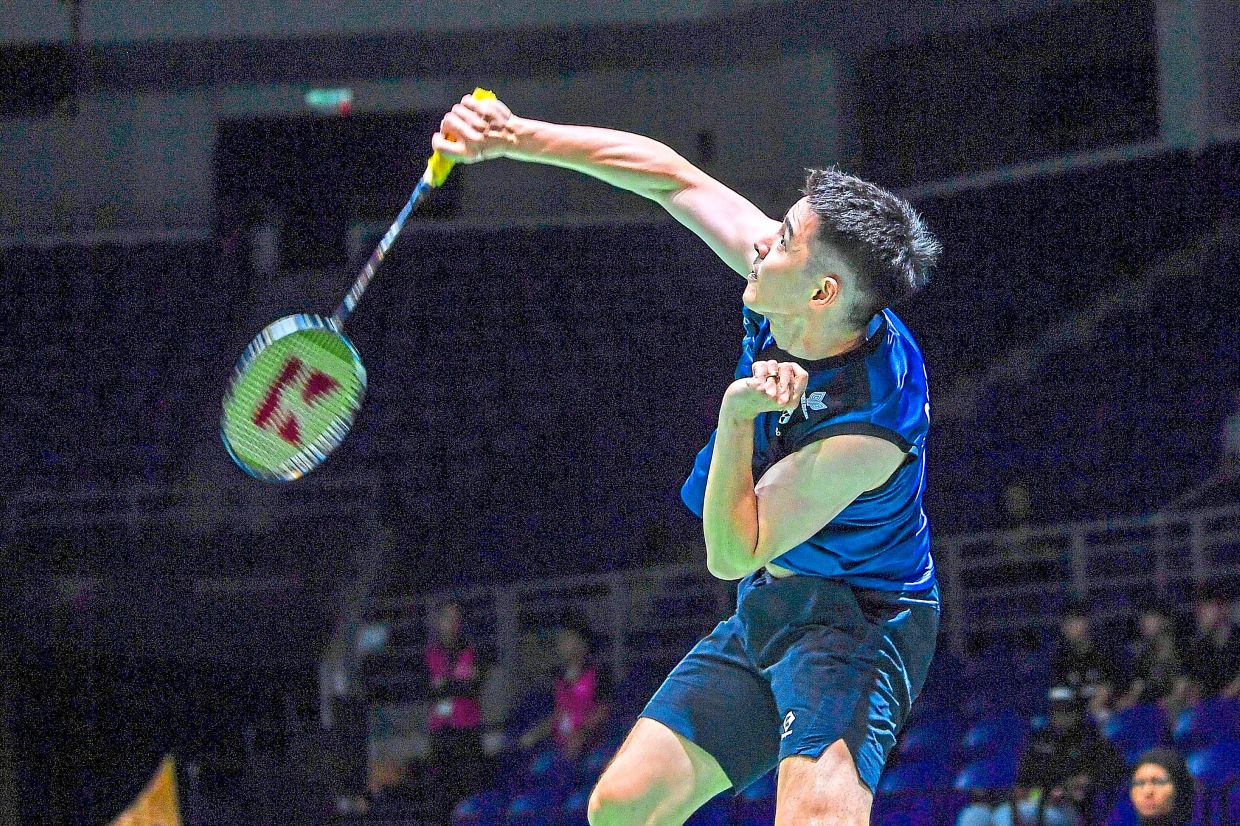
Badminton's unpredictable nature was on full display at the Korean Masters when Malaysian shuttler Cheam June Wei orchestrated another upset victory on Friday, August 7, dispatching Taiwan's Su Li-yang—seeded seventh—in a gruelling quarter-final contest at the Asan Yi Sun-sin Gymnasium. The three-game encounter tested June Wei's composure and tactical acumen, ultimately concluding 23-21, 10-21, 21-18 in his favour as he booked a berth in the semifinal stage. This latest triumph represents yet another significant scalp in what has become an improbable tournament trajectory for the independent player.
What makes June Wei's performance particularly noteworthy is the calibre of opposition he has progressively dismantled throughout the week. In the tournament's opening rounds, he delivered successive upsets against world-ranked adversaries who entered with substantial pedigree and seeding advantages. His opening-round victory saw him topple Jason Teh, a shuttler ranked 29th globally, before he subsequently overwhelmed China's Dong Tianyao—positioned at world number 49—in the second round. Each victory has methodically dismantled the notion that unseeded challengers cannot penetrate deep into elite tournament brackets, particularly when facing established names with tournament experience at the highest levels.
The quarter-final match itself reflected the grinding nature of modern men's singles badminton, where momentum fluctuates rapidly and tactical adjustments often determine outcomes. June Wei's ability to win the opening game by the narrowest margin demonstrated his resilience under pressure, though Su Li-yang's emphatic response in the second game suggested the encounter remained competitive. The decisive third game ultimately hinged on June Wei's capacity to maintain focus and execute precise shot selection when the stakes intensified. In his post-match reflection, June Wei acknowledged the unexpected nature of his progression while emphasizing his point-by-point mentality—a philosophy that clearly resonates with his match execution and enables him to process high-pressure situations without becoming overwhelmed by their magnitude.
Malaysia's representation in doubles categories yielded contrasting results that further complicated the nation's overall performance trajectory at the Korean Masters. The men's doubles partnership of Man Wei Chong and Soh Wooi Yik progressed to the semifinals with consummate ease, dismantling India's Krishna Prasad Garaga and Pruthvi Krishnamurthy Roy with a dominant 21-7, 21-8 scoreline. The lopsided nature of this victory suggested a significant gulf in rhythm and court positioning between the opponents, allowing the Malaysian pair to establish early control and systematically dismantle their opponents' coordination. Simultaneously, Tee Kai Wun and Yap Roy King advanced past fellow Malaysian shuttlers Aaron Chia and Aaron Tai in an all-Malaysian quarterfinal, winning decisively 21-12, 21-15 to secure their own semifinal appointment.
However, Malaysia's mixed doubles contingent encountered considerably sterner resistance that ultimately proved insurmountable. Three separate partnerships attempting to navigate the quarterfinal hurdle encountered seeded opposition they could not overcome, each departing the tournament in succession. Jimmy Wong and Cheng Su Yin succumbed to South Korea's second-seeded pairing Kim Jae-hyeon and Jang Ha-jeong, falling 17-21, 18-21 in a match that likely remained competitive throughout despite the eventual scoreline. The subsequent elimination of Loo Bing Kun and Noraqilah Maisarah Ramdan at the hands of China's third-seeded duo Gao Jiaxuan and Wu Mengying reflected a similar pattern, with the Malaysians falling 14-21, 15-21. Chen Tang Jie and Clarissa San completed the mixed doubles exodus when they lost to Japan's Haruki Kawabe and Kokona Ishikawa, finishing 20-22, 17-21.
For Malaysian badminton, these results underscore the disparate fortunes across different discipline categories at international tournaments. While the men's singles division has produced an unlikely semifinalist in June Wei, and men's doubles has delivered two semifinal representatives, the mixed doubles category has proven considerably more challenging. The fact that all three Malaysian mixed doubles partnerships exited at an identical stage suggests systemic difficulties in this particular discipline—whether attributable to preparation, tactical alignment, or the specific characteristics of the opposition bracket remains subject to analysis by coaching staff. The absence of a Malaysian mixed doubles presence in the latter stages represents a missed opportunity to build momentum heading into future tournaments.
June Wei's continued progression carries implications beyond his immediate tournament performance. His success as an independent shuttler—operating outside the formal national federation structure—demonstrates that advancement at elite levels remains possible through alternative pathways. His ability to execute consistently against seeded opponents of international standing provides evidence that Malaysian badminton talent transcends organizational boundaries, though it simultaneously raises questions about the potential unrealised if such talent were fully integrated into comprehensive developmental programmes. His path to the semifinals represents a narrative of individual determination that resonates particularly strongly within Malaysian sporting discourse, where underdog achievements capture public imagination and inspire younger athletes to pursue ambitious objectives.
The significance of reaching the semifinal stage at a premier badminton tournament cannot be understated for a shuttler competing independently. Korean Masters tournaments command respect within the international badminton calendar, attracting elite competitors and offering substantial ranking points that influence year-end classifications. For June Wei specifically, this semifinal berth represents tangible validation of his technical proficiency and competitive mentality, outcomes that will reverberate through subsequent tournament participation and ranking trajectory. His presence among the final four competitors positions him advantageously for potential title considerations, and regardless of semifinal outcome, his tournament run has already established him as a formidable competitor capable of prevailing against globally-ranked opposition.

