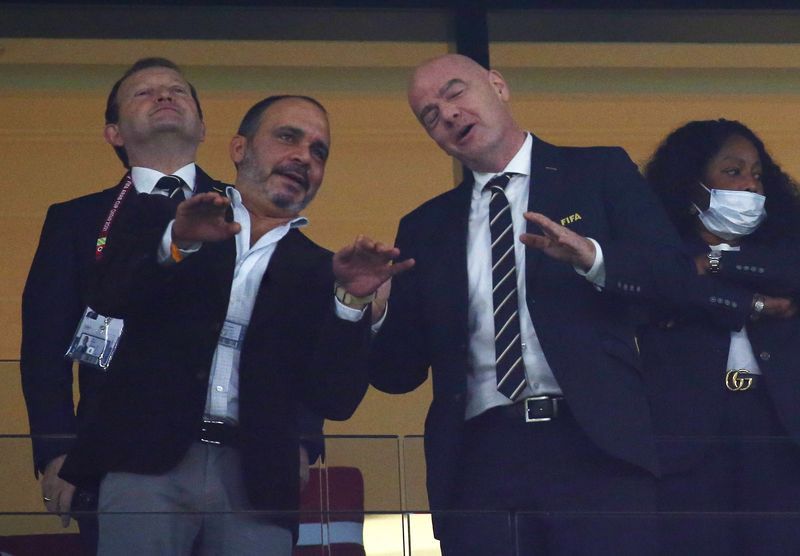
Ali bin Hussein, the Jordan Football Association President, has mounted a public assault on FIFA President Gianni Infantino, alleging that the world soccer body engaged in what amounts to extortion by conditioning support for the organisation's internal problems on the provision of his personal endorsement. Speaking out on Tuesday, Bin Hussein contended that during the World Cup tournament, FIFA representatives conveyed verbally that endorsing Infantino's continued leadership would substantially assist the Jordanian football association in receiving help with longstanding institutional difficulties that had previously been stonewalled.
The timing of Bin Hussein's condemnation is particularly significant, as it arrives during a period of intensifying internal friction at FIFA. Infantino has come under considerable fire from senior officials and national soccer bodies following his bid to sell a minority stake in the organisation's commercial operations—a scheme intended to generate substantial funding for development initiatives globally. When member associations and confederations rejected this controversial proposal following a hard deadline of September 19, the FIFA president was forced into a humiliating retreat. The setback has exposed fractures in support for his leadership, with even senior FIFA figures including Secretary General Mattias Grafstrom and legendary coach Arsene Wenger distancing themselves from the initiative.
Bin Hussein's grievances extend far beyond the allegation of quid pro quo dealings. He articulated a catalogue of systemic issues confronting Jordan's football association, an organisation operating with severe resource constraints that characterise smaller football nations. Jordanian supporters attending World Cup matches have reportedly faced demands for ticket prices that many consider unreasonable, yet simultaneously encountered complications obtaining visas to travel to the tournament venue in the United States. These dual burdens exemplify what smaller football nations experience in the FIFA ecosystem—forced participation in expensive global tournaments coupled with bureaucratic barriers that undermine fan engagement.
A particularly contentious grievance involves FIFA's taxation arrangements with the American government. According to Bin Hussein, Jordan has incurred substantial tax liabilities through FIFA as a consequence of participating in the United States-hosted World Cup, an obligation that did not apply to nations fielding teams in Canada or Mexico. This asymmetrical treatment reveals how geographical accident of tournament location can create disparate financial consequences for participating countries, with the costs effectively transferred to players and staff whose wages or benefits absorb these unanticipated charges.
The Arab Cup situation adds another dimension to Jordan's accumulated frustrations. The association has been awaiting payment for reaching the final of the 2025 Arab Cup, a tournament organised by FIFA itself, since December. The delay is particularly galling to Bin Hussein given that FIFA maintains substantial financial reserves and regularly publicises its considerable wealth accumulation. For a small national association, such delayed payments represent meaningful financial hardship that directly impacts player compensation and operational capacity.
Jordan's recent World Cup participation holds symbolic importance for the nation's football development, marking the kingdom's inaugural qualification for the tournament. However, the experience has been overshadowed by these administrative and financial complications. The team's group-stage exit was disappointing on the sporting stage, but the bureaucratic and financial challenges surrounding their participation have proven equally damaging to the association's operational stability and institutional morale.
Bin Hussein's public statement on X emphasised that Jordan's football community values ethical standards and principled conduct in governance. By this standard, he asserted, the tactics allegedly employed by Infantino fall conspicuously short. The explicit rejection of both past and future endorsement represents a clear line drawn against what Bin Hussein characterises as corrupt practices—the leveraging of organisational support to obtain personal backing from confederations and associations that may not genuinely support a leader but feel coerced into compliance.
FIFA has not yet responded substantively to these accusations, having only acknowledged that Reuters contacted the organisation for comment. The silence itself may reflect the precarious position Infantino currently occupies within FIFA's internal power structure, where his authority has been demonstrably weakened by the failed privatisation scheme and the emergence of coordinated resistance from member organisations and senior officials.
For Malaysian readers and Southeast Asian football observers, the Jordan dispute illuminates systemic vulnerabilities in FIFA's governance that disproportionately affect smaller member nations with limited negotiating power. Malaysia's own experiences navigating FIFA regulations and international tournament obligations suggest that the issues raised by Bin Hussein resonate across the region. The allegations of coercive tactics and unfair financial arrangements raise fundamental questions about FIFA's commitment to equitable treatment of all member associations, regardless of their size, resources, or political influence.
The broader context of Infantino's embattled leadership position suggests that his capacity to continue extracting support through implied quid pro quo arrangements has diminished markedly. With key FIFA officials already positioning themselves at distance from his initiatives, and national associations increasingly willing to voice objections publicly, the FIFA president faces a credibility crisis that extends beyond any individual transaction or endorsement dispute. Whether this moment catalyses genuine institutional reform at FIFA or merely reshuffles power dynamics among competing factions remains to be determined, but the structural vulnerabilities highlighted by Jordan's experience will persist regardless of leadership transitions.

