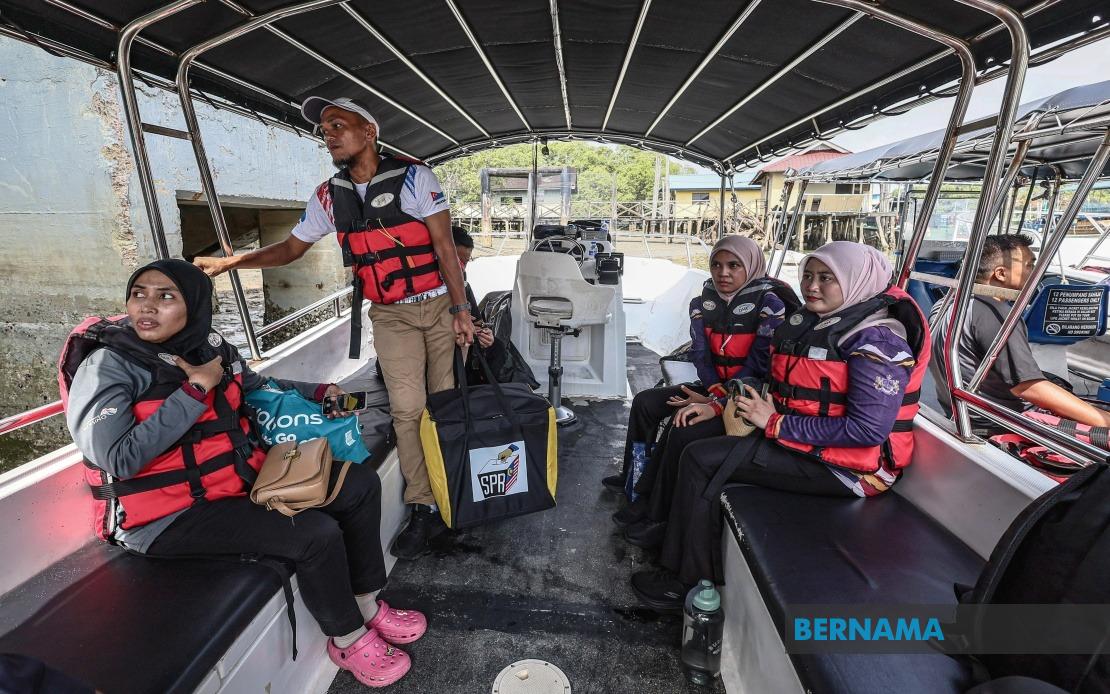
The 16th Johor State Election, which saw more than 2.6 million registered voters head to polling stations, delivered an unexpected economic injection into the pockets of small entrepreneurs across the state. While the contest dominated headlines for its political significance, the electoral process itself created a surge in demand for transportation services, food supplies, and logistical support that benefited independent operators who had seized the commercial opportunity.
Among the biggest winners were maritime transport providers servicing the scattered island communities of Johor. Island Eagle Boat Services & Island Hopping, helmed by Mustakim Shafie, experienced a particularly robust day of activity. Beyond the standard contracts to ferry Election Commission personnel and election-related cargo, the company fielded booking requests from approximately 50 voter groups requiring passage to offshore voting centres. The 35-year-old entrepreneur found his operational calendar substantially fuller than typical, with combined bookings reaching double the volume of an ordinary day.
The economics of maritime charter work in this region reflects the premium rates associated with sea travel logistics. Mustakim's company operates a modest fleet of six speedboats, offering customers flexible pricing structures depending on service scope. Three-day excursion packages incorporating accommodation amenities command between RM4,000 and RM4,500, whilst one-way transit for groups reaching up to 18 passengers costs approximately RM2,500. These revenue opportunities, while seasonal, represent meaningful income for operators managing the specialized skills and infrastructure required for safe water transportation across the state's archipelago.
For veteran maritime professionals like Hasrul Azmin Jumaat, election-driven transport demand provided validation of both their business model and expertise. At 39 years old, Jumaat has accumulated more than two decades navigating Johor's waterways, including the challenging route to Pulau Aur—a crossing spanning over 76 kilometres and typically requiring more than two hours of transit time. His experience proved particularly valuable given that passenger safety depends entirely on reading sea conditions and weather patterns accurately. The unpredictability of coastal weather represented the primary operational concern for boat operators throughout polling day, requiring constant vigilance to ensure safe passage for both voters and election officials.
The commercial benefits extended far beyond the maritime sector. In residential polling areas, food vendors positioned themselves strategically to capture the captive demand generated by early-morning voter turnout. One husband-and-wife operation, comprising Ismail Mad Hasim and Faradila Fairuz Mohd Affandi, established a food stall adjacent to Sekolah Kebangsaan Taman Sutera and discovered substantial customer appetite beginning from 8 in the morning. Voters casting early ballots proved particularly receptive to grabbing refreshments, creating steady traffic throughout the morning hours. The couple drew on prior experience managing a similar setup during the preceding General Election, having refined their understanding of voter behaviour and timing patterns across multiple electoral cycles.
What distinguished this election-day entrepreneurship from opportunistic commerce was the vendors' commitment to their own civic obligations. Despite achieving brisk sales sufficient to exhaust their inventory before day's end, both Ismail and Faradila maintained intention to cast their own votes at the identical polling centre once customer demand subsided. This balancing of commercial interest with participatory citizenship reflected broader patterns observable across Johor's polling stations, where small entrepreneurs leveraged temporary surges in foot traffic whilst maintaining their responsibilities as electors.
The election's economic ripple effects highlight how electoral cycles in Malaysia generate multiplier effects throughout local economies. Infrastructure requires temporary augmentation, enabling expanded shipping schedules and logistical employment. Voter populations travelling considerable distances require sustenance and accommodation services. Support personnel associated with the Election Commission itself demand meals and local knowledge. These cumulative demands, concentrated within a single day or across a narrow timeframe, produce measurable income spikes for service providers positioned to respond quickly.
For small-scale operators in peripheral regions like island communities and rural residential areas, such electoral occasions represent rare opportunities to capture revenue substantially exceeding baseline expectations. The concentration of 2.6 million voters requiring transport, meals, and ancillary services within compressed timeframes creates genuine commercial opportunity. Yet these opportunities remain temporary and largely unpredictable, depending on electoral scheduling beyond entrepreneurs' control. Operators like Mustakim and Jumaat must maintain permanent infrastructure and employment to service ordinary demand whilst positioning themselves to capitalise rapidly when electoral activity generates temporary abundance.
The broader implications for Malaysian small business resilience warrant consideration. Elections occur on prescribed schedules, yet businesses lacking structural predictability struggle with cash flow management and workforce planning. Those experiencing income volatility must either maintain substantial reserves or accept income uncertainty—both strategies impose costs. Johor's experience illustrates how marginal entrepreneurs develop economic resilience through diversified service offerings and flexibility in deployment, rather than relying on sustained demand for specialised services.
As polling continued through the afternoon and evening hours across Johor, the accumulated commercial activity of boat operators, food vendors, transport services, and accommodation providers was generating measurable economic benefit to thousands of individuals and household enterprises. The state election, from this perspective, functioned simultaneously as a mechanism for political participation and as an economic stimulus instrument for peripheral service providers who rarely encounter such concentrated demand. This dual function—simultaneously democratic necessity and economic opportunity—demonstrates how major civic activities intersect with livelihood ecosystems in ways often overlooked in broader election analysis.

