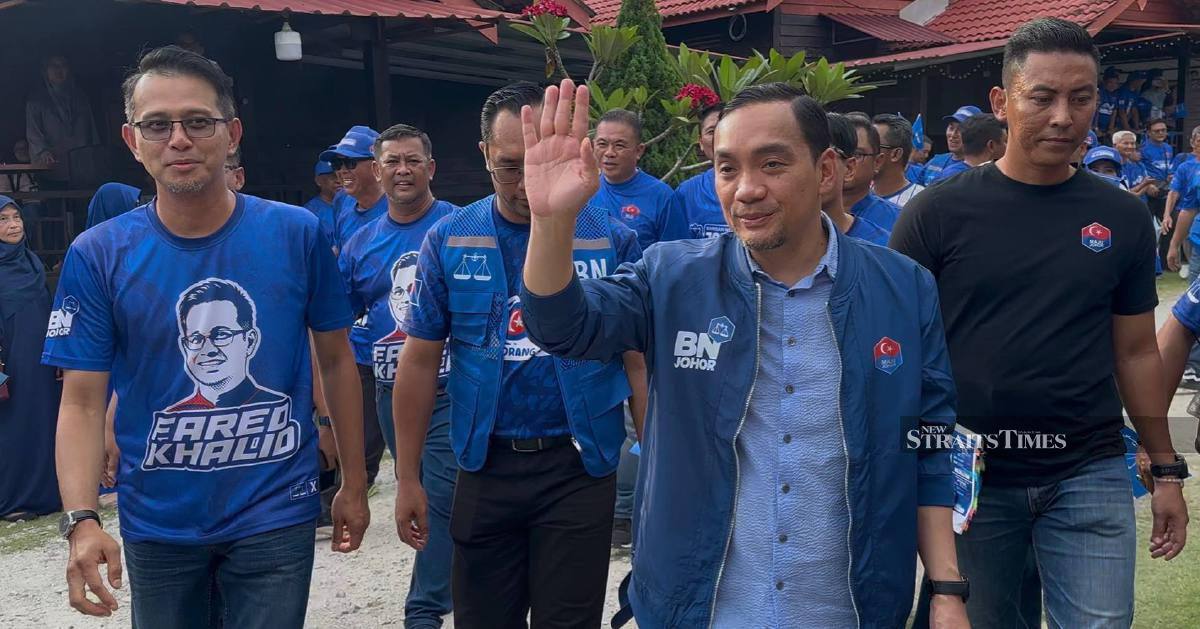
Johor's caretaker Menteri Besar Datuk Onn Hafiz Ghazi has pushed back against suggestions that the forthcoming state election serves purposes beyond democratic renewal, asserting that the poll exists solely to allow voters to determine their next administration. His remarks in Batu Pahat represent an attempt to reframe the narrative surrounding the election amid speculation about hidden political agendas.
The decision to call for early elections in Johor has generated considerable discussion across Malaysian political circles, with observers offering competing interpretations of the state government's motivations. While the official position maintains that the poll represents a straightforward exercise in democratic governance, critics have raised questions about whether other factors influenced the timing and decision to dissolve the state assembly.
Onn Hafiz's insistence that the election concerns itself exclusively with securing electoral validation underscores the administration's desire to position the contest as a legitimate expression of the democratic will. By emphasizing the purely electoral character of the exercise, the caretaker Menteri Besar attempts to establish that the government is guided solely by constitutional and democratic principles rather than narrower political calculations.
The emphasis on returning the mandate to the people carries particular weight in Malaysia's political context, where questions of governmental legitimacy and popular consent remain central to political discourse. An election providing fresh validation strengthens any subsequent government's claim to represent the electorate's wishes, which becomes especially important after periods of political flux or shifting coalitions within state legislatures.
Johor's political landscape has experienced considerable turbulence in recent years, with various shifts in alliances and legislative compositions creating questions about whether the existing composition accurately reflects current voter preferences. Holding a fresh election addresses these concerns by offering voters an opportunity to express their current political preferences directly rather than relying on parliamentary arithmetic from previous contests.
The timing of elections in Malaysian states typically involves calculations about economic conditions, political momentum, and the overall climate for the ruling coalition. However, officials insist that such considerations remain subordinate to the primary objective of restoring democratic legitimacy through a fresh mandate. The caretaker Menteri Besar's framing emphasizes this ordering of priorities, suggesting that political renewal through popular vote supersedes other considerations.
For Malaysian voters and observers tracking Johor's political trajectory, Onn Hafiz's statements reflect the standard justifications offered by governments calling early elections. Whether the electorate ultimately agrees that the election primarily concerns returning the mandate to the people or believes that other political motivations lie beneath the surface remains to be determined through the actual polling process. Public reception of the election campaign will likely reveal whether voters accept or question the official narrative about the poll's purposes.
The emphasis on mandate-seeking also positions the election within broader constitutional frameworks governing Malaysian state governments. By centering the discussion on democratic renewal, the administration frames its actions as consistent with Westminster parliamentary traditions and democratic governance principles, thereby countering any suggestions that the election represents a departure from established norms or serves undisclosed objectives.
Looking ahead, the Johor election will test whether the electorate accepts the government's characterization of the poll or interprets it through alternative lenses. The campaign period will reveal how effectively the caretaker administration can sustain its framing and how opposition parties choose to challenge or reinterpret the stated rationale for holding the election at this particular moment.

