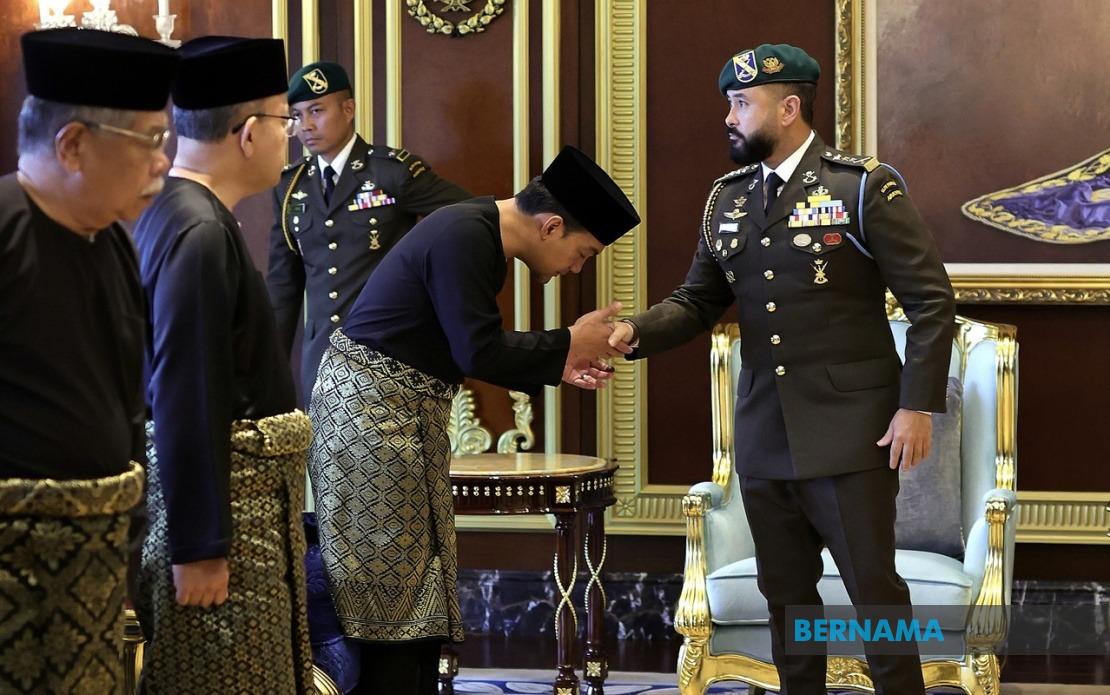
The newly formed Johor State Executive Council will take their oaths of office tomorrow at Istana Bukit Serene in Johor Bahru, marking the formal commencement of the state cabinet's tenure following the recent electoral mandate. The ceremony represents a pivotal constitutional moment for the southern state's administration, as the winning coalition solidifies its leadership structure after a decisive electoral outcome.
The Regent of Johor, Tunku Mahkota Ismail, will preside over the swearing-in ceremony, underscoring the royal significance of the occasion. This ceremonial role reflects the constitutional framework governing Johor's governance, wherein the regent maintains ceremonial and constitutional responsibilities alongside the state's elected leadership. The presence of the regent affirms the continuity of constitutional processes within the state's institutional hierarchy.
Menteri Besar Datuk Onn Hafiz Ghazi, who was sworn in for his new term on July 12, will lead the incoming cabinet. His appointment followed Barisan Nasional's commanding performance in the Johor state election, where the coalition secured 48 of the 56 available seats, providing substantial legislative backing for the government's agenda. This electoral result represents one of the more decisive outcomes in recent state-level polling, offering the incoming administration considerable parliamentary room for manoeuvre.
The gathering will include prominent state officials, including Johor Council of Royal Court president Datuk Dr Abdul Rahim Ramli and state secretary Datuk Mohammed Ridha Abd Kadir, reflecting the full ceremonial apparatus of the state government's transition. These senior administrative figures play critical roles in coordinating between the elected executive and the permanent bureaucracy, ensuring institutional continuity and effective administration during the change of government.
Journalists and media representatives have been formally invited to document the proceedings, with coordinated access points established at the palace's main entrances beginning at 9:30 am. This transparent approach to the ceremonial proceedings reflects contemporary governance practices, allowing public observation of constitutional formalities and ensuring democratic accountability through media coverage of official state business.
The electoral context provides crucial background to this administrative milestone. Barisan Nasional's victory in the 16th Johor State Election has fundamentally shaped the composition and likely policy direction of the incoming cabinet. The scale of the coalition's majority—winning approximately 86 per cent of available seats—suggests a strong popular endorsement in Johor, traditionally one of Malaysia's most significant states both economically and politically.
For Malaysian political observers, this cabinet formation carries implications beyond Johor's borders. The state's performance in recent elections has periodically influenced broader national political narratives, and the composition of Onn Hafiz Ghazi's team may offer insights into contemporary coalition management and the balance of power within Barisan Nasional. The distribution of portfolios among the incoming exco members will likely reveal which regional and factional interests have secured influence within the state government.
The timing of the ceremony, scheduled just days after the Menteri Besar's formal inauguration, reflects standard constitutional procedures for expediting government formation. This relatively swift transition enables the cabinet to commence substantive governance work without extended periods of administrative uncertainty. For public-facing government services and policy initiatives awaiting cabinet-level decisions, this prompt establishment of the full executive council removes procedural bottlenecks.
Johor's cabinet formation also occurs within a broader context of subnational governance in Malaysia, where state governments increasingly navigate complex policy terrain spanning economic development, infrastructure, education, and healthcare delivery. The incoming exco members will inherit existing state-level initiatives while presumably developing new policy priorities reflecting the coalition's electoral platform and contemporary developmental challenges facing the southern state.
The ceremonial formality of tomorrow's proceedings, while observing constitutional requirements, also symbolizes the democratic legitimacy conferred through electoral processes. The public invitation to media coverage reinforces the principle of transparent governance and allows citizens to witness the formal transition to their new state cabinet, notwithstanding the constitutional and democratic significance vested in electoral mandates themselves.

