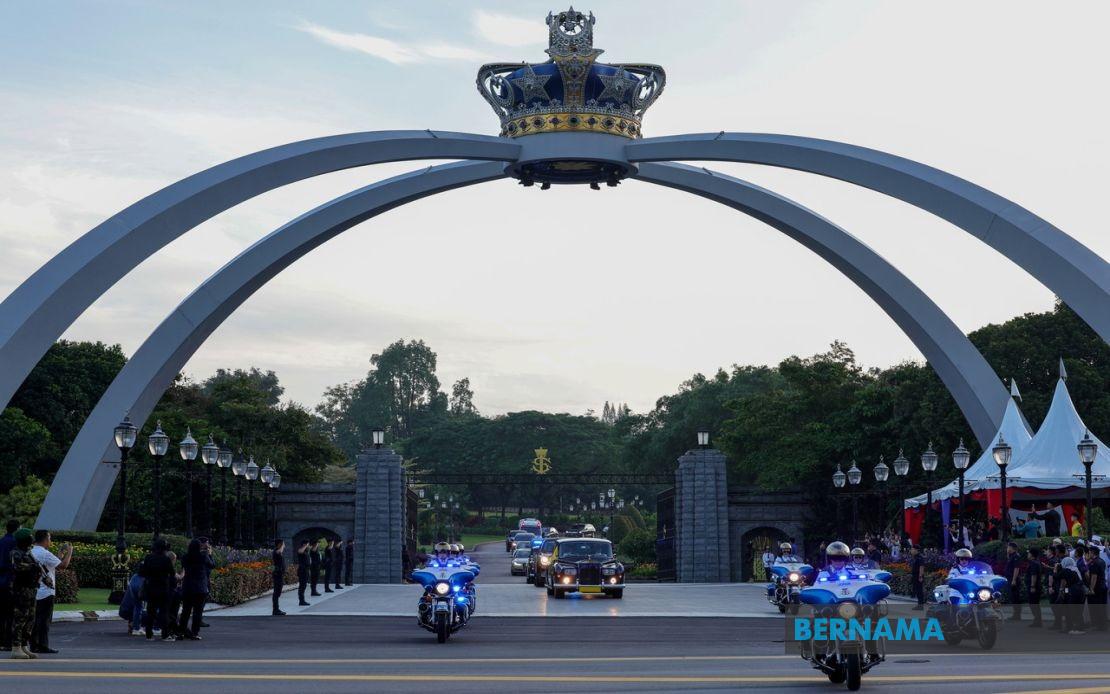
Johor's political leadership transitions formally today with the scheduled swearing-in ceremony of a new Menteri Besar at Istana Bukit Serene in Johor Bahru at 3 pm. The Johor Palace confirmed the appointment through invitations distributed to media outlets, establishing the Crown Arch entrance as the vantage point for press coverage of the afternoon proceedings. Despite the official announcement of the ceremony's timing and venue, the palace did not reveal the identity of the incoming chief minister, maintaining a measure of suspense despite widespread expectations within political circles.
The institutional choreography surrounding this appointment underscores the constitutional protocols that govern leadership transitions in Malaysia's state governments. The swearing-in at the palace represents the formal moment when executive power transfers through the sovereign authority of the Sultan, marking the culmination of post-election political negotiations and coalition-building efforts. Such ceremonies carry symbolic weight in Malaysian politics, as they reaffirm the constitutional role of the monarchy in the governance structure and reinforce the legitimacy of elected representatives through royal endorsement.
Journalists had begun congregating at the Menteri Besar's official residence in Saujana and at the palace gates since midday, reflecting the media's keen interest in documenting this transition moment. The gathering of press contingents at multiple strategic locations demonstrated how significant state-level political appointments attract intense scrutiny from newsrooms and news agencies. This coverage vigilance ensures that the public receives timely information about leadership changes that will shape policy direction and administrative priorities for Johor's populace over the coming years.
The appointment process gained momentum following Sultan Ibrahim Iskandar's audience with Barisan Nasional chairman Datuk Seri Ahmad Zahid Hamidi at Istana Pasir Pelangi earlier on July 12. This meeting, which extended for nearly an hour, also included Johor's Barisan Nasional chairman Datuk Onn Hafiz Ghazi, suggesting consultations at multiple levels of the coalition hierarchy to finalize the leadership decision. Such formal audiences with the Sultan represent critical junctures in Malaysian politics, where coalitions present their preferred candidates for the monarch's consideration and approval.
Barisan Nasional's commanding performance in yesterday's Johor state election provided the political foundation for today's appointment. The coalition secured 48 of the 56 state assembly seats, delivering a landslide mandate that substantially strengthened its governing authority in one of Malaysia's most strategically important states. This electoral dominance grants the incoming Menteri Besar a substantial legislative majority, enabling the administration to pursue its policy agenda with reduced parliamentary obstruction and enhanced capacity to implement its development and governance initiatives.
The scale of Barisan Nasional's electoral victory in Johor carries implications extending beyond the state itself. As Malaysia's second-largest state by population and a crucial economic hub with significant industrial and port infrastructure, Johor's political direction influences broader national trends and coalition dynamics. A strong showing in Johor reinforces Barisan Nasional's resurgence in peninsular Malaysia following previous electoral challenges, potentially shaping the trajectory of federal politics and future national campaigns.
For Malaysian readers and Southeast Asian observers, this transition exemplifies how Malaysia's constitutional monarchy framework structures executive authority at the state level. Unlike countries with purely elected chief executives, Malaysia's system requires formal royal approval and ceremonial investiture, embedding monarchical authority into the governance process. This afternoon's swearing-in ceremony will instantiate those constitutional principles in concrete form, as the incoming Menteri Besar takes the oath before the Sultan.
The deliberate non-disclosure of the appointment's details prior to the ceremony reflects evolving practices around political announcements in Malaysia. By controlling the announcement's timing and circumstances, the palace and Barisan Nasional leadership manage the narrative framing of the transition. This approach allows the coalition to present the appointment as a validated choice of the monarchy rather than a contested political decision, thereby enhancing the legitimacy conferred on the new administration.
For Johor's civil service and administrative apparatus, the appointment marks the beginning of a new governance cycle. The incoming Menteri Besar will assume control of state-level policy implementation across education, agriculture, local government, and other devolved matters. The extent to which this administration prioritizes infrastructure development, economic diversification, or social services will likely reflect both coalition preferences and the particular political capital earned through the overwhelming electoral mandate. The landslide victory provides the new administration with considerable flexibility in policy choices and budgetary allocation.
The timing of this appointment during Malaysia's wider political calendar carries significance as well. Johor's leadership configuration influences the balance of power within Barisan Nasional and shapes dynamics within Malaysia's federal government. The strong state-level performance may embolden the coalition's national leadership or potentially alter internal power distributions within the broader coalition structure. Political observers will monitor how the new Johor administration navigates both state-specific challenges and its role within the national coalition framework.
As the afternoon ceremony approaches, the swearing-in represents a routine yet significant moment in Malaysia's democratic and constitutional life. While the specific policy direction of the new administration remains to be articulated, today's ceremonial transfer of authority fulfills the constitutional requirements that legitimize state-level executive power. The new Menteri Besar will inherit both the substantial parliamentary majority granted by voters and the expectations of Johor's diverse population for effective, responsive governance across the coming mandate.

