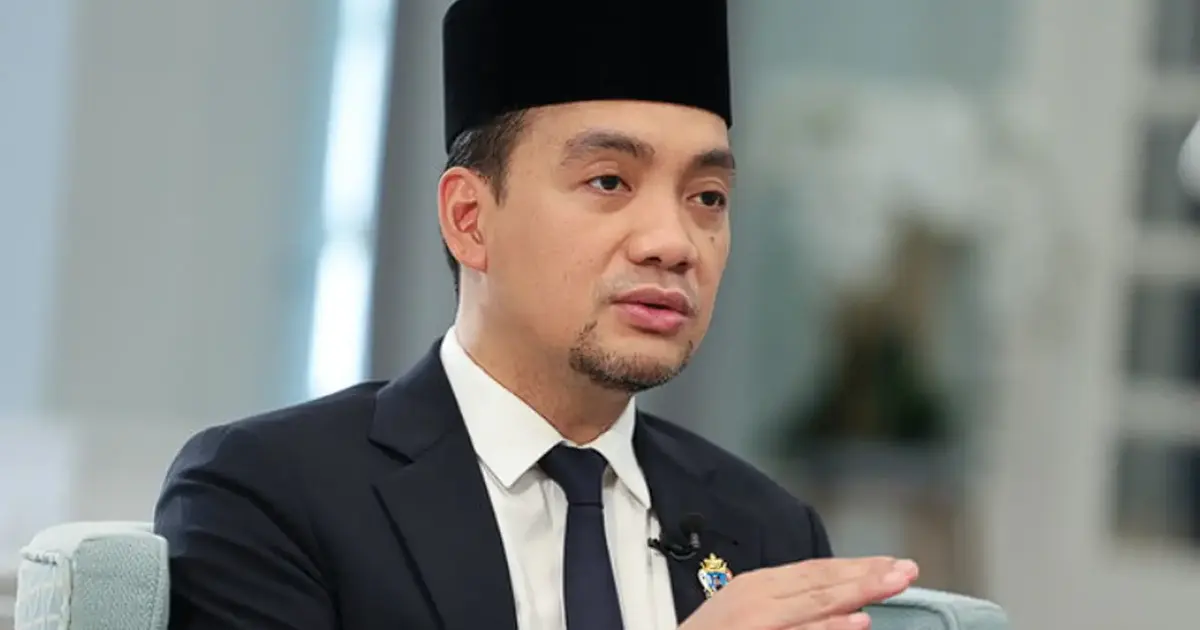
Onn Hafiz, serving as Johor's caretaker menteri besar, has moved to allay concerns about the monarchy's role in the state assembly's dissolution, framing the Sultan's assent as an essential constitutional formality rather than a manifestation of palace influence in partisan politics. His clarification addresses mounting scrutiny over whether the royal institution has overstepped its ceremonial bounds in endorsing the decision to disband the legislature ahead of fresh elections.
The constitutional framework governing Malaysian states assigns the Sultan a distinctive dual position: head of state and keeper of constitutional integrity. In this dual capacity, the Sultan's approval of parliamentary dissolution represents a procedural checkpoint built into the legal architecture, not an exercise of discretionary political power. When a caretaker administration or elected government petitions for dissolution, the Sultan's assent formalises what is fundamentally a legislative procedure requiring institutional validation at the highest level.
For Malaysian readers accustomed to monitoring palace neutrality in electoral cycles, the distinction Onn Hafiz draws carries significant weight. The perception of royal institutions wielding influence over the timing or circumstances of elections has historically triggered contentious debate about the monarchy's constitutional role. By characterising royal assent as ministerial process rather than executive judgment, Onn Hafiz seeks to reframe the narrative away from speculation about behind-the-scenes palace preferences and toward the mechanics of constitutional governance.
Johor's political landscape has witnessed considerable flux in recent years, with elections producing fragmented mandates and coalition-building challenges common across Malaysian states navigating the post-2018 realignment. The dissolution of the state assembly, therefore, occurs within a context where electoral recalibration has become routine practice rather than exceptional occurrence. Against this backdrop, the procedural nature of royal assent becomes more straightforward: the Sultan performs a constitutional duty by granting approval that enables the machinery of state to function according to established rules.
The menteri besar's public articulation of this distinction serves multiple purposes within the Malaysian political ecosystem. Domestically, it reassures stakeholders that the monarchy remains within its constitutional lane, avoiding the perception of favouritism that could undermine public confidence in royal impartiality. Regionally, as Southeast Asian democracies grapple with questions about institutional boundaries and democratic legitimacy, clarity about Malaysia's monarchy's constrained role reinforces the principle of constitutional monarchy rather than latent authoritarianism.
Understanding this procedural framework requires appreciating that Malaysian sultans function within constraints absent in purely ceremonial monarchies. The Federal Constitution and state enactments prescribe precisely when and how royal assent applies. Dissolution of state assemblies falls squarely within parameters requiring Sultan approval—not because the Sultan possesses political discretion, but because the law mandates this validation. A caretaker menteri besar requesting dissolution through proper channels would, under normal constitutional operation, receive assent as a matter of procedure.
What distinguishes genuine political interference from constitutional routine is the element of discretionary judgment exercised with political consequence. If a Sultan withheld assent from a legitimately constituted request to obstruct a particular faction's electoral prospects, that would constitute overreach. Conversely, granting assent when legal conditions are satisfied represents the palace performing its institutional function. Onn Hafiz's statement implicitly invokes this distinction, suggesting the Sultan was following constitutional prescription rather than exercising political preference.
The timing of Johor's dissolution nonetheless invites scrutiny about whether procedural correctness automatically precludes broader political implications. Even routine constitutional processes occur within political contexts where timing matters. Elections called during particular windows benefit some candidates over others; coalitions consolidate differently depending on electoral calendars. The legality of a dissolution and the political consequences it produces are separate questions. A process may be constitutionally sound while still reflecting political calculations by those initiating the request. Onn Hafiz's defence addresses the former dimension while remaining silent on the latter.
For Malaysian observers, the episode reflects deeper questions about how constitutional monarchy functions when democratic institutions face regular stress. Parliamentary systems with strong monarchies require extraordinary trust that royal institutions will decline political temptation. Onn Hafiz's framing of royal assent as mechanical consent rather than discretionary judgment attempts to reinforce this trust. Whether the public finds such reassurances persuasive depends partly on whether subsequent electoral processes appear fair and contestable.
The caretaker menteri besar's position also acknowledges broader institutional anxieties within Malaysia's political class. As national politics has grown more combative and coalition-building more precarious, the palace has occasionally faced pressure—explicit or implicit—to intervene in ways stretching constitutional boundaries. By publicly anchoring royal action to constitutional procedure, officials like Onn Hafiz work to establish precedent that even when stakes run high, institutional restraint prevails.
Johor's electorate will ultimately judge whether the dissolution and subsequent election reflect genuine constitutional governance or manoeuvring disguised in procedural language. The effectiveness of Onn Hafiz's defence rests partly on whether the campaign that follows feels competitive and unbiased, suggesting that the palace confined itself to validating proper procedure rather than selecting political outcomes. His articulation of constitutional principle, however carefully reasoned, carries credibility only when matched by observable democratic practice.
Looking forward, the incident contributes to an evolving understanding of how Malaysian constitutional monarchy operates under contemporary pressures. Each instance where royal assent is invoked, each public explanation offered by officials, each electoral cycle proceeding without obvious interference builds or erodes confidence in institutional restraint. Onn Hafiz's defence of the Sultan's role as procedural rather than political represents one contribution to this ongoing calibration of what constitutional monarchy means in Malaysia's particular democratic context.

