Johor's top political leadership has embarked on a carefully calibrated administrative restructuring, with Menteri Besar Datuk Onn Hafiz Ghazi presenting the move as a necessary evolution rather than a wholesale rejection of his predecessor's team. The reshuffle of the State Executive Council, which saw ten assemblymen sworn in before Tunku Mahkota Ismail at Istana Bukit Serene, represents a midterm refresh that preserves institutional continuity while injecting new energy into the state government apparatus.
Onn Hafiz's framing of the reshuffle emphasises administrative renewal as an ongoing process essential to Johor's development trajectory. His carefully worded Facebook statement acknowledges that cabinet reorganisation constitutes a standard governmental practice, positioning the changes as organic rather than the outcome of internal conflict or performance failures. This diplomatic approach reflects an awareness that public perceptions of leadership instability can undermine investor confidence and administrative effectiveness in a state economy as significant as Johor's to the broader Malaysian market.
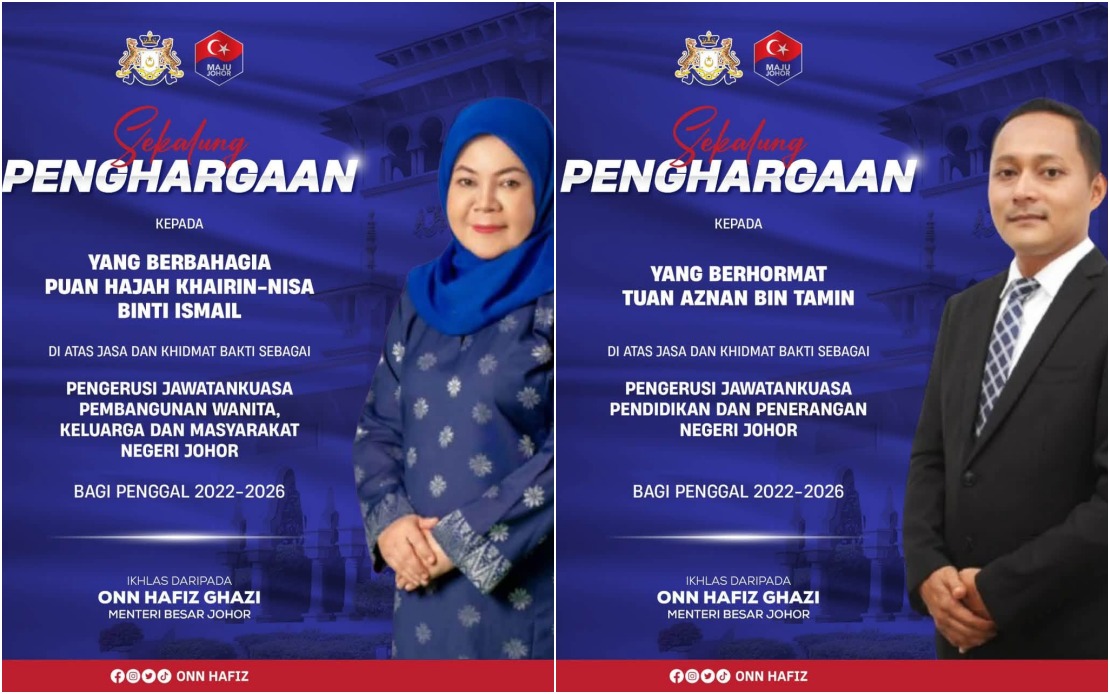
The recognition extended to four departing council members—Datuk Zahari Sarip, K. Raven Kumar, Aznan Tamin and Khairin-Nisa Ismail—demonstrates an attempt to maintain political harmony across the ruling coalition in Johor. Rather than allowing outgoing officials to become marginalised figures, Onn Hafiz publicly credited them with substantial contributions to state development during the 2022-2026 term. This approach serves dual purposes: it preserves relationships with experienced administrators who retain political constituencies, and it legitimises the reshuffle by suggesting it stems from strategic planning rather than factional disputes.
The retention of six assemblymen in their existing positions provides institutional stability amid the leadership transition. These continuities help maintain policy coherence in portfolios where progress depends on sustained attention and relationship-building with federal counterparts, private sector partners, and international investors. Given Johor's role as Malaysia's second-largest economy and its strategic importance to regional manufacturing and logistics networks, disrupting key administrative functions could have ripple effects across the peninsula's broader commercial infrastructure.
The introduction of four new faces into the Exco structure suggests deliberate efforts to broaden the leadership coalition and potentially incorporate perspectives from emerging political constituencies. In Malaysia's federal system, where state governments exercise significant autonomy over economic development, education, and infrastructure, the calibre and networks of executive councillors directly influence a state's competitiveness. Johor's new appointees will inherit responsibility for portfolios ranging from agriculture and commerce to education and health—sectors critical to both rural and urban constituents.
Onn Hafiz's assertion that state achievements during the previous term reflected collective rather than individual effort attempts to establish continuity of purpose despite the personnel changes. This narrative positioning matters significantly in Malaysian political culture, where cabinet reshuffles can trigger perceptions of disloyalty or incompetence. By insisting that experience and wisdom remain valuable commodities regardless of formal position, Onn Hafiz signals that departing members retain his confidence and that their exclusion reflects administrative design rather than political exile.
The timing of the reshuffle, occurring in mid-2024 roughly halfway through the state government's five-year term, aligns with international practice of mid-term administrative evaluations. However, Johor's position within Malaysia's current political constellation adds complexity to the exercise. As a state governed by the coalition controlling federal power, Johor's administrative decisions reflect broader national political dynamics. Personnel changes in the state Exco may therefore signal emerging shifts in factional balance within the ruling coalition or adjustments to the ethnic and geographic representation considered necessary for political stability.
The formal swearing-in ceremony before the Regent underscored the constitutional propriety of the process and linked the reshuffle to institutional continuity beyond partisan government. This ceremonial emphasis serves to elevate the administrative reorganisation above day-to-day politics, suggesting it operates within established frameworks rather than circumventing constitutional or conventional safeguards. For Malaysian readers accustomed to scrutinising executive authority, such ritualistic affirmation of process legitimacy carries substantive political weight.
For southeast Asian investors and businesses with significant Johor operations, the reshuffle presents a moment of evaluation regarding administrative stability and policy continuity. International corporations with supply chain infrastructure in Johor's industrial zones will monitor whether the new Exco configuration maintains consistent engagement with business communities and pursues existing development initiatives. The retention of experienced members in key economic portfolios should provide some reassurance, though new appointees will require time to build relationships with stakeholder groups.
The reshuffle also reflects evolving expectations regarding state government performance and responsiveness. Contemporary Malaysian political culture increasingly demands demonstrable results regarding economic growth, infrastructure delivery, and service quality. By presenting administrative renewal as linked to improved performance, Onn Hafiz implicitly acknowledges that governance effectiveness, rather than personality-driven leadership, constitutes the legitimate basis for political authority. This emphasis aligns with broader regional trends toward meritocratic arguments in public administration.
Looking forward, the success of Johor's reshuffle will depend substantially on how effectively new appointees integrate into the existing administrative culture while introducing fresh approaches where warranted. Exco members across Malaysian states typically chair standing committees overseeing major expenditure and policy implementation, making their individual capabilities and political networks consequential for outcomes. The combination of continuity and change introduced through this restructuring thus carries implications extending well beyond ceremonial adjustments to Johor's political hierarchy.

