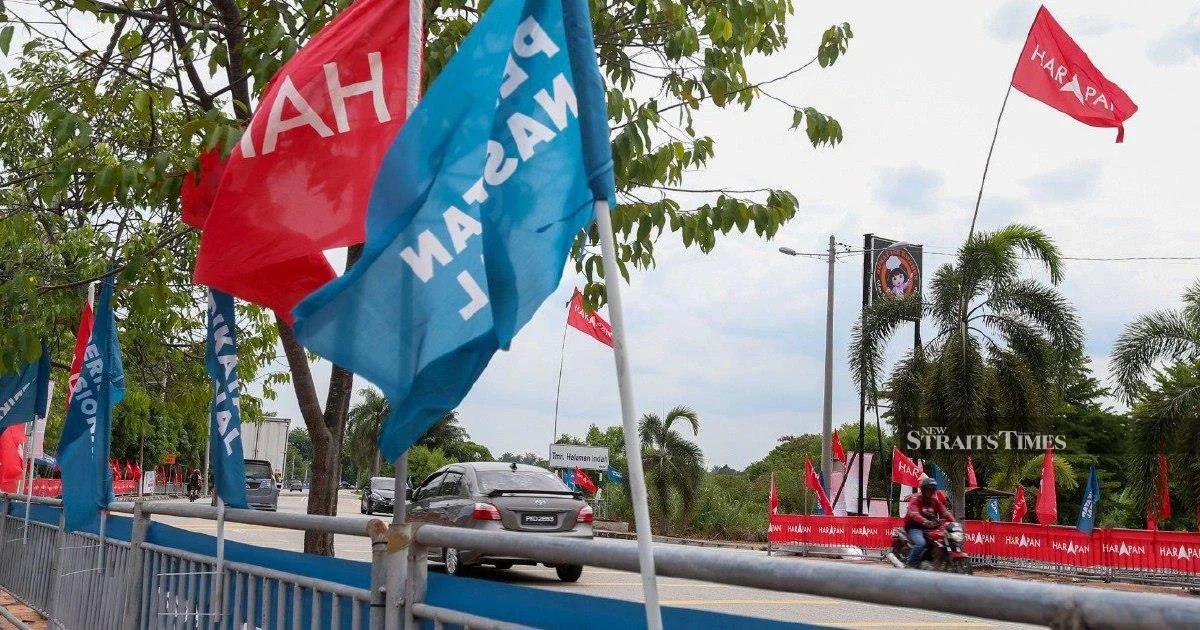
The 16th Johor state election campaign officially commenced on nomination day, with electoral machinery moving into action across all 56 state constituencies spanning the region. This marks a pivotal moment in Johor's political calendar, as candidates and political parties formally register their intentions to contest, turning the electoral process from speculation into institutional reality across the southern state.
Johor, Malaysia's second-largest state by population with over 4 million residents, represents a crucial political battleground in the nation's federal system. The election of its state government carries implications far beyond the state's borders, influencing the broader balance of power in national politics and setting precedents for governance in one of Malaysia's most economically significant regions. The 56 constituencies encompass vast demographic diversity, from the industrialised urban centres of Johor Baru and Iskandar Puteri to rural agricultural areas and new development zones competing for resources and representation.
Nomination day serves as the formal gateway through which political ambitions must pass. Prospective candidates and their respective parties must complete registration procedures, submit required documentation, and secure endorsement from their party machinery. This process filters out underfunded or poorly organised attempts at candidacy whilst simultaneously enabling the electoral commission to verify that all contenders meet constitutional and legal requirements. For Johor's major political coalitions and smaller parties alike, nomination day represents the moment when campaign organisations must demonstrate operational readiness across dozens of scattered constituencies.
The scale of coordinating a 56-seat election presents logistical challenges that extend beyond merely fielding candidates. Political parties must resource campaign operations, arrange candidate briefings, and establish electoral machinery in regions ranging from Johor Baru's urban sophistication to the more dispersed communities in constituencies like Mersam or Endau. The nomination process itself requires candidates to appear physically at designated nomination centres, a requirement that tests the coordination capabilities of party organisations and can reveal internal party dynamics when contested positions become apparent.
Johor's electoral landscape reflects the state's position as both a traditional stronghold and increasingly competitive political arena. The previous state government and opposition parties have invested substantially in ground organisation, recognising that control of Johor's state assembly carries economic significance beyond typical state politics. Federal funds flow through state governments, development projects require state-level coordination, and the state's influence on national politics extends through its parliamentary representation and electoral precedents.
The 56-constituency structure itself evolved through boundary changes intended to reflect population shifts and urbanisation patterns. Newer constituencies in the Iskandar Malaysia development corridor differ fundamentally from longer-established rural constituencies, with different voter demographics, campaign priorities, and political sensitivities. Candidates and parties must tailor approaches to diverse constituencies with varying concerns, from manufacturing workers and technology park employees in industrial areas to farming communities dependent on agricultural policies and rubber-producing regions affected by commodity prices.
Nomination day also reveals party strength through candidate quality and experience. Political parties often field a mix of sitting representatives seeking re-election, new candidates identified through party selection processes, and prominent figures shifted between constituencies for strategic advantage. The choices parties make regarding candidate placement frequently indicate their confidence levels in particular constituencies and their broader strategic vision for the election.
For Malaysian voters and observers, nomination day provides the first concrete information about the forthcoming election—which parties are contesting, which candidates are running, and which constituencies face contested races versus uncontested nominations. This information shapes public discourse, media coverage, and voter attention during the campaign period preceding polling day. The nomination data itself becomes newsworthy, revealing which personalities seek election, which representatives face challenges from opponents within their own parties, and which areas attract fierce competition between major coalitions.
Johor's election timing carries broader significance within Malaysia's political calendar. The state's electoral outcomes frequently influence national political momentum, affect coalitional calculations at federal level, and demonstrate voter sentiment regarding incumbent administrations. Political parties view Johor contests as crucial indicators of electoral viability, campaign effectiveness, and public acceptance of their governance records or policy platforms. Results in Johor have historically prompted federal-level political reorganisation and influenced calculations regarding timing for other state elections or federal elections.
The nomination process also represents a moment of formal equality, where established incumbents and newcomers engage identical procedures, submit identical documentation, and receive identical verification processes. Yet the substantive inequality remains profound—sitting representatives benefit from name recognition, existing administrative machinery, and documented track records, whilst new candidates must overcome these structural advantages. Nomination day levels the procedural playing field without erasing the underlying competitive asymmetries that characterise electoral contests.
For the 56 constituencies now officially in election mode, the period between nomination day and polling day will determine which candidates successfully persuade sufficient voters of their suitability for representation. Campaign seasons witness intensive ground activity, public engagement, media scrutiny, and voter mobilisation across diverse communities and constituencies. The formal registration of candidates on nomination day transforms Johor's political landscape from anticipatory speculation into administered electoral competition, with concrete candidates, documented parties, and official processes replacing earlier uncertainty.

