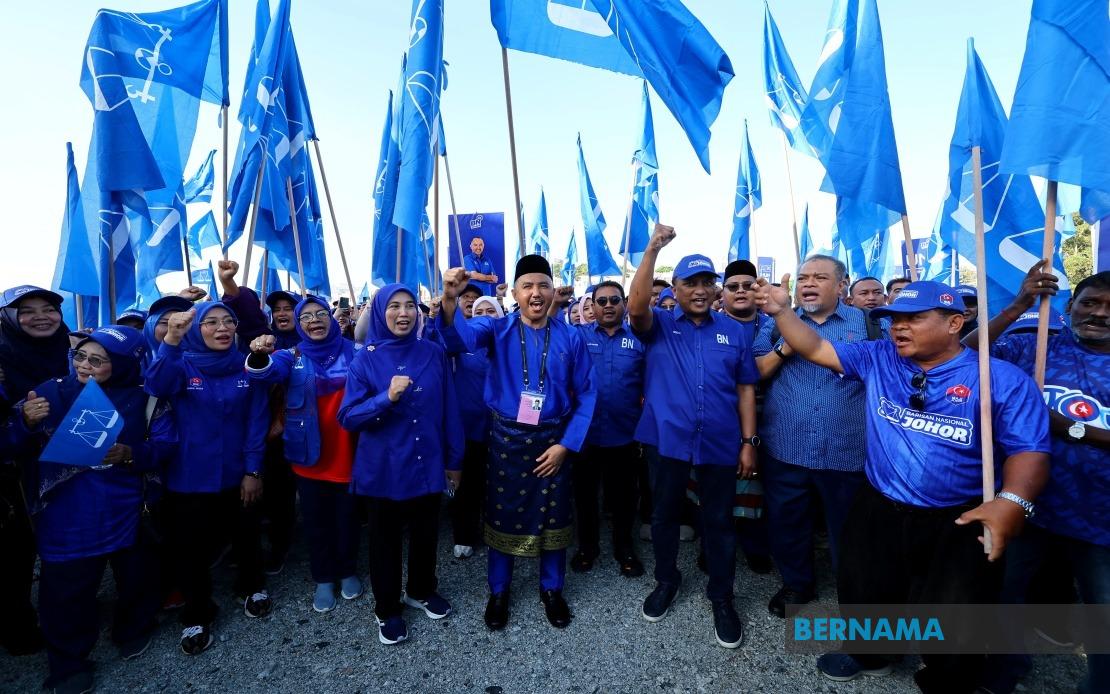
The nomination phase for Johor's 16th State Election formally concluded this morning when the final submission deadline passed at 10am, with all 56 polling and nomination centres (PPC) across the state ceasing operations. The one-hour window that commenced at 9am marked the final opportunity for political parties to lodge their candidate applications, with returning officers simultaneously announcing closures at their respective locations. This procedural checkpoint represents a critical juncture in the electoral calendar, as it determines which individuals have met the formal requirements to contest the available state assembly seats.
With nominations now complete, the focus shifts to the Election Commission's (EC) upcoming announcement detailing the full roster of candidates who successfully registered and how they are distributed across each state constituency. This official confirmation will provide clarity on the competitive landscape heading into the campaign phase and may reveal instances where multiple candidates are contesting individual seats, indicating hotly contested areas, or conversely, where nominations remained unopposed. The registration data will form the basis for campaign strategies and media coverage throughout the coming weeks.
The Election Commission has structured the electoral timeline to provide candidates with ample preparation time before voters cast their ballots. A 14-day campaign period has been designated, commencing immediately after today's nominations deadline and extending until 11.59pm on July 10. This fortnight allows political parties and independent candidates to conduct grassroots outreach, organise rallies, distribute campaign materials, and engage with constituents across their respective divisions. The compressed yet intensive schedule requires efficient coordination and resource allocation among competing political organisations.
Election day itself is set for July 11, with the EC having designated July 7 as an advance voting opportunity for eligible groups including essential workers and those unable to vote on the main day. This arrangement recognises the practical constraints facing certain voter segments and aims to maximise participation levels across the electorate. The availability of early voting windows has become increasingly standard in Malaysian electoral practice, reflecting broader efforts to enhance accessibility and convenience.
The nomination process unfolded under conditions of heightened security and administrative oversight throughout Johor's 56 designated centres. Police forces (PDRM) and volunteer personnel from the People's Volunteer Corps (RELA) maintained close surveillance of nomination venues to ensure orderly procedures and prevent disruptions. Supporters of various candidates converged on submission points, accompanying their respective nominees and demonstrating partisan enthusiasm, yet the overall atmosphere remained calm and incident-free throughout the operation. This peaceful execution reflects the maturity of electoral processes in the state and the commitment of security personnel to maintaining decorum.
The eligible voter population for this election represents a substantial demographic exercise spanning nearly 2.73 million individuals. The total comprises 2,703,175 ordinary registered voters, augmented by 12,041 military personnel and their spouses who possess electoral rights, and an additional 12,710 police personnel and spouses similarly entitled to participate. This voter base reflects Johor's significant population within Malaysia's federal structure and underscores the political importance of state-level elections in establishing governance mandates and determining resource allocation policies at the state government level.
For Malaysian political observers, the Johor election carries implications extending beyond the state's boundaries. As the southernmost peninsula state and a major economic contributor, Johor's election outcome may influence broader political dynamics affecting national coalition formations and parliamentary mathematics at the federal level. Political parties view state elections as opportunities to test campaign messaging, assess voter sentiment, and organise their machinery ahead of potential nationwide polls. The registered candidates and their affiliations will provide initial indicators of party strengths and competitive positioning in a state where electoral contests have historically been closely contested.
The closure of nomination centres marks the transition from the administrative phase into the political campaign phase, where candidates will present their manifestoes and seek voter endorsement. Campaign activities during the 14-day window will shape public perception and voter preferences, with media coverage, party advertising, and direct community engagement serving as primary vehicles for candidate promotion. The intensity and tenor of these campaign activities will influence turnout patterns and ultimately the electoral outcome on July 11.
For Johor's political landscape, this election represents an opportunity for incumbent parties to reinforce their mandates or for opposition groups to consolidate support and gain ground. The registration of candidates across multiple constituencies will reveal the depth of bench strength within each political organisation and their capacity to field competitive candidates throughout the state. Uncontested seats, where candidates run unopposed, typically reflect incumbent strength or lack of competitive challenge, while highly contested divisions indicate contested political territory where multiple factions believe they can mobilise support effectively.
The Election Commission's management of the nomination process demonstrates the institutional mechanisms through which Malaysia's elections are administered, with returning officers overseeing procedures at designated centres and maintaining compliance with electoral regulations. The smooth operation of all 56 centres, with timely closure and procedural compliance, reflects established administrative protocols refined through previous electoral cycles. These institutional frameworks provide the structural foundation upon which democratic participation rests, ensuring that political competition occurs within defined parameters and prescribed timelines.
Looking ahead, the weeks separating today's nomination closure from July 11's polling day will prove pivotal in determining voter preferences and constituency outcomes. Campaign strategies will evolve based on early responses and organisational effectiveness, with parties adjusting messaging and resource deployment to concentrate on competitive areas. The advance voting opportunity on July 7 may disproportionately influence turnout patterns depending on which candidate bases most effectively mobilise early voters, providing early indicators of election momentum before main polling day arrives.

