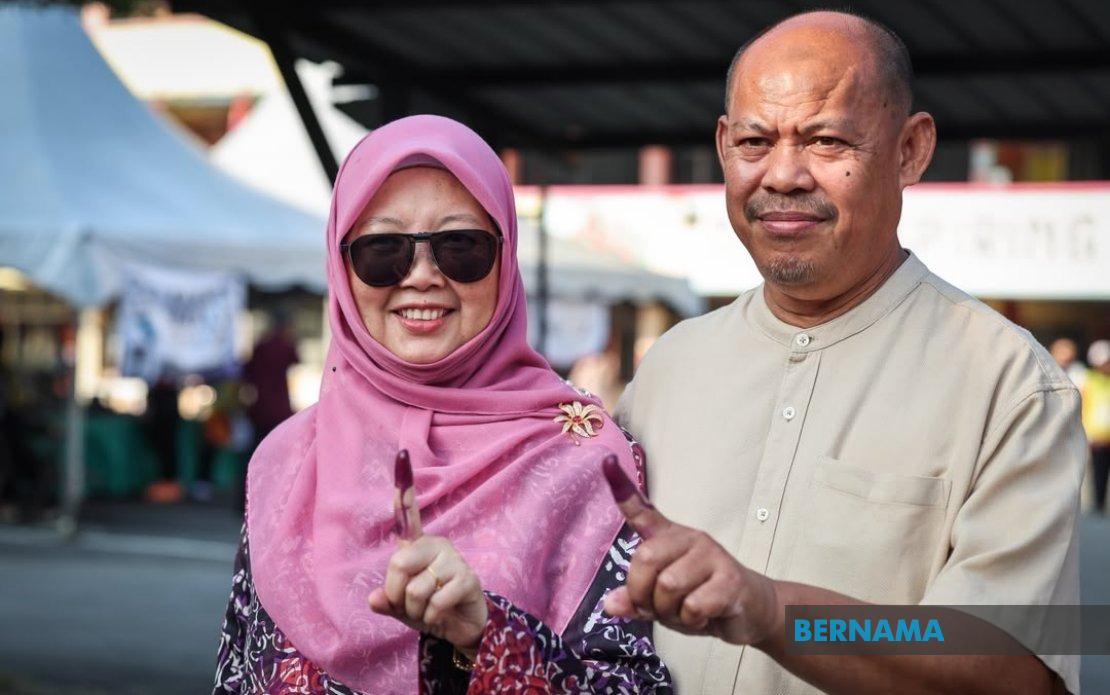
High-ranking officials from across Malaysia's political spectrum lined up at polling stations across Johor on July 11 to participate in the 16th state election, setting a precedent of civic engagement that party strategists hope will inspire broader voter participation. The staggered arrival of party leaders throughout the morning demonstrated the coordinated effort by major political organizations to emphasize the importance of the electoral process and encourage their base to vote early, before weather conditions deteriorated.
Johor PKR chairman Datuk Seri Dr Zaliha Mustafa cast her ballot at Sekolah Menengah Kebangsaan Bandar Baru Uda in Johor Bahru shortly after 9 am, accompanied by her husband Dr Ahmad Adzlan Musa. The couple exercised their franchise in the Larkin constituency, a significant urban area that has historically been contested between the ruling coalition and opposition forces. Zaliha's public voting activity carried symbolic weight, given her previous position as Minister in the Prime Minister's Department with responsibility for Federal Territories, lending gravitas to the PKR's participation in the election.
Recognizing the practical challenges facing voters, Zaliha addressed journalists immediately after casting her ballot to highlight an important meteorological concern. She urged Johor residents to complete their voting early in the day, before midday rains were forecast to sweep across the state through the afternoon hours. This advice reflected both meteorological forecasts and the electoral commission's concerns about maintaining voter turnout despite inclement weather. The timing of her statement during the crucial early voting window suggested a deliberate strategy to maximize participation during the dry morning hours.
Parallel to PKR's early voting initiative, Johor DAP chairman Teo Nie Ching also made an appearance at the polls, casting her ballot at Sekolah Jenis Kebangsaan Cina Kulai Besar in the Kulai constituency approximately thirty minutes after Zaliha. The DAP's presence in the voting process underscored the multi-party nature of Johor's political competition, with significant Chinese-majority constituencies remaining contested terrain between various political coalitions. Teo's participation at a Chinese vernacular school carried particular resonance within the DAP's traditional base of support among Malaysian Chinese voters.
The coordinated early voting by party leadership served multiple strategic purposes within the broader election campaign. By appearing at polling stations during peak morning hours and speaking directly to journalists, senior figures demonstrated their personal commitment to the democratic process while simultaneously generating media coverage that reinforced their parties' election messages. Such high-visibility participation creates psychological momentum, encouraging rank-and-file party members and sympathetic voters to prioritize casting their ballots early rather than postponing the decision.
The Larkin and Kulai constituencies, where these party leaders voted, represent distinct demographic and political battlegrounds within Johor. Larkin encompasses parts of Johor Bahru's urban core, traditionally contested between Pakatan Harapan and Barisan Nasional candidates, while Kulai contains significant Chinese-majority areas where DAP competes alongside other coalition partners. The specific selection of these constituencies for high-profile voting appearances suggested deliberate campaign targeting of areas deemed crucial for both parties' overall performance in the state election.
Weather-related challenges to voter participation present a recurring concern in Malaysian elections, particularly during the monsoon season. Afternoon rainfall can suppress turnout, especially among voters without flexible work schedules or reliable transportation. By publicly encouraging early voting during dry morning conditions, Zaliha's intervention addressed a practical barrier to participation that could significantly impact final vote tallies. Such operational considerations often receive insufficient attention in election coverage focused primarily on political competition and policy platforms.
The staggered timing of various party leaders' appearances throughout the morning created a rolling narrative of early voting momentum that media outlets could report progressively. Rather than concentrating all leadership voting at a single time, the distribution across multiple constituencies and times extended media attention across a wider timeframe, potentially amplifying the message that voting early was both encouraged and feasible. This tactical spacing reflected sophisticated understanding of news cycle dynamics and media coverage patterns.
For Malaysian observers, the Johor election carried implications extending beyond the state level. As one of Malaysia's largest and most diverse states, Johor's electoral outcome would provide crucial indicators regarding voter sentiment toward various national coalitions and emerging political dynamics. The early voting patterns and leadership participation documented on polling day offered preliminary signals about which parties had successfully mobilized their organizational capacity and voter enthusiasm ahead of final results. The emphasis on early voting timing suggested that parties expected competitive races in multiple constituencies where margins might prove decisive.
The practical advice dispensed by party leaders regarding voting times and weather considerations revealed the often-overlooked operational dimensions of democratic participation. Beyond campaign messaging and policy debate, election success frequently hinges on mundane factors including weather conditions, transportation access, and voter awareness of optimal timing. Senior leaders' public guidance on these matters, delivered through informal comments to journalists at polling stations, represented a form of civic communication that prioritized practical voter support over formal campaign rhetoric.

