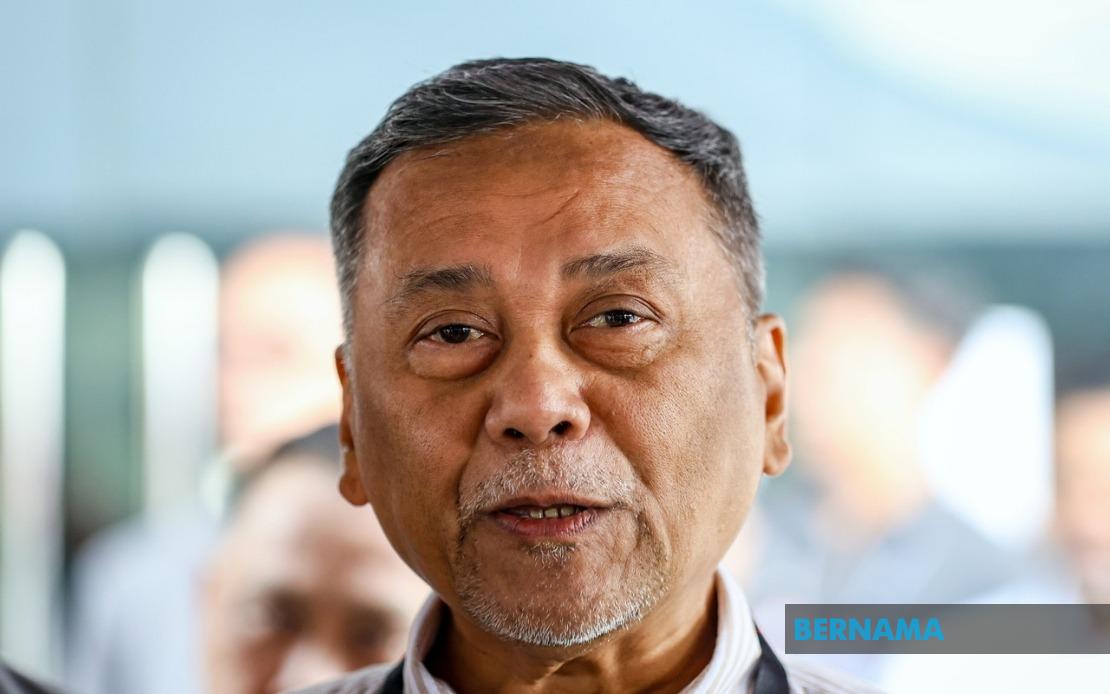
The Election Commission expects the upcoming Johor state election to attract roughly 70 per cent voter participation, reflecting what officials describe as genuine public commitment to the democratic franchise. EC chairman Datuk Seri Ramlan Harun attributed this projection to observable patterns during the campaign period, which have demonstrated substantial citizen interest in exercising their voting rights.
Ramlan's forecast, announced ahead of polling day in Pontian, rests on concrete observations from the campaign trail rather than historical precedent alone. The EC chairman noted that enthusiasm among voters has been noticeably elevated, with communities showing genuine eagerness to participate actively in shaping the electoral outcome. This level of engagement, he suggested, signals a population increasingly conscious of its democratic responsibilities and the tangible impact of electoral participation.
The optimistic turnout prediction also reflects broader public awareness campaigns emphasising the significance of the electoral process itself. Beyond mere voting mechanics, voters appear to have absorbed messaging about their collective power in determining representation and policy direction at the state level. This consciousness-raising effort appears to have resonated across the diverse demographic base eligible to vote in Johor, suggesting the EC's outreach initiatives have gained traction.
The scope of this election underscores its significance within Malaysia's political landscape. Approximately 2.7 million registered voters across Johor have the opportunity to cast ballots, making this one of the country's larger single-state elections. If the EC's 70 per cent projection materialises, that translates to roughly 1.89 million votes being cast, a substantial exercise in democratic participation that requires considerable logistical coordination.
Organisational complexity underpins the election machinery itself. Polling stations will operate on a staggered schedule reflecting Johor's geographic diversity. Voting commences at 8 am across all centres, but closing times vary substantially based on location. Island communities like Pulau Besar near Mersing will close polling as early as 11 am, followed by Pulau Aur and Pulau Pemanggil at noon. The majority of voting centres—1,114 locations—will remain open until 6 pm, with intermediate closures at 42 centres at 4 pm and 17 at 2 pm.
This distributed timing reflects practical necessities for island communities but also demonstrates how election administration must adapt to Malaysia's geographic realities. Island voters require earlier closing times to facilitate secure transport of ballot materials back to urban counting centres. Such arrangements necessitate meticulous advance planning to ensure all votes are recorded securely and counted accurately regardless of polling location.
The EC has mobilised a substantial workforce to manage this distributed operation. Approximately 43,036 election workers have been deployed across Johor to oversee polling processes, staff registration desks, distribute ballots, and manage voter queues. This represents a significant commitment of human resources, reflecting the EC's determination to ensure smooth operations despite logistical challenges inherent to administering elections across a sprawling state territory.
Postal voting arrangements, increasingly important for citizens unable to attend polling centres, reveal another dimension of modern election administration. The EC has distributed 24,677 postal ballot papers to eligible voters, all of which must be physically received by the commission before the 6 pm deadline on election day. This hard deadline ensures that all votes, regardless of delivery method, are counted within the same timeframe and subject to identical verification procedures.
Logistical planning for this election extends well beyond typical urban polling operations. The EC has specifically emphasised coordination with security agencies to manage ballot box transportation from island areas, acknowledging the unique challenges these communities present. The Malaysian Armed Forces and police have been integrated into election contingency planning, prepared to address unforeseen circumstances that might disrupt voting or ballot security. This inter-agency cooperation reflects recognition that democratic processes require institutional coordination across multiple government domains.
For Malaysian observers, the Johor election serves as a significant barometer of voter sentiment and democratic health. The state represents a major economic centre and population concentration, making its electoral dynamics nationally significant. A 70 per cent turnout, should it materialise, would represent robust democratic participation by regional standards, suggesting that Malaysians view state-level elections as worthy of their active engagement despite the proliferation of electoral contests at federal, state, and local levels.
The emphasis on transparency and preparation that the EC chairman articulated also carries broader implications for public confidence in Malaysia's electoral system. By publicly projecting turnout expectations and detailing logistical arrangements, the EC signals commitment to administered, predictable elections. This transparency, particularly regarding the careful scheduling of island closures and the substantial workforce deployed, demonstrates that democratic institutions take their responsibilities seriously.
For Southeast Asian context, Malaysia's approach to state elections illustrates how democracies adapt administrative procedures to geographic and demographic realities. The staggered polling hours, postal ballot provisions, and inter-agency coordination reflect mature electoral machinery refined through repeated exercises. Whether the 70 per cent projection proves accurate on election day, the careful planning evident in EC statements suggests that whatever participation rate emerges, it will represent a well-administered expression of Johor voters' democratic choices.

