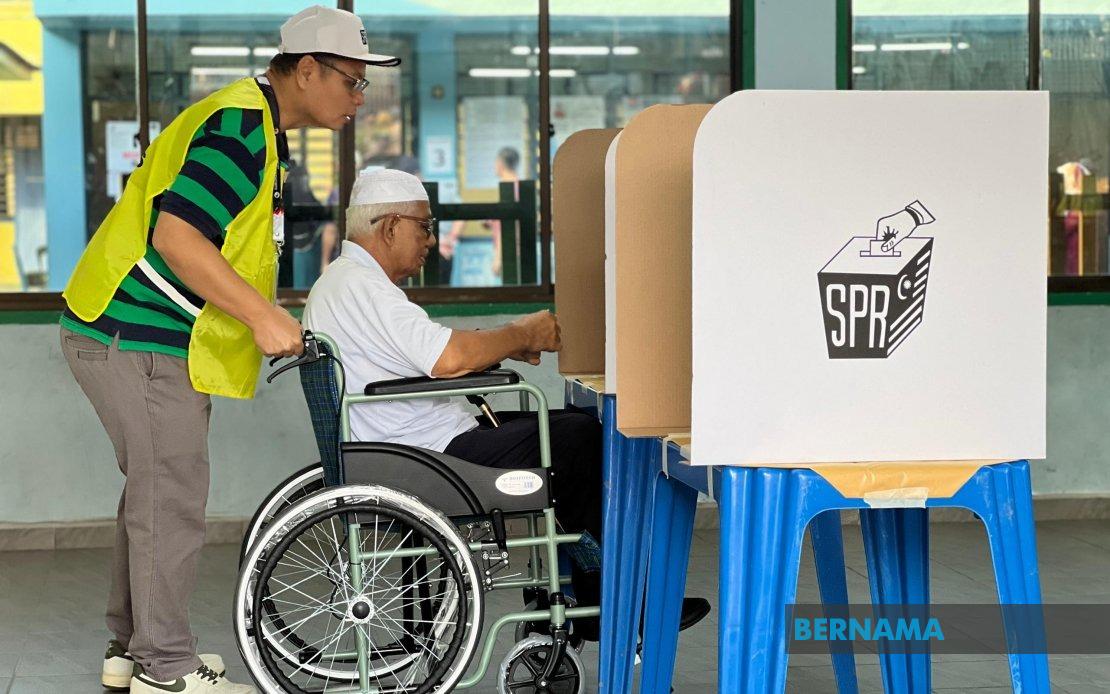
Johor's 16th state election commenced on July 11 as all 1,076 polling centres across the state opened their doors at 8 am sharp, marking the culmination of a fortnight-long campaign and setting in motion a process that would determine the composition of the state legislature for the next term. The simultaneous opening of nearly 4,900 polling streams underscored the scale and coordination required to manage an election involving 2.7 million registered voters across Malaysia's second-largest state by population, a logistical undertaking that stretched from urban centres in Johor Bahru to rural constituencies across the state's diverse landscape.
The voting exercise represented a significant democratic engagement for Johor, whose electorate would determine which coalition—or constellation of independent candidates—would form the next state government. The electoral contest itself reflected the competitive nature of Malaysian politics at the state level, with 172 candidates vying for the 56 available seats in the State Legislative Assembly. This distribution of candidates across seats created a varied electoral landscape: 14 constituencies featured straight fights between two candidates, 27 saw three-cornered contests introducing a third player into the equation, while 12 constituencies presented four-way battles where voters faced multiple viable options and split votes could significantly alter outcomes.
The Election Commission had orchestrated meticulous preparations to ensure the polling process would unfold smoothly throughout the day. Voting was scheduled to continue until 6 pm, a ten-hour window that provided ample opportunity for Johor's electorate to cast their ballots. However, a practical consideration embedded in the electoral design meant that certain polling centres located in constituencies with comparatively smaller voter populations would close earlier than the standard 6 pm cutoff, with some facilities shuttering as early as 11 am once their registered voters had been processed. This staggered approach reflected the administrative efficiency demanded by constituencies of varying sizes across the state.
The Election Commission set its sights on achieving approximately 70 per cent voter turnout, a target that would signal substantial public participation in the democratic process and provide a strong mandate to whichever coalition emerged victorious. Should this ambition be realised, it would represent meaningful engagement from the state's electorate and underscore the relevance of state-level elections in Malaysian political consciousness. Officials anticipated that results could begin flowing by 10 pm, allowing for a relatively swift determination of which parties had secured the mandate to govern Johor for the next term, though final tallies would depend on how swiftly returning officers could process and verify the votes from all 1,076 centres.
On-the-ground observations from polling stations throughout the morning painted a picture of well-orchestrated electoral administration. Security personnel had been strategically deployed across voting locations to maintain order and prevent disruption, reflecting standard protocols designed to protect the integrity of the ballot. Media representatives, recognising the significance of the state election within Malaysia's broader political context, began congregating at polling stations as early as 7 am to capture developments as voting commenced. Their presence underscored the election's importance to national political narratives and the keen interest among press outlets in covering outcomes that might foreshadow broader trends in Malaysian electoral politics.
Weather conditions proved largely favourable across Johor on voting day, with most areas experiencing clear skies that facilitated voter movement and reduced logistical complications that inclement weather might have introduced. However, the Muar district experienced rainfall during the morning hours, potentially introducing minor friction into the voting process in that locality, though not substantially disrupting the overall conduct of elections. Such environmental variations, while typically minor in their impact on overall turnout patterns, nonetheless represent the practical considerations that election administrators must navigate in managing nationwide or state-wide polling exercises.
The Johor state election occurred within the context of Malaysian politics where state-level contests increasingly demonstrate dynamism and competitiveness. Unlike previous eras when certain states appeared politically calcified, contemporary Johor elections reflect a more fluid electoral landscape where incumbents cannot assume continued dominance and where opposition coalitions mount credible challenges. The diversity of contest types—from straight fights to four-way contests—suggested that voter choice in various constituencies would range from binary decisions to more complex calculations involving multiple credible alternatives, potentially influencing both turnout patterns and the strategic messaging adopted by contending parties.
For Malaysian political observers and regional analysts, the Johor result carried significance beyond the state's borders. As a major economic engine of Southeast Asia's second-largest economy, Johor's governance outcome could influence investor confidence and policy direction in areas ranging from manufacturing to infrastructure development. The state's political composition also traditionally influenced dynamics within the broader Malaysian federation, particularly given Johor's historical importance to Malay-Muslim politics and its role in shaping federal coalition preferences. An election delivering unexpected outcomes could reverberate through national political calculations and alter the strategic positioning of various parties ahead of potential federal-level contests.
The 2.7 million registered voters who participated in the Johor election represented a substantial cross-section of the state's population, encompassing urban professionals in Johor Bahru and Iskandar Puteri, rural agricultural communities, industrial workers in manufacturing zones, and business proprietors in both formal and informal sectors. Their collective decision would reflect diverse considerations: economic anxiety or satisfaction, assessment of incumbent performance, confidence in opposition alternatives, and broader judgments about governance quality and direction. The varied nature of constituencies—from urban to rural, from homogeneous to diverse in demographic composition—meant that different factors would weigh differently across Johor's electoral landscape, producing a composite result that reflected the state's genuine political complexity.

