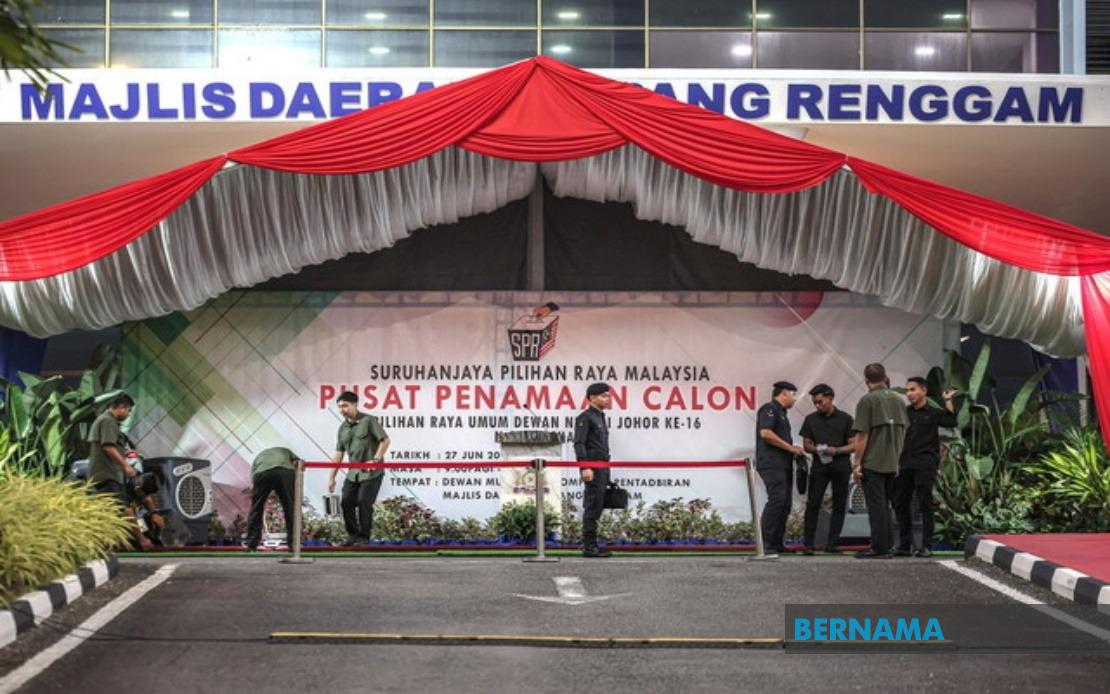
The 16th Johor State Election formally commenced on June 27 with the simultaneous opening of all 56 nomination centres across the state at 9 o'clock in the morning, marking the critical first step in the electoral process. Candidates seeking to contest the election faced a tight one-hour deadline, closing at 10am, to lodge their nomination papers with the returning officer at their designated centres. This compressed timeframe is standard practice during state elections and ensures that the verification and validation process can proceed efficiently before the official announcement of eligible candidates.
The submission of nomination papers involves specific procedural requirements to maintain electoral integrity. Either the candidate themselves, their proposer, their seconder, or any combination of two or all three individuals must personally hand over the nomination documents to the returning officer. This safeguard prevents proxy submissions and ensures accountability at the initial registration stage. Once the Election Commission completes its verification of all submitted nominations, the statutory 14-day campaign period will commence, extending through July 10 at 11:59pm, during which political parties and candidates can actively engage with voters through rallies, broadcasts, and ground campaigns.
Party supporters demonstrated considerable enthusiasm from the pre-dawn hours, with crowds beginning to gather at nomination centres as early as 6:30am to show solidarity with their candidates. This early mobilisation reflects the significant political stakes involved in the Johor election, particularly given the state's historical importance in Malaysian politics and its economic significance as the nation's southern industrial and manufacturing hub. The visible presence of party machinery and grassroots supporters at nomination centres has become a traditional barometer of electoral energy and organisational readiness.
Weather conditions presented a variable landscape across Johor on nomination day. The Malaysian Meteorological Department issued forecasts predicting rainfall in eight districts—Johor Bahru, Muar, Batu Pahat, Kota Tinggi, Pontian, Tangkak, and Kulai—during the morning hours, while Segamat, Kluang, and Mersing were expected to experience clearer conditions. Afternoon thunderstorms were anticipated across most districts, including Johor Bahru, Segamat, Kluang, and Kota Tinggi. Despite these weather challenges, no reports of disruptions to the nomination process were received, and venue preparations had accommodated the predicted conditions.
Security arrangements were comprehensively deployed to safeguard the nomination proceedings and maintain public order. The police force, working in conjunction with the People's Volunteer Corps (RELA), established strict security perimeters and implemented traffic control measures around each nomination centre to prevent incidents and ensure smooth candidate registration. These security measures, standard during electoral events, aim to prevent confrontations and protect both candidates and election officials from potential disruptions. The heightened security presence also serves to reassure the public that the democratic process is being conducted under controlled and professional conditions.
The electoral roll for this state election reflects Johor's substantial population base, with the Election Commission registering a total of 2,727,926 eligible voters. This voting population comprises three distinct categories: 2,703,175 ordinary registered voters forming the primary electoral base, supplemented by 12,041 military personnel and their spouses, and 12,710 police personnel and their spouses. These latter two groups represent specific constituencies with particular operational and logistical requirements during voting periods, necessitating separate administrative arrangements. The total voter count underscores Johor's significance within the Malaysian federal system, as it represents a substantial proportion of the national electorate.
The Election Commission has structured the polling calendar to accommodate administrative preparations and compliance with statutory requirements. Early voting has been scheduled for July 7, allowing certain eligible voters—particularly government employees, security personnel, and voters unable to attend on polling day—to cast their ballots in advance. The main polling day is set for July 11, providing a one-day window for the general electorate to exercise their franchise. This compressed electoral timeline, from nomination day to polling day, represents the standard practice for state elections and ensures that campaign periods remain substantive yet manageable.
For Malaysian political observers and stakeholders, the Johor election carries implications extending beyond the state borders. Johor remains a strategic political battleground where national coalition dynamics play out at the state level, and electoral outcomes here often signal broader political trends affecting federal politics. The composition of the new Johor state government will influence the balance of power in the Peninsula and may have ramifications for future federal political configurations. Additionally, as one of Malaysia's most economically developed states, Johor's governance outcomes directly affect investment climate, infrastructure development, and intergovernmental fiscal arrangements.
The nomination day proceedings demonstrate that Malaysia's electoral machinery, despite occasional criticisms, continues to function according to established legal and constitutional frameworks. The coordination required to simultaneously open 56 nomination centres across a large state, manage substantial candidate volumes, maintain security, and adhere to strict time protocols reflects institutional capacity in electoral administration. This organisational achievement becomes particularly noteworthy when considering the geographical dispersion of Johor, which spans from the urban centre of Johor Bahru to rural constituencies in districts like Mersing and Segamat. The successful execution of nomination day processes sets the foundation for what is anticipated to be a closely contested and politically significant state election.

