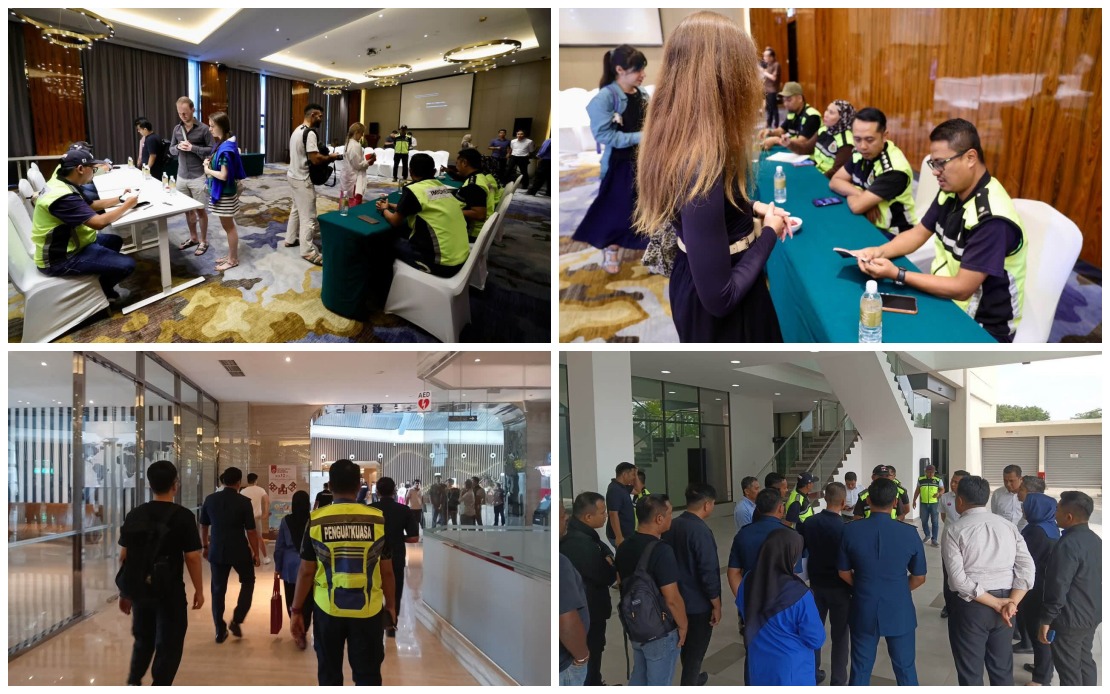
The Iskandar Puteri City Council (MBIP) has taken decisive enforcement action against Network School in Forest City, issuing a formal Stop-Business Notice after investigators uncovered systematic breaches of local business regulations. Johor Menteri Besar Datuk Onn Hafiz Ghazi announced the measure on July 17, underscoring the state government's commitment to ensuring compliance with licensing requirements across its commercial zones.
The investigation revealed that Network School operated from two separate locations within the development. While one premise maintained a valid office business licence, the second facility functioned entirely without MBIP approval, despite being owned by a Malaysian citizen. This dual-location arrangement appears deliberate, suggesting the organisation may have been attempting to circumvent regulatory oversight by splitting operations across licensed and unlicensed spaces.
Beyond the absence of proper licensing, authorities identified more serious violations regarding the misuse of premises zoning. The company had obtained office business licences for spaces it then converted into classroom facilities and business promotion venues without submitting the required applications for such conversions. This breach represents a fundamental violation of the Local Government Act's use-classification system, which exists to maintain orderly urban development and prevent incompatible land uses within residential and commercial zones.
In response, MBIP formally issued Stop-Business Notice IP012N260714001 against the unlicensed premises. The council simultaneously issued an Advertisement Licence Notice (6103) under Section 107(2) of the Local Government Act 1976, addressing the company's non-compliant signboards and advertising materials that neither reflected approved licensing conditions nor matched the premises' authorised purpose. These violations suggest a pattern of regulatory circumvention rather than isolated administrative oversight.
Menteri Besar Onn Hafiz emphasised that Johor's state government treats such breaches as serious matters warranting thorough investigation and decisive action. He assured the public that MBIP would continue scrutinising all aspects within its jurisdictional authority, with further enforcement measures to follow should additional violations come to light. This messaging seeks to reassure residents and legitimate businesses that regulatory compliance remains non-negotiable within the state's commercial landscape.
The controversy surrounding Network School gained significant traction on social media platforms, where unverified claims circulated alleging connections between the institution and Israeli interests, purportedly involving currency investment schemes operating covertly within Malaysia. While Onn Hafiz did not directly address these allegations, his statement carefully delineated between MBIP's local regulatory purview and matters falling under federal jurisdiction.
Specifically, the Menteri Besar indicated that questions regarding foreign nationals' status and residence permits associated with the school remain entirely within the Home Ministry's domain. He stated that Johor's government has formally urged the federal ministry to reach a prompt and conclusive determination about the individuals involved and the institution's permissibility to operate. This jurisdictional boundary reflects Malaysia's administrative structure, whereby immigration and citizenship matters rest with federal authorities rather than state governments.
The Network School case illustrates broader tensions between rapid development in emerging urban zones and the enforcement of established regulatory frameworks. Forest City, as a major integrated development project, attracts considerable international attention and investment. This commercial dynamism can create environments where developers and operators test regulatory boundaries, particularly when operating under ambiguous circumstances involving foreign personnel or unconventional business models.
From a regional perspective, Malaysia's handling of this incident carries implications for how Southeast Asian jurisdictions balance developmental aspirations with security vigilance. The viral social media allegations, regardless of their substantiation, revealed public concern about foreign entities potentially establishing institutional footholds within the country. Whether these concerns have merit, the incident underscores how communities scrutinise educational institutions and commercial entities, particularly when foreign involvement appears present.
The enforcement action also demonstrates the interconnectedness of local and federal regulatory systems. While MBIP can address licensing and land-use violations through its Stop-Business Notice, comprehensive investigations into foreign nationals' immigration status and potential security implications require Home Ministry resources and authority. This division of labour, though logically sound, creates potential gaps when complex cases involve simultaneous violations across multiple regulatory domains.
For legitimate businesses and educational institutions operating in Johor, the Network School enforcement serves as a clear reminder that licensing compliance and proper regulatory approval processes cannot be circumvented. Authorities have shown willingness to pursue administrative closure even for substantial operations, suggesting a hardening stance on jurisdictional violations regardless of the operator's scale or apparent legitimacy.
Moving forward, the case's resolution will depend significantly on the Home Ministry's investigation and determination regarding the foreign nationals involved. Should that federal inquiry reveal immigration violations or security concerns, it could lead to additional enforcement measures beyond MBIP's authority. The situation remains fluid, with state and federal authorities coordinating to address what appears to be either a complex regulatory failure or, if the social media allegations carry weight, a more serious compliance breach.

