%22%2F%3E%3C%2Fpattern%3E%3C%2Fdefs%3E%3Crect%20width%3D%22100%25%22%20height%3D%22100%25%22%20fill%3D%22url(%23ph3mqbjg)%22%2F%3E%3Crect%20width%3D%22100%25%22%20height%3D%22100%25%22%20fill%3D%22url(%23ph3mqbjp)%22%2F%3E%3Ctext%20x%3D%2250%25%22%20y%3D%2250%25%22%20text-anchor%3D%22middle%22%20dominant-baseline%3D%22central%22%20fill%3D%22rgba(255%2C255%2C255%2C0.95)%22%20font-family%3D%22Georgia%2C%20'Times%20New%20Roman'%2C%20serif%22%20font-weight%3D%22700%22%20font-size%3D%22272%22%20letter-spacing%3D%22-0.02em%22%3EJohor%3C%2Ftext%3E%3C%2Fsvg%3E)
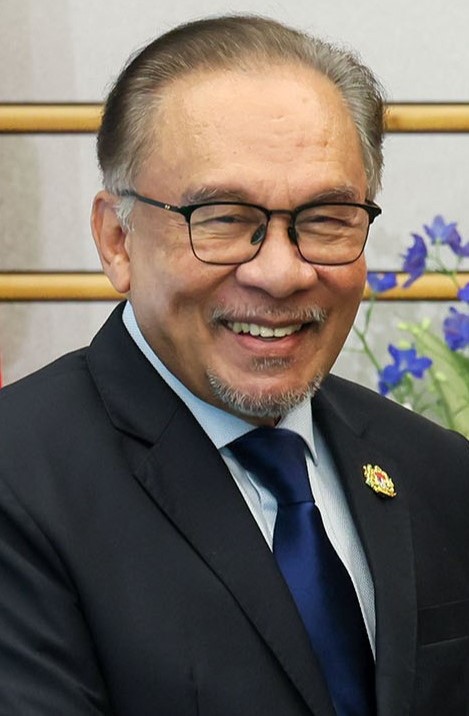
Prime Minister Datuk Seri Anwar Ibrahim asserted that Johor has been a beneficiary of federal fiscal transfers, receiving approximately RM16 billion in excess allocations beyond what the state contributed in taxes to Putrajaya. The claim, made during a visit to Tangkak in Johor on June 23, underscores the Malaysian government's approach to wealth redistribution across states and forms part of the administration's broader narrative about equitable development.
Anwar's remarks highlight a contentious but fundamental aspect of Malaysian federalism: the tension between revenue-generating and revenue-receiving states. Johor, as one of the nation's significant economic engines with a substantial industrial and agricultural base, generates considerable tax revenue. Yet the federal government's accounting framework suggests the state received considerably more in allocations, grants, and development funding than the tax revenue it contributed to the central coffers. This dynamic reflects deliberate policy choices to support states facing economic challenges or to fund nationwide programmes.
The RM16 billion figure carries political significance beyond its numerical value. For Johor, historically governed by Barisan Nasional and more recently experiencing political fluidity with representation across multiple coalitions, the assertion that federal resources flow substantially to the state can be framed as evidence of the centre's responsiveness to local needs. The Prime Minister's emphasis on this transfer during a Tangkak visit—a state assembly constituency—suggests an attempt to demonstrate tangible federal investment in the southern state ahead of potential electoral contests.
This approach reflects how Malaysian political discourse increasingly focuses on the distribution of fiscal resources. Different states have varying capacities to generate revenue through taxation, licensing, and other means. Wealthier, more industrialised states tend to contribute proportionally more to federal coffers, while developing states often receive larger allocations relative to their contributions. The federal government's role as a redistributor of wealth becomes particularly important in bridging regional economic disparities.
Johor's position in this ecosystem merits examination. The state possesses significant industrial capacity, particularly in manufacturing and petrochemicals along the Johor Strait, substantial agricultural output, and growing service sectors. However, it also faces infrastructure challenges, needs ongoing investment in human capital development, and requires support for areas lagging in economic development. The purported RM16 billion net transfer suggests federal policy prioritises addressing these disparities through substantial resource allocation.
The broader context involves questions about fiscal federalism and how Malaysia distributes limited resources among thirteen states and three federal territories. Some states with weaker revenue bases naturally require larger transfers to maintain essential services. Others with stronger economic foundations might be expected to rely more on internally generated revenue. The federal government's budget increasingly reflects these realities, though the methodology for determining allocation formulas remains opaque to public scrutiny and often contentious among state governments across party lines.
Anwar's statement also arrives amid evolving federal-state relations under the unity government framework. With representation from Pakatan Harapan, Barisan Nasional, and other political entities, the central government must navigate complex political dynamics when allocating resources. Highlighting substantial transfers to Johor suggests an effort to maintain consensus and demonstrate equitable treatment regardless of state-level political composition or historical allegiances.
For Malaysian readers, particularly those in other states, such claims raise questions about their own states' fiscal positions. Affluent states like Selangor and Penang, which contribute substantially to federal revenue, might view such transfers differently than developing states receiving net allocations. The transparency of federal allocation formulas remains limited, making it difficult for citizens to independently verify claims or understand the precise criteria guiding resource distribution.
The economic implications extend beyond immediate budgeting. Sustained federal transfers can support infrastructure development, education, healthcare, and social services across Johor, contributing to improved living standards and attracting investment. However, they also raise questions about long-term sustainability and whether states receiving substantial net transfers develop sufficient independent revenue capacity or become structurally dependent on federal support. This dependency dynamic shapes state-level governance and fiscal autonomy.
For Southeast Asian observers, Malaysia's approach to federal fiscal transfers reflects a broader regional pattern where central governments balance wealth redistribution with concerns about economic efficiency and incentives for local revenue generation. How Malaysia manages these tensions influences perceptions of federalism's effectiveness and equity across the broader ASEAN region, where several nations employ federal or quasi-federal governance structures.
Anwar's emphasis on fiscal transfers also connects to his administration's positioning as focused on economic inclusion and reducing regional disparities. By highlighting substantial allocations to Johor, the government frames itself as committed to balanced development rather than concentrating resources in traditionally privileged areas. This narrative gains importance as Malaysia navigates post-pandemic economic recovery and addresses concerns about inequality.
Looking forward, such assertions invite scrutiny of allocation methodologies and outcomes. Critics might question whether RM16 billion in transfers have translated into proportional improvements in Johor's infrastructure, education, healthcare, or poverty reduction metrics. The value of federal transfers ultimately depends on implementation quality and whether funds reach intended beneficiaries effectively. These remain ongoing challenges in Malaysian public finance management across all states.