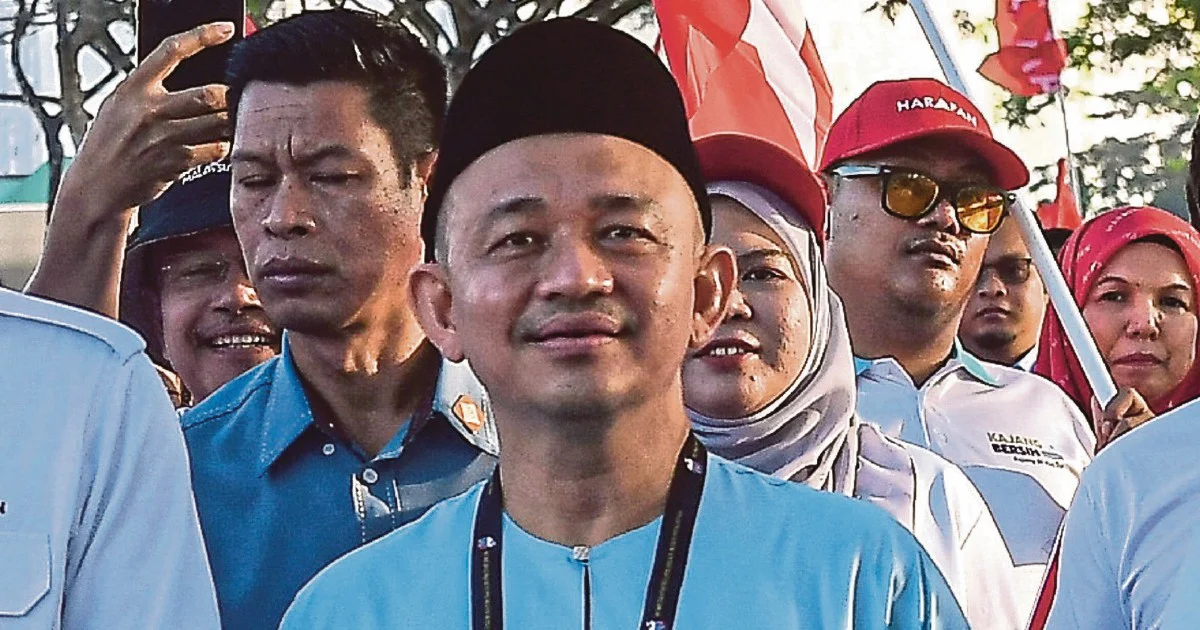
Former education minister Dr Maszlee Malik has indicated that a successful showing by Pakatan Harapan in the Johor state election would fundamentally reshape the trajectory of development across the peninsula's southern gateway. Speaking in Johor Baru, he specifically highlighted the Puteri Wangsa constituency alongside other potential PH gains as catalysts for what he characterised as a transformative political shift.
The remarks come as Pakatan Harapan continues its ground campaign ahead of polling day, with senior party figures framing the election as a referendum on competing visions for Johor's future. Maszlee, whose tenure as education minister coincided with PH's first federal government from 2018 to 2020, carries political credibility within the coalition despite his parliamentary defeat in 2022. His intervention in Johor campaigning underscores the significance the coalition places on challenging incumbent administrations in the state.
Johor remains a politically crucial battleground for any Malaysian government seeking to establish strong legislative majorities. The state's economic importance as home to major manufacturing clusters, port facilities, and a growing services sector makes electoral outcomes here consequential for broader national economic policy. A PH victory would necessarily alter the political calculus at state level and potentially influence federal coalition dynamics, particularly given the complex relationship between state and national governance structures in Malaysia's federalism.
Maszlee's framing of electoral victory as opening a "new chapter" reflects a common campaign strategy that positions political change as synonymous with progressive governance. This narrative positioning attempts to differentiate PH's governance philosophy from current state administration, appealing to voters dissatisfied with the status quo or seeking alternative policy directions. The emphasis on development specifically suggests PH messaging targets economic grievances and infrastructure concerns among Johor's electorate.
Puteri Wangsa, identified by Maszlee as a particular flashpoint, has emerged as a closely watched seat within the election cycle. Constituency-level contests often determine broader electoral outcomes, and PH's strategic emphasis on specific seats indicates campaign resource allocation based on polling data and ground assessments. The selection of Puteri Wangsa alongside reference to "other seats" suggests a multifaceted PH strategy across different demographic and geographic segments of Johor's voter base.
For Malaysian observers, Johor elections carry broader implications beyond state boundaries. The state has historically served as an electoral bellwether, with voting patterns sometimes preceding similar shifts in other states. A PH resurgence in Johor would signal potential momentum for the coalition's federal ambitions, particularly as Malaysia approaches potential national elections. Conversely, a strong incumbent performance would reinforce current state government confidence and complicates PH's path toward expanding federal influence.
Regional dynamics add another dimension to Johor's political significance. As a state bordering Singapore and directly integrated into transnational economic networks spanning the Straits of Malacca region, Johor's governance direction affects cross-border trade, labour mobility, and regional positioning. The state hosts critical infrastructure including the Strait of Malacca's busiest shipping lanes and serves as a gateway for Malaysian commerce with the broader Southeast Asian region. Political leadership changes therefore carry economic ramifications extending beyond state boundaries.
Maszlee's specific invocation of PH victory's capacity to initiate developmental transformation implicitly critiques current state governance approaches. This positioning assumes voters perceive existing development trajectories as insufficient or misdirected, a calculation underlying PH's strategic messaging. Whether such messaging resonates depends on how broadly Johor's electorate views economic performance, infrastructure quality, and governance responsiveness under current administrations.
The coalition's activation of prominent figures like Maszlee indicates substantial organisational preparation and resource commitment to the Johor contest. Senior party figures do not typically invest campaign time in uncompetitive environments, suggesting PH's internal polling indicates competitive races across multiple constituencies. Such competitive positioning benefits from visible leadership presence, conveying campaign confidence to voters and party volunteers alike.
Looking forward, the Johor election outcome will substantially influence Malaysian political momentum heading into subsequent electoral contests and inter-coalition negotiations. A PH breakthrough would validate their organisational capacity and policy messaging, potentially attracting fence-sitter politicians and undecided voter segments. An incumbent victory would consolidate current state government authority and complicate PH's broader political recovery trajectory. Either outcome reshapes the political landscape governing Malaysian governance for years ahead.

