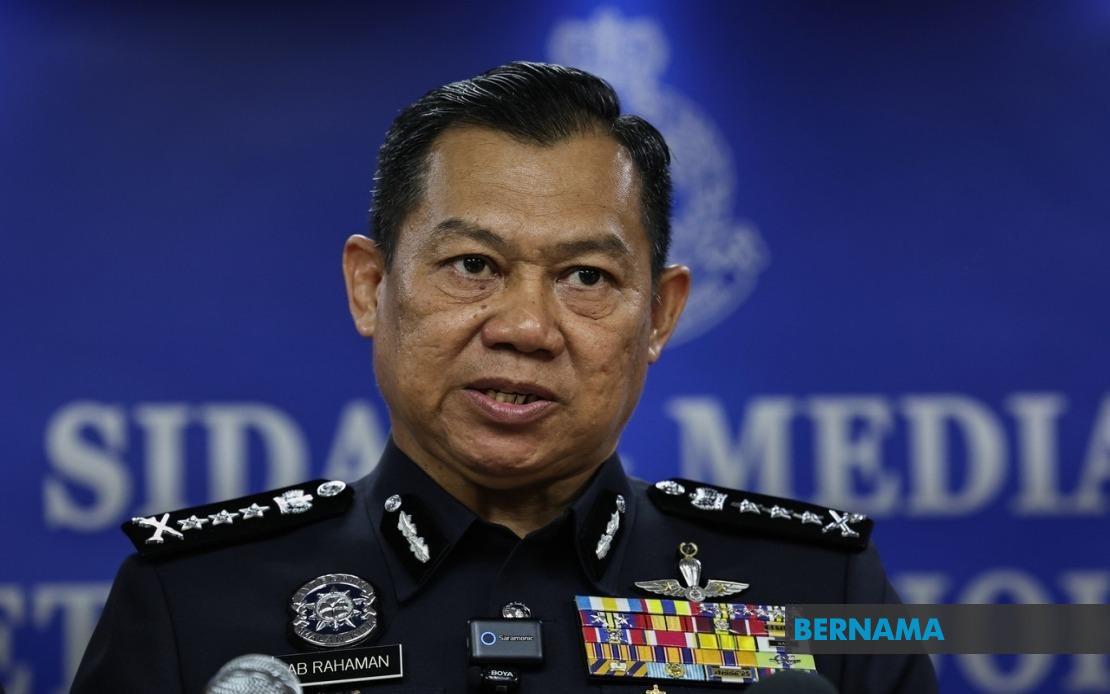
The Johor police force has given the all-clear to 4,053 permit applications for political rallies and campaign activities connected to the 16th Johor state election, demonstrating a largely smooth approval process in the lead-up to voting day. Between June 27 and July 8, authorities processed 4,368 applications total, with the vast majority receiving police endorsement to proceed. The high approval rate suggests that most political parties and candidates navigating the electoral landscape have been compliant with formal requirements, though the police have maintained vigilant oversight throughout the campaign period.
Johor police chief Datuk Ab Rahaman Arsad revealed that the final two days of the monitoring window proved particularly busy on the administrative front. Between July 7 and 8 alone, police received 884 fresh permit applications, approving 838 of these submissions after verifying they met all stipulated conditions. This compressed timeline at the tail end of the period reflects the intensity with which campaign activities ramped up as election day approached, with political candidates and their teams accelerating their ground-level engagement with voters across the state. The brisk processing of applications during this crunch period indicates that police resources were mobilised effectively to handle the surge in demand.
Despite the substantial volume of political activity unfolding across Johor, Datuk Ab Rahaman emphasised that the security and public order environment has remained stable throughout the election process. His statement underscores a key responsibility of law enforcement during electoral campaigns: balancing the constitutional rights of political actors to campaign freely with the imperative to maintain peace and prevent disorder. The police have deployed monitoring mechanisms to track all campaign activities, ensuring participants adhere to electoral law and do not create risks to public safety or communal harmony. This calibrated approach seeks to protect both the integrity of the democratic process and the tranquillity of Johor's communities.
However, beneath the largely orderly surface of the campaign, police have documented concerning breaches of electoral conduct. Between July 7 and 8, officers received 17 reports alleging election offences and formally opened four separate investigation papers. One of these investigations targets alleged promotion of ill will or hostility under Section 4A(1) of the Election Offences Act 1954, a provision designed to prevent inflammatory political speech that could polarise communities along religious, ethnic, or other sensitive lines. Such violations carry particular weight in Malaysia's multicultural context, where electoral campaigns can occasionally inflame dormant tensions if left unchecked.
The remaining three investigation papers address distinct categories of misconduct. Police opened proceedings under Section 500 of the Penal Code and Section 233 of the Communications and Multimedia Act 1998 in response to allegations involving defamation and misuse of digital communications platforms. This dual-pronged approach reflects the modern reality that electoral offences increasingly occur online, where false or damaging statements about candidates can spread rapidly and widely. Separately, two investigation papers were initiated under Section 427 of the Penal Code for wilful mischief resulting in property loss or damage, suggesting that campaign tensions have occasionally boiled over into physical confrontations or vandalism.
When cumulated across the entire monitoring period, the scale of alleged violations becomes clearer. Police recorded 73 reports touching on election offences between June 27 and July 8, translating into 22 formal investigation papers opened. While these numbers remain relatively contained given the volume of campaign activity occurring simultaneously across multiple constituencies, they signal that elements within the political ecosystem have tested or crossed regulatory boundaries. The diversity of offences under investigation—ranging from inflammatory speech to digital misconduct to property damage—suggests that election rule-breakers are resorting to varied tactics rather than concentrated campaigns of a single type.
Datuk Ab Rahaman's statement that violations will be addressed with firmness, fairness, and integrity represents a standard assurance from law enforcement during elections, yet it carries weight given Malaysia's history of contested polls and partisan allegations of police bias. Voters and political actors across Johor will interpret police conduct during investigations and potential prosecutions as either vindicating or undermining claims of impartial law enforcement. The credibility of the electoral process itself often hinges not merely on the rules themselves, but on the perceived even-handedness with which authorities apply them across competing political factions.
For Malaysian observers and regional democracy analysts, the Johor campaign's approval metrics reflect broader patterns emerging from contemporary Southeast Asian elections. The high permit approval rate suggests that most political actors have internalised or accepted electoral regulations without major confrontation, a positive indicator for institutional stability. Yet the parallel stream of investigations into offensive speech and online misconduct mirrors dynamics playing out in neighbouring democracies, where digital connectivity has lowered barriers to rapid dissemination of problematic campaign content and real-time partisan mobilisation.
The implications for future Malaysian elections are evident. Authorities must simultaneously facilitate broad political participation—a democratic necessity—while policing the boundaries of acceptable conduct with consistency and transparency. The Johor police's handling of the 16th state election campaign, measured by the approval-to-application ratio and the responsiveness to alleged breaches, will likely serve as a benchmark against which voters, parties, and international observers assess the fairness of subsequent electoral contests in the state and nationwide.

