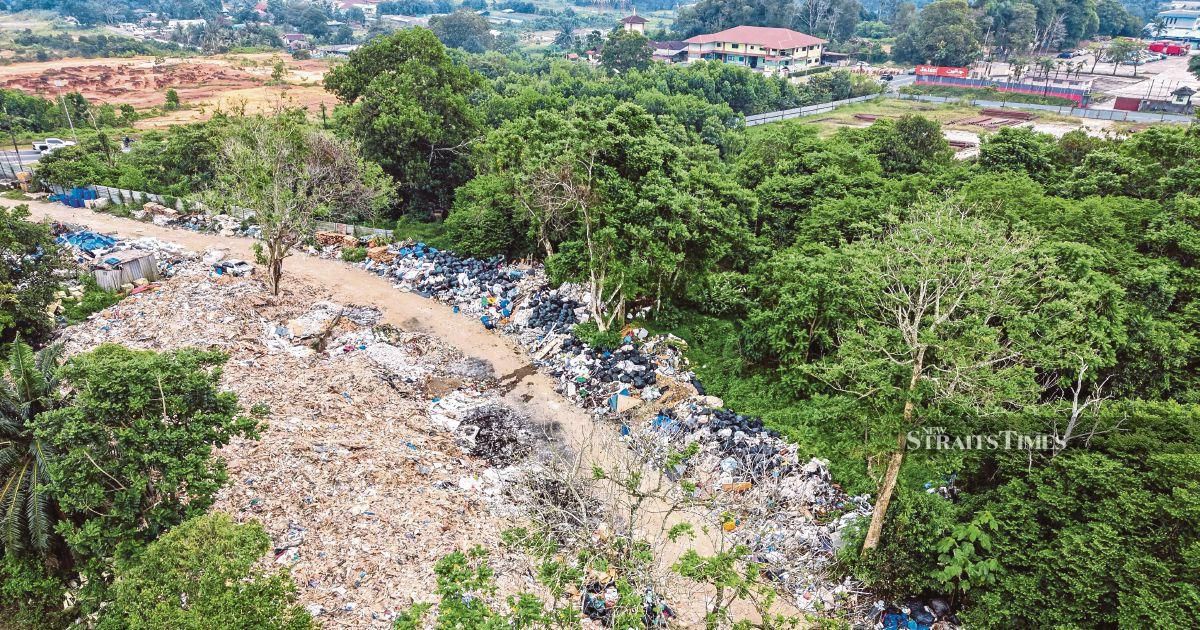
Authorities in Johor have announced the formation of a dedicated multi-agency task force tasked with thoroughly investigating allegations that construction debris and waste materials from Singapore have been deposited at various locations throughout Pontian. The initiative represents a coordinated response from regional environmental and enforcement bodies determined to address what may constitute illegal cross-border waste trafficking.
The alleged dumping incidents have drawn scrutiny from the Solid Waste and Public Cleansing Corporation (SWCorp), the statutory authority responsible for waste management oversight across Malaysia. The emergence of these allegations underscores ongoing concerns about improper waste disposal practices affecting the southern Johor district, which shares extensive maritime boundaries with Singapore and has historically served as a focal point for environmental compliance issues.
Cross-border waste movement represents a persistent challenge in Southeast Asia, where economic disparities and differing regulatory standards can create incentives for the illegal export of waste from higher-income jurisdictions to neighbouring countries with less stringent enforcement mechanisms. Singapore, as a densely populated city-state with significant construction activity and limited landfill capacity, has faced criticism internationally over its waste management practices. The allegations in Pontian illustrate how waste disposal problems originating in one jurisdiction can rapidly become transnational environmental concerns affecting the broader region.
The formation of the task force signals governmental recognition that single-agency approaches have proven insufficient for addressing the complexity of illegal waste dumping operations. By coordinating across multiple agencies—potentially encompassing environmental protection departments, customs authorities, local government bodies, and law enforcement—Johor authorities aim to establish stronger investigative capacity, improve information sharing, and develop more effective enforcement responses. This collaborative framework also enables better coordination between Malaysian federal and state-level agencies.
Pontian's vulnerability to such allegations stems from several geographical and infrastructural factors. As a coastal area with relatively less developed monitoring infrastructure compared to more urbanised regions, it may present fewer obstacles to illegal waste disposal operations. The district's proximity to Singapore means it could serve as a convenient offloading point for waste generated across the causeway, with perpetrators banking on detection difficulties and enforcement gaps. Industrial areas within and around Pontian may additionally lack the comprehensive surveillance systems necessary to deter or prevent unauthorised dumping.
The environmental implications of construction waste contamination extend beyond immediate visual blight. Improperly disposed construction materials—including metals, concrete fragments, timber, and potentially hazardous substances—can leach contaminants into soil and groundwater systems, affecting agricultural productivity and public health. Given Pontian's agricultural heritage and reliance on natural water resources, contamination poses risks not only to environmental quality but also to economic livelihoods within the district.
From a bilateral relations perspective, these allegations carry diplomatic dimensions. Formal investigation will likely involve liaison between Malaysian environmental agencies and their Singapore counterparts, requiring careful management to avoid escalating tensions while pursuing legitimate environmental enforcement objectives. Singapore authorities may themselves possess valuable information regarding waste transportation records, company invoices, or customs declarations that could illuminate the supply chain for alleged illegally dumped materials. Successful resolution may depend substantially on cooperation mechanisms between the two governments.
The investigation's scope will presumably encompass identifying the waste sources, tracing transportation routes and responsible parties, quantifying the volume of materials involved, and assessing environmental damage. Investigators will need to establish whether waste originated from specific Singapore construction projects, which intermediaries or logistics companies facilitated transport, and whether documentation falsifying the waste classification or destination accompanied the shipments. Such inquiries typically demand forensic analysis, witness interviews, and examination of commercial records.
Regulatory frameworks governing hazardous waste trade already exist at international and regional levels. The Basel Convention, to which both Malaysia and Singapore are parties, establishes restrictions on transboundary movement of hazardous wastes. Malaysia's Environmental Quality Act similarly prohibits importation of scheduled wastes without proper licensing. Whether alleged dumping violates these instruments will be central to determining appropriate enforcement responses and whether prosecutions under environmental or criminal statutes are warranted.
The incident reflects broader Southeast Asian challenges around waste management capacity and enforcement consistency. Rapid industrialisation and construction booms throughout the region have generated enormous quantities of waste, while disposal infrastructure has frequently lagged behind generation rates. Wealthier jurisdictions sometimes exploit this imbalance by exporting waste rather than investing in domestic treatment facilities. Thailand, Vietnam, and the Philippines have all documented similar cross-border waste trafficking problems. Malaysia's proactive investigation stance here could establish useful precedent for regional environmental enforcement cooperation.
For Malaysian residents and businesses in Pontian, the investigation provides an opportunity to demand greater environmental accountability and monitoring. The multi-agency approach suggests governmental commitment to moving beyond reactive responses toward systematic prevention. However, sustained success will require ongoing investment in monitoring capabilities, community reporting mechanisms, and cross-border coordination infrastructure. The outcome may influence how Johor addresses future environmental compliance challenges and shapes its relationship with Singapore on shared environmental concerns.
The task force's findings will likely determine whether criminal charges, civil remedies, or administrative penalties are pursued against responsible parties. Establishing clear accountability will be essential for deterring future violations and signalling that Malaysia takes cross-border environmental crime seriously. The investigation also represents an opportunity for both governments to identify systemic weaknesses in waste tracking and border enforcement that warrant long-term collaborative solutions.

