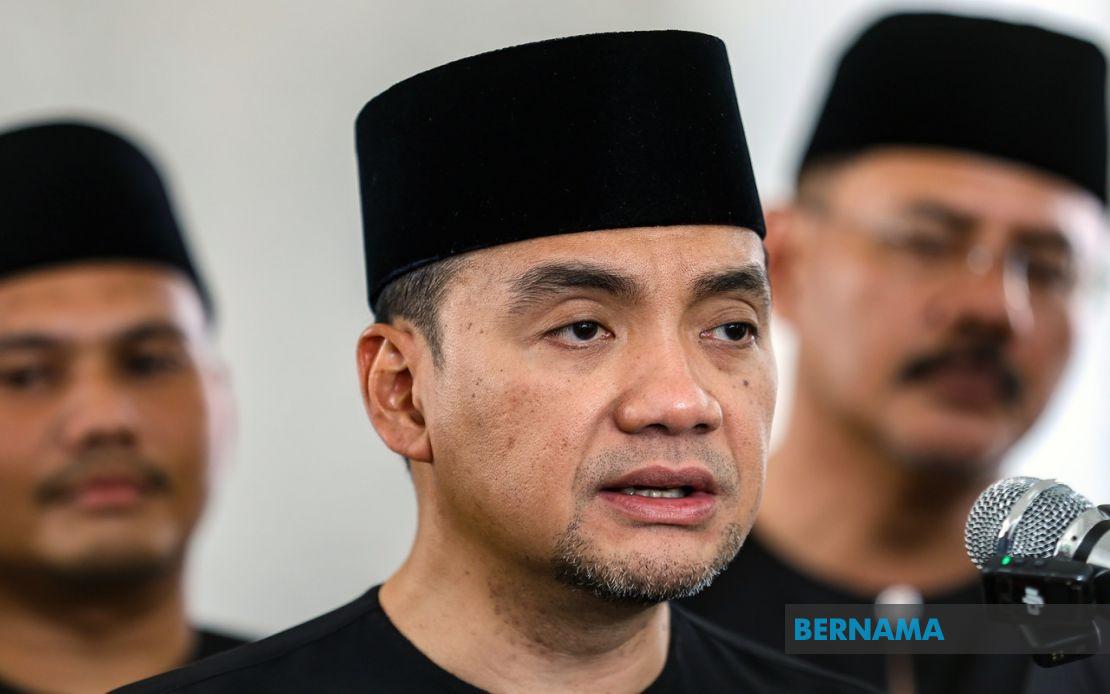
Johor's state government has unveiled an ambitious new initiative aimed at reinvigorating congregational worship in mosques across the southern state. The Semarak Maghrib and Isyak programme, announced by Menteri Besar Datuk Onn Hafiz Ghazi, represents a strategic effort to deepen religious engagement among Johor's Muslim population while strengthening the social and spiritual role of mosques as community hubs. The initiative builds on earlier state-level campaigns focused on encouraging Muslims to perform prayers collectively, with this particular drive concentrating on the two evening prayer times that have traditionally seen lower attendance rates compared to dawn prayers.
According to Onn Hafiz, the programme embodies a core principle of the Barisan Nasional government's electoral promises during the 16th Johor state election, demonstrating the administration's commitment to translating manifesto pledges into tangible community programmes. The launch reflects broader recognition within state leadership that religious institutions require sustained support and innovation to remain relevant and vibrant in contemporary Malaysian society. By coupling the encouragement of congregational prayers with structured religious education and spiritual activities, the state government is attempting to position mosques not merely as places of worship but as comprehensive centres for knowledge dissemination and community development.
The inaugural session of Semarak Maghrib and Isyak took place at Masjid Jamek As-Syakirin in Bukit Saujana, where participants engaged with structured religious content delivered by Johor Bahru district kadi Mohd Zaini Mohd Salleh. The session centred on an exploration of the 40 Hadith, with particular focus on the concept of intention—expressed as 'Niat Penentu Perbuatan Hamba'—a foundational principle in Islamic jurisprudence emphasising that actions are judged by the sincerity of one's intentions. The programme also incorporated the recitation of Surah Al-Mulk, creating a comprehensive spiritual experience that combines prayer, religious instruction, and Quranic engagement.
Johor's approach mirrors strategies employed in other Malaysian states seeking to revitalise religious participation among younger and more mobile populations who face competing demands on their time and attention. Evening prayer times present particular challenges for mosque attendance, as they fall during the transition from working hours to domestic responsibilities, making active promotion and community engagement essential for sustained participation. The Semarak Maghrib and Isyak programme attempts to address this challenge by creating occasions that combine prayer with educational and social components, effectively transforming mosque visits into multi-purpose community events rather than isolated religious obligations.
Onn Hafiz's statements emphasise the programme's alignment with the broader state vision of a progressive Johor grounded in Islamic principles and guided by the Quran and Sunnah. This framing suggests a deliberate positioning of religious revitalisation as compatible with economic development and social progress—a message that attempts to counter narratives portraying Islamic engagement and modernisation as contradictory aspirations. By articulating the initiative as part of comprehensive state development strategy rather than purely devotional exercise, the Johor government signals that Islamic values and civic participation are integral to governance priorities.
The programme's emphasis on ukhuwah—the Islamic concept of brotherhood and communal solidarity—addresses a dimension of mosque function that extends beyond worship to encompass social welfare and mutual support networks. Mosques historically served as spaces where community members could identify local needs, coordinate charitable activities, and strengthen interpersonal bonds across socioeconomic strata. By explicitly highlighting this dimension, the Semarak Maghrib and Isyak programme positions mosques as potential solutions to contemporary challenges of social fragmentation and community isolation, particularly relevant in rapidly urbanising states like Johor.
The state government's decision to expand evening prayer initiatives represents evolution from earlier Subuh prayer campaigns, suggesting institutional learning about which prayer times present the greatest accessibility challenges and opportunities for growth. Subuh prayers, performed in early morning hours, require significant personal discipline and preparation, potentially limiting participation among shift workers, students with irregular schedules, and others with non-standard daily routines. Evening prayers, by contrast, occur at more predictable times but face competition from meal preparation, family commitments, and other domestically anchored activities. This shift in focus indicates recognition that different prayer times require tailored engagement strategies reflecting their distinct practical and social contexts.
For Malaysian Muslim communities more broadly, the Johor initiative offers a potential model that other state administrations might adapt or replicate. As mosque attendance in urban Malaysia has declined in recent decades despite substantial expansion of mosque infrastructure, state-sponsored programmes combining congregational prayer encouragement with structured religious education and community building address a documented concern among Islamic leaders and policymakers. The success or limitations of Semarak Maghrib and Isyak may provide valuable evidence regarding the effectiveness of government-supported religious revitalisation strategies in the Malaysian context.
Onn Hafiz's public appeal for Muslim communities to actively support the programme through consistent attendance and participation signals recognition that government initiatives require sustained public engagement for meaningful implementation. The invocation of spiritual blessings in the Menteri Besar's closing remarks—invoking mercy and well-being upon Johor—employs religious language to frame the programme as spiritually meritorious, potentially encouraging participation beyond those motivated primarily by social or educational considerations. This rhetorical approach attempts to align personal spiritual development with collective civic participation, suggesting that attendance benefits both individual believers and the broader Islamic community.
The programme's timing and scale suggest institutional commitment to systematic implementation, with plans for rollout across mosques throughout Johor rather than limitation to flagship locations or pilot projects. This breadth of ambition indicates confidence in the initiative's potential impact while also reflecting recognition that meaningful cultural change within religious institutions requires sustained, coordinated effort across diverse communities with varying capacities and existing engagement levels. The success of Semarak Maghrib and Isyak will likely depend on consistent resource allocation, training of mosque personnel, and ongoing refinement based on participant feedback and observable attendance trends.

