Johor's ambitious drive to overhaul its education system is entering a new phase with the government's decision to bring its proven reform model into the religious school sector. The launch of the Sekolah Agama Rintis Bangsa Johor (SARBJ) programme represents a strategic broadening of the flagship Sekolah Rintis Bangsa Johor (SRBJ) initiative, which has already established four conventional schools across the state. This expansion signals the administration's commitment to ensuring that educational innovation spans both secular and religious institutions, creating a more holistic approach to student development across Johor's diverse learning environments.
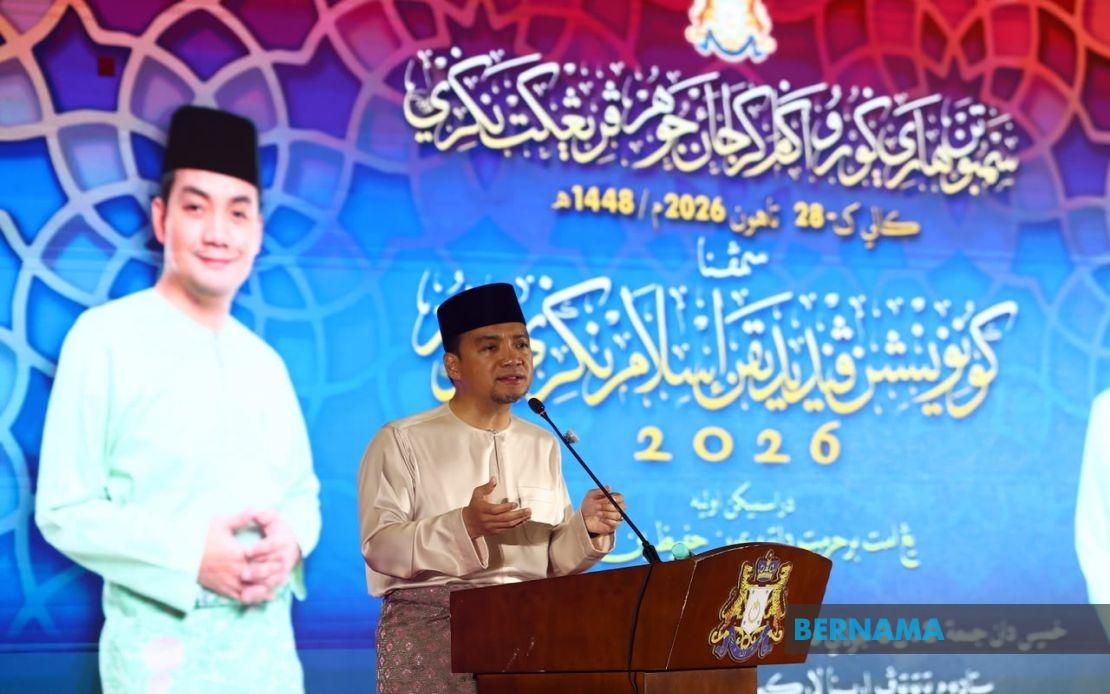
Menteri Besar Datuk Onn Hafiz Ghazi unveiled the initiative during the 28th Johor Government Religious Teachers' Day celebration and the closing of the State Islamic Education Convention at Arena Larkin Indoor Stadium, crediting the concept to Tunku Mahkota Ismail, the Regent of Johor. This royal endorsement underscores the significance of the programme at the highest levels of state governance and reflects a broader vision for educational excellence that transcends traditional institutional boundaries. The Regent's personal investment in this initiative has clearly shaped the government's priorities, positioning education as a cornerstone of Johor's development strategy.
The SRBJ programme, which originated as a pilot project, has matured into an established network encompassing four schools distributed across key locations in the state. These institutions include two secondary establishments: Sekolah Menengah Kebangsaan Seri Kota Puteri 2 and Sekolah Menengah Kebangsaan Tasek Utara, alongside their primary school counterparts Sekolah Kebangsaan Seri Kota Puteri 4 and Sekolah Kebangsaan Tasek Utara. The schools in Pasir Gudang and Johor Bahru have served as demonstration sites for the initiative's core principles, generating valuable experience that the state government now plans to replicate within the religious education ecosystem.
The first SARBJ will be constructed in Kota Iskandar this year, positioning it as a flagship facility that combines the transformative pedagogical approaches of SRBJ with Islamic education content. This location choice carries symbolic weight, as Kota Iskandar serves as the administrative heart of Johor's governance infrastructure. By establishing the religious school within this precinct, the government ensures high visibility and accessibility for oversight while signalling its confidence in integrating religious education into the broader reform narrative. The announcement by State Islamic Religious Affairs Committee chairman Mohd Fared Mohd Khalid gave formal approval to the project, adding institutional credibility to the initiative.
Central to the SRBJ philosophy is a multifaceted approach to educational excellence that goes beyond conventional academic metrics. The initiative emphasises digital learning capabilities, recognising that students must be equipped with technological competencies essential for the modern economy. Multilingual proficiency constitutes another pillar, reflecting Johor's position within the regional and global marketplace where linguistic dexterity provides competitive advantage. Character development and moral education form the ethical foundation, while teacher empowerment ensures that educators possess both the skills and resources to deliver this enhanced curriculum effectively. The provision of high-quality physical facilities completes the framework, acknowledging that learning environments themselves shape educational outcomes.
For Malaysia's religious education sector, this initiative carries particular resonance. Islamic schools have historically operated somewhat apart from mainstream education reform discussions, yet their student populations deserve equivalent access to contemporary pedagogical innovations. By extending the SRBJ model into religious schools, Johor challenges the implicit assumption that modernisation and religious education operate in separate spheres. This integration could establish a template for other states grappling with the question of how to enhance religious education without compromising spiritual and moral instruction. The approach suggests that digital fluency and Islamic knowledge acquisition need not be mutually exclusive objectives.
The government's plan to further expand the initiative into early childhood education through a pilot kindergarten programme reveals the administration's systematic approach to reform. Rather than implementing piecemeal changes across scattered age groups, Johor is constructing a coherent educational pathway that begins in kindergarten and extends through secondary schooling. This longitudinal perspective acknowledges that educational transformation requires continuity and that the developmental foundations laid in early childhood significantly influence later academic and personal success. A pilot kindergarten would allow the government to test methodologies adapted for younger learners before scaling up across the sector.
The convergence of multiple announcements at the religious teachers' day celebration demonstrates deliberate messaging about the state's educational priorities. By coupling the SARBJ announcement with the presence of senior officials including the Johor police chief, the government framed education as integral to broader state development and social stability objectives. This messaging carries implications for how education is perceived within Johor's policy hierarchy. Rather than treating it as a peripheral concern, the high-level participation signals that educational excellence ranks alongside security and governance in the state's strategic vision.
From a regional perspective, Johor's educational initiatives warrant attention as a potential model for Southeast Asian states similarly grappling with modernising their school systems while preserving cultural and religious identity. Malaysia's plural society requires educational frameworks that can accommodate diverse communities and worldviews. If Johor successfully demonstrates that technological advancement, linguistic capability, and moral-religious education can coexist within a coherent institutional framework, the model may influence approaches in other Malaysian states and potentially inspire neighbouring countries confronting analogous challenges.
The financial and human resource implications of this expansion merit consideration. Establishing new schools requires substantial capital investment and trained personnel. The government's confidence in proceeding with SARBJ construction suggests either that preliminary financial planning is advanced or that the administration perceives the investment as sufficiently valuable to justify resource allocation. Whether the existing pool of educators trained in SRBJ methodologies can be extended to religious schools, or whether specialised training programmes must be developed, remains a practical question that will determine implementation success.
Looking forward, the success of the SARBJ initiative will provide crucial data about whether innovations proving effective in conventional secular schools translate effectively into religious education contexts. Students at SARBJ will serve as a cohort demonstrating whether combining Islamic knowledge with digital competency, multilingual capacity, and character-focused pedagogy produces measurable advantages in academic achievement, employment prospects, or social contribution. Such outcomes could either validate or challenge assumptions about educational best practices and their context-dependency.
The Johor government's commitment to comprehensive education transformation across institutional types reflects a maturing understanding of what educational excellence requires in the twenty-first century. By refusing to compartmentalise religious education as separate from mainstream reform efforts, the administration acknowledges that all Malaysian students, regardless of school type, deserve access to contemporary educational approaches. As SARBJ moves from announcement to implementation, it will test whether systematic, well-resourced reform can take root within religious education, potentially reshaping how Malaysia approaches the teaching of Islam in formal school settings while maintaining rigorous academic standards.

