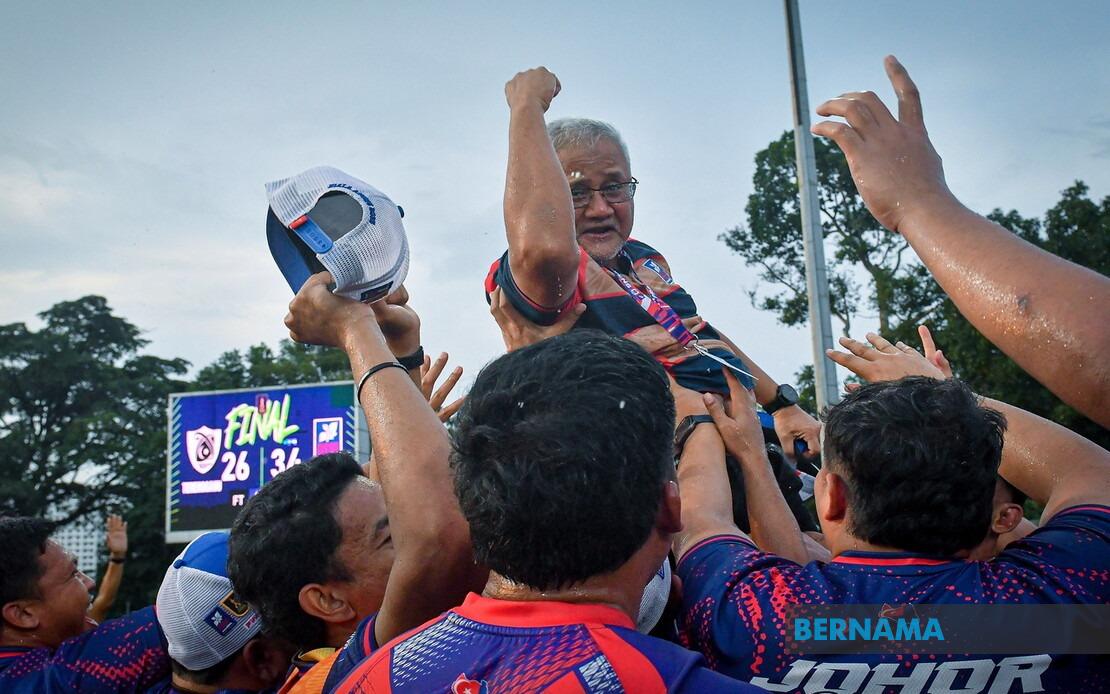
Johor rugby supporters ended nearly a decade of waiting on June 28 when their team staged a commanding second-half performance to defeat Terengganu 34-26 in the final of the 42nd Agong's Cup at Universiti Teknologi MARA Stadium in Shah Alam. The victory represents the southern state's third title in the tournament's prestigious history, marking a triumphant return to the championship podium that had eluded them since their previous success in 2017.
The match proved to be a compelling affair that unfolded in two distinct phases. Terengganu's opening performance demonstrated considerable attacking intent, with the eastern state establishing a 19-17 lead by halftime. Their first-half dominance suggested they might be destined for the trophy. However, the interval signalled a dramatic shift in momentum that would ultimately determine the outcome. Johor's coaching staff clearly implemented significant tactical adjustments and tactical refinements to address the deficiencies exposed in the opening period.
After the resumption of play, Johor exhibited a markedly different intensity and precision that overwhelmed their opponents. The team's forward pack achieved decisive dominance in the set pieces, while their backline movement became increasingly incisive and penetrative. This superiority allowed Johor to systematically build pressure and convert opportunities into scoring chances at a rate that Terengganu could not match. The 17-point swing in the final outcome reflects the magnitude of Johor's second-half superiority and their ability to execute under pressure when championship glory hung in the balance.
The tournament's supporting fixtures also generated considerable excitement and spectacle. In a fiercely contested bronze-medal match, Kelantan secured third place through a thrilling victory over Royal Malaysia Police, prevailing 43-41 in a contest that featured numerous lead changes and demonstrated the depth of competitive rugby talent throughout Malaysia. This match exemplified how the national rugby landscape remains vibrant, with multiple states capable of competing at the highest level and producing compelling entertainment.
The financial incentives distributed by tournament organisers reflected the significance of the competition within Malaysia's sporting hierarchy. Johor's triumphant side received RM20,000 in prize money for their achievement, while runners-up Terengganu earned RM15,000. Kelantan's third-place finish resulted in RM10,000, and Royal Malaysia Police received RM5,000 for their fourth-place effort. These monetary rewards, whilst modest by international standards, remain substantial within Malaysian domestic rugby and acknowledge the competitors' commitment and endeavour.
Individual excellence was also recognised through the player-of-the-tournament accolade. Johor's Aqasha Daniel Irwan received the honour, marking his outstanding contribution throughout the competition and earning him RM1,000 in cash along with a commemorative plaque. The selection highlighted his influence across multiple matches and his crucial role in facilitating Johor's comeback triumph. Individual recognition at tournaments such as this provides important encouragement for developing players and strengthens the recruitment pipeline for higher-level rugby competitions.
The Agong's Cup occupies a distinctive position within Malaysian rugby's calendar. As the nation's premier domestic rugby tournament, it carries historical significance and carries the patronage of Malaysia's constitutional monarchy, which elevates its prestige beyond typical sporting competitions. The tournament has operated for 42 editions, demonstrating remarkable institutional longevity and establishing itself as a reliable fixture in the Malaysian sporting calendar. This consistency matters significantly for talent development, as it provides a recognised competition structure where emerging athletes can gain valuable experience against strong provincial opposition.
Johor's nine-year championship drought had extended considerably beyond their previous success, representing a substantial gap in the state's trophy cabinet. The hiatus had generated mounting pressure on the coaching staff and players to deliver a championship that supporters increasingly demanded. This extended waiting period makes the 2024 triumph particularly sweet for the state's rugby community, vindicating faith in the direction and development of their rugby programme. The victory suggests that investment in coaching infrastructure and player development initiatives have finally yielded tangible competitive dividends.
The context of Malaysian rugby remains significant for understanding this achievement. Rugby union participation in Malaysia remains relatively modest compared to football or badminton, yet the sport maintains a dedicated supporter base and continues to attract talented athletes. The Agong's Cup serves as the pinnacle of domestic rugby achievement, and state teams invest considerable resources into developing squads capable of competing at this level. For Johor specifically, returning to championship status reinforces their position as one of Malaysian rugby's traditional powers and establishes momentum potentially extending into subsequent seasons.
Looking forward, Johor's resurgence may influence the competitive dynamics of future Agong's Cup tournaments. Teams that were seemingly ascending in recent years will face renewed competition from a state that has demonstrated it remains capable of producing high-quality rugby. The tournament's competitive balance matters considerably for the sport's health in Malaysia, as monopolisation by any single state tends to diminish overall interest. The distribution of success across Johor, Terengganu, Kelantan, and other competitive states maintains enthusiasm throughout the national rugby community and encourages continued investment in player development programmes across different regions.

