%22%2F%3E%3C%2Fpattern%3E%3C%2Fdefs%3E%3Crect%20width%3D%22100%25%22%20height%3D%22100%25%22%20fill%3D%22url(%23ph540jeg)%22%2F%3E%3Crect%20width%3D%22100%25%22%20height%3D%22100%25%22%20fill%3D%22url(%23ph540jep)%22%2F%3E%3Ctext%20x%3D%2250%25%22%20y%3D%2250%25%22%20text-anchor%3D%22middle%22%20dominant-baseline%3D%22central%22%20fill%3D%22rgba(255%2C255%2C255%2C0.95)%22%20font-family%3D%22Georgia%2C%20'Times%20New%20Roman'%2C%20serif%22%20font-weight%3D%22700%22%20font-size%3D%22272%22%20letter-spacing%3D%22-0.02em%22%3EJohor%3C%2Ftext%3E%3C%2Fsvg%3E)
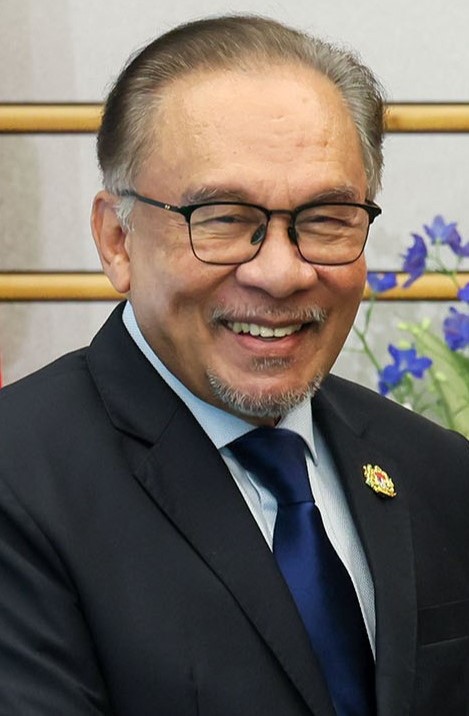
Prime Minister Datuk Seri Anwar Ibrahim has issued a clear call for maintaining strict separation between Malaysia's royal institution and electoral politics, warning against any entanglement of the monarchy in the forthcoming Johor state election. Speaking in Tangkak on June 23, Anwar underscored that political competitors must acknowledge institutional limits and refrain from drawing the royal establishment into campaign matters, a stance reflecting growing sensitivity around the intersection of constitutional monarchy and democratic practice in the country.
The caution comes as Johor prepares for what political observers anticipate will be a closely contested state election, with multiple parties vying for legislative dominance. Anwar's intervention suggests concern that electoral pressures could tempt candidates or parties to invoke royal backing or seek to position themselves as favored by the palace—a practice that would undermine both democratic principles and the apolitical role the Constitution assigns to the institution. By explicitly raising the issue beforehand, the Prime Minister appears to be establishing ground rules intended to insulate the election from tactics that could compromise the monarchy's institutional standing.
Malaysia's constitutional framework places the Yang di-Pertuan Agong and state sultans in elevated ceremonial and symbolic positions, deliberately divorced from partisan politics. This design reflects a deliberate historical choice to protect the monarchy from the wear and tear of electoral competition while preserving its role as a unifying national and state symbol. When electoral campaigns risk politicizing the royal institution, either through explicit appeals to royal preference or through attempts to claim special connection to palace circles, the independence and neutrality that buttresses the monarchy's legitimacy can suffer damage. Anwar's statement suggests he views this principle as under pressure.
The Johor context amplifies these concerns. The state, home to Malaysia's most senior royal household and historically a political bastion for the United Malays National Organisation, carries particular symbolic weight. Any perception that electoral competition had been influenced by royal preference—or that candidates had sought to leverage royal connections—could ripple across the federation's understanding of how institutions ought to function. The Sultan of Johor occupies a position of considerable visibility and influence within state society, making the principle of maintaining distance from electoral contests especially vital in this particular jurisdiction.
Anwar's framing as a matter of understanding institutional "limits" suggests he is appealing to the political maturity and democratic sensibilities of contending parties and candidates. Rather than issuing threats or introducing new rules, he appears to be reminding stakeholders of existing constitutional boundaries and asking them to police their own conduct accordingly. This approach reflects a governance philosophy that privileges consensus and shared institutional respect over regulatory enforcement, though it places responsibility on political actors to exercise restraint.
The statement also carries implications for how Malaysia's hybrid Westminster-monarchical system navigates the tension between democratic competition and constitutional deference. Unlike fully republican democracies where the head of state is an elected political figure, Malaysia's system requires political players to respect an institution that stands above partisan struggle. This creates a distinctive challenge: maintaining genuine electoral competition while preserving the Crown's constitutional position. Anwar's intervention indicates that he regards this balance as fragile and requiring active maintenance through political discipline.
The warning arrives against a backdrop of evolving Johor politics, where factional realignments have created uncertainty about traditional power arrangements. In contexts of heightened competition and shifting alliances, the temptation to invoke royal sanction or to suggest special relationships with palace circles intensifies—making Anwar's preventative statement timely. By front-loading this message, the government signals that it will scrutinize election conduct for any apparent breach of these boundaries.
For Southeast Asian observers, Malaysia's approach to managing the relationship between electoral democracy and constitutional monarchy offers a distinctive model. Unlike several neighboring countries where military or monarchical institutions have periodically displaced democratic processes, Malaysia has sought to constitutionalize both democratic practice and royal authority, creating parallel rather than competing power streams. Sustaining this arrangement depends on political actors accepting that certain domains—particularly the dignity and apolitical character of the Crown—remain beyond electoral contestation, even as other spheres of governance are fully subject to democratic competition and debate.
Anwar's intervention also reflects the broader governance priorities of his administration, which has emphasized institutional restoration and respect for constitutional norms after periods of considerable political turbulence. By reaffirming the principle that the royal institution should remain insulated from electoral manipulation, he positions his government as a guardian of constitutional propriety. This messaging may resonate particularly with voters and institutions concerned about democratic health and institutional integrity.
The practical enforcement of Anwar's principle will depend substantially on voluntary compliance from political parties and candidates. Should election campaigning proceed without inappropriate invocation of royal preference or palace connections, his warning will have served its purpose through deterrence. Should violations occur, responses could range from party discipline to more formal electoral commission findings, though the Prime Minister's framing emphasizes the moral and constitutional imperative rather than enforcement mechanisms. As Johor prepares for electoral competition, the test of whether Malaysia's political elite respects the monarchy's constitutional distance will become evident.